fbpx

Skeletal System: The Body’s Call for Stability, Mineral Balance, and Inner Support

skeletal-system

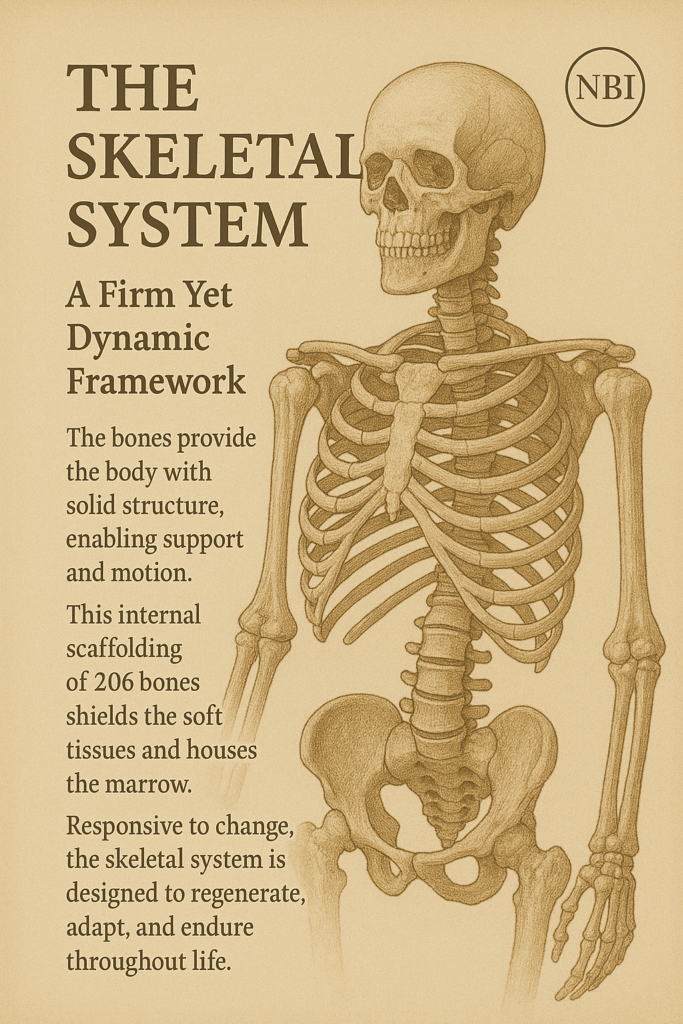
The skeletal system is far more than a structural frame. It is a living, dynamic, constantly renewing tissue that protects vital organs, supports movement, stores essential minerals, and even plays a key role in blood creation. In Natural Hygiene, the bones are viewed as responsive reservoirs that adapt to the internal environment we create through lifestyle, diet, rest, and emotional balance. When living conditions support clarity and mineral equilibrium, the bones stay strong and resilient. When living conditions place excessive strain on the body, the skeletal system is forced to compensate.

Modern society often treats bone issues as isolated structural problems. But Natural Hygiene recognises that bone health is inseparable from digestion, blood purity, mineral intake from natural foods, posture, circulation, and emotional calm. Bones become weak, painful, or inflamed not because they randomly deteriorate, but because the internal environment they depend on has become imbalanced.

Bones Are Living Tissue, Not Static Structures

Bones continuously break down old tissue and rebuild new tissue. This process is known as remodelling. For remodelling to stay balanced, the body must have a steady supply of natural minerals — especially calcium, magnesium, phosphorus, potassium, and silica. These minerals come most bioavailable from fruits, leafy greens, vegetables, nuts, and seeds in their natural, uncooked forms.

Contrary to common belief, calcium does not come from dairy in a usable form. Cooked dairy and processed foods leave acidic residue in the bloodstream. The body must neutralise this acid, and one way it does so is by withdrawing alkaline minerals from the bones. Over time, this creates weakness, brittleness, and inflammation.

In Natural Hygiene, low bone density is therefore not a calcium deficiency but a lifestyle imbalance.

Acidic Lifestyles Pull Minerals From the Bones

Anything that acidifies the internal environment forces the body to buffer this acidity using mineral reserves — mainly from bone tissue. These acid-forming habits include:

  • High animal-product diets
  • Cooked fats and oils
  • Processed foods
  • Alcohol and stimulants
  • Excessive salt
  • Chronic stress
  • Poor sleep
  • Under-hydration
  • Low intake of fresh fruits and greens

When this pattern continues over years, the bones lose minerals faster than they can be replaced. Symptoms such as joint pain, stiffness, brittle nails, back discomfort, and slow healing of fractures all signal that the skeletal system is under strain.

The skeleton is not “failing”; it is supplying the rest of the body with buffering materials to keep the blood stable.

Joint Health and Movement: Stagnation Is a Major Cause of Pain

Joints rely on movement for nourishment. They do not have their own direct blood supply — they receive nutrients through the synovial fluid that circulates only when joints move. When a person lives a sedentary or restricted lifestyle, the joints become stiff because nutrient flow slows down.

Natural Hygiene teaches that natural movement is essential for joint health. Walking, stretching, gentle bodyweight movement, and functional daily activity keep the joints lubricated, nourished, and flexible.

Artificial exercise regimens that strain or compress the joints often worsen pain because they override the body’s natural mechanics. Natural, enjoyable movement is far more supportive.

Inflammation in the Bones and Joints: A Detox Response

Many bone and joint issues — osteoarthritis, inflammation, stiffness, and pain — are not degenerative diseases in the traditional sense. From a Natural Hygiene perspective, they are the body’s attempt to expel metabolic waste stored in the tissues. When the lifestyle is heavy and digestion is burdened, toxins circulate in the blood and can settle in the connective tissues around joints. The body uses inflammation to dissolve and remove these residues.

This discomfort is not a sign of permanent damage. It is often a sign that the body is cleaning and repairing the area. Painkillers and anti-inflammatories merely suppress this cleansing action, driving the problem deeper.

Rest, Sunlight, and the Skeleton

Bones require rest just as muscles do. During sleep, the body repairs micro-damage and rebuilds bone tissue. Without deep rest, bone renewal slows, and the body becomes more susceptible to injury.

Sunlight is equally vital. Natural Hygiene emphasises sunlight as the primary way the body regulates mineral absorption and internal chemistry. Sunlight helps convert certain precursors into active hormones that direct calcium into the bones where it belongs.

A lifestyle lacking fresh air and sunlight will always create skeletal imbalance, regardless of diet.

Fasting and Bone Renewal

The skeletal system benefits profoundly from fasting. When digestion pauses, the body directs energy toward cleansing and rebuilding. Waste materials stored in joints begin to break down. Inflammation reduces naturally. Circulation improves. The bloodstream becomes clearer, reducing the mineral demand on the bones.

Far from weakening the bones, fasting allows the internal environment to rebalance so the bones can begin absorbing minerals correctly again.

The Skeleton’s Message: Support Me Naturally

Bone and joint issues are not mechanical faults. They are messages from the body:

  • The bloodstream is acidic.
  • The diet is too heavy.
  • Movement is inadequate.
  • Rest is insufficient.
  • Emotions are locked in the tissues.
  • The lifestyle is out of sync with nature.

When we create natural conditions — simple foods, proper rest, daily movement, emotional ease, sunlight, and hydration through fruits and greens — the skeletal system responds with remarkable speed. The body is always trying to rebuild, renew, and strengthen itself.

We simply need to remove the obstacles.


Conditions Commonly Associated With the Skeletal System

Systems That Work Closely With the Skeletal System

Skip to content