
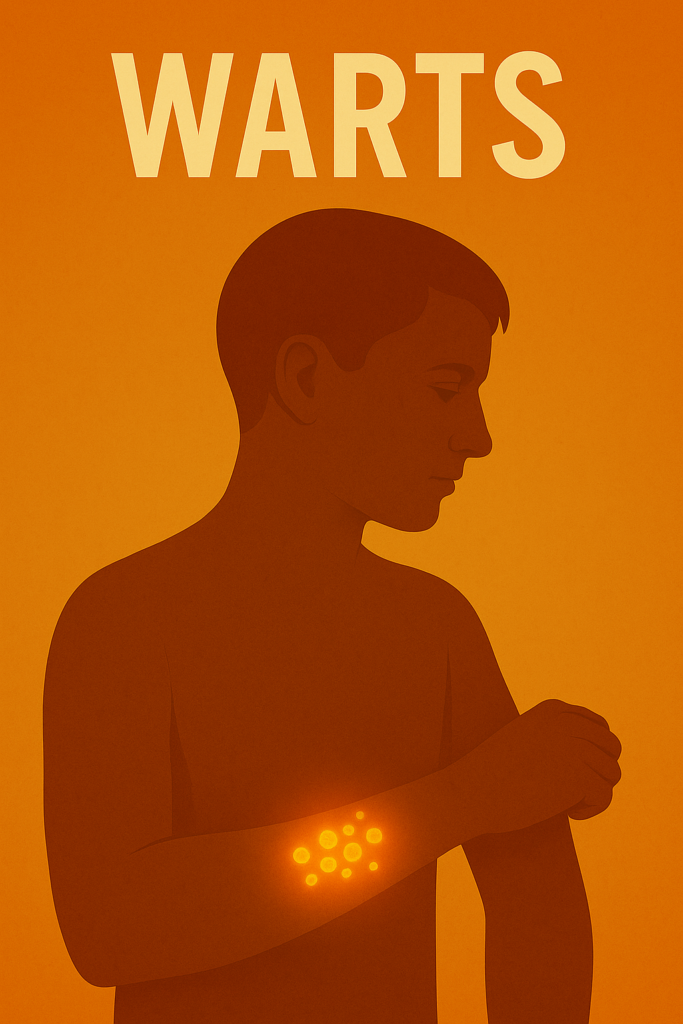
Warts are commonly described as small growths caused by a virus, yet from a Natural Hygiene perspective they are far more meaningfully understood as the body’s intelligent attempt to push waste, irritation or damaged tissue toward the surface for removal. A wart is a localised area where the body has placed material it cannot safely process internally. It is a storage and expulsion point. Instead of being a malfunction or an attack, a wart is evidence of the body working to protect deeper tissues by isolating and expelling unwanted substances.
The skin is one of the body’s major eliminative organs. When the internal pathways of elimination such as the kidneys, colon, liver and lymphatic system are overwhelmed, the skin steps in as a backup route. The body prioritises survival by using whatever channels it can. A wart forms when waste, metabolic debris or lymphatic congestion accumulates in a specific location and the body walls it off for controlled elimination. This encapsulation prevents irritation from circulating back into the bloodstream.
Contrary to common belief, the presence of a virus is not the root cause of wart formation. Microorganisms are attracted to weakened or congested tissue. They flourish in the environment the body creates but do not create the environment themselves. They are opportunistic, not causal. Natural Hygiene understands microbes as part of the clean-up process, not an invading force. Removing the underlying congestion allows the wart to detach naturally because the environment that sustained it is no longer present.
Warts often appear on areas of repeated friction such as hands, feet, knees or fingers. These areas experience micro-abrasions and pressure, which the body compensates for by thickening the skin. When the internal terrain is burdened, this thickening may trap waste and create a wart. The body is simply using the most accessible route to move irritants outward.
The lymphatic system plays a major role. Lymph is responsible for removing cellular waste, but it has no pump and relies entirely on movement, hydration and breathing. When the lymph becomes stagnant due to inactivity, dehydration, processed foods or stress, waste accumulates in peripheral tissues, especially the skin. Warts can be seen as pockets of stored debris the lymph was unable to flush. Improving lymphatic flow often leads to warts shrinking or disappearing on their own.
Circulation is another factor. Poor circulation leads to cool extremities and slow cellular turnover. When fresh, oxygenated blood does not reach the outer layers of skin efficiently, the tissues become sluggish. Waste removal slows and warts become more likely to persist. Natural Hygiene emphasises daily movement, deep breathing and hydration to restore circulation and enhance the skin’s ability to renew itself.
Dietary irritation is also a major contributor. Foods that are difficult for the body to digest such as dairy, oils, animal products, processed foods and stimulants place stress on the eliminative organs. When these organs become overloaded, the body diverts elimination to the skin. Warts often reflect long-term dietary stress rather than a sudden external trigger. Hydrating foods such as fruits, leafy greens and fresh juices help lighten the body’s load and restore internal clarity.
Warts grow slowly because the body is cautious. It walls off the area, isolates the waste and gradually pushes it outward. This process protects the internal organs from being exposed to irritants. Removal methods such as burning, freezing or cutting the wart do not resolve the underlying need the body had for creating the wart in the first place. This is why warts often return after mechanical removal. True healing comes from addressing the internal terrain, not from attacking the symptom.
Natural Hygiene encourages supporting the body rather than forcing it. When the internal environment becomes cleaner and more hydrated, the wart loses its purpose. Blood flow improves, lymph movement increases and the tissues regain vitality. Over time, the wart may shrink, dry up and fall away because the body has determined it no longer needs that outlet.
Fasting or simplifying the diet is one of the most effective approaches. When digestion rests, the body has more energy available for detoxification and repair. This often leads to improvements in skin conditions, including warts. Fruit-only days, especially with hydrating fruits like melons or grapes, can support lymphatic cleansing and speed up elimination.
Emotional factors also play a role. Stress and unresolved tension tighten the body, restrict circulation and reduce oxygenation. The skin is particularly sensitive to stress, as it is closely connected to the nervous system. Many people notice improvements in skin conditions when they prioritise rest, calm breathing and emotional release.
It is important to trust the body’s timing. Warts are not dangerous, and they do not need to be attacked. They are reminders that the body is constantly working to protect us. When we provide it with hydration, clean food, movement, sunlight and rest, the need for warts gradually disappears. They fall away as the internal terrain becomes cleaner and more balanced.
Warts teach us patience. They show that healing is not always immediate but is always possible when we work with the body rather than against it. As we improve circulation, restore lymph flow and adopt a simpler, natural lifestyle, warts become unnecessary, and the skin returns to clarity.