Hiatal Hernia: A Natural Hygiene Perspective on Pressure, Digestion and Structural Ease
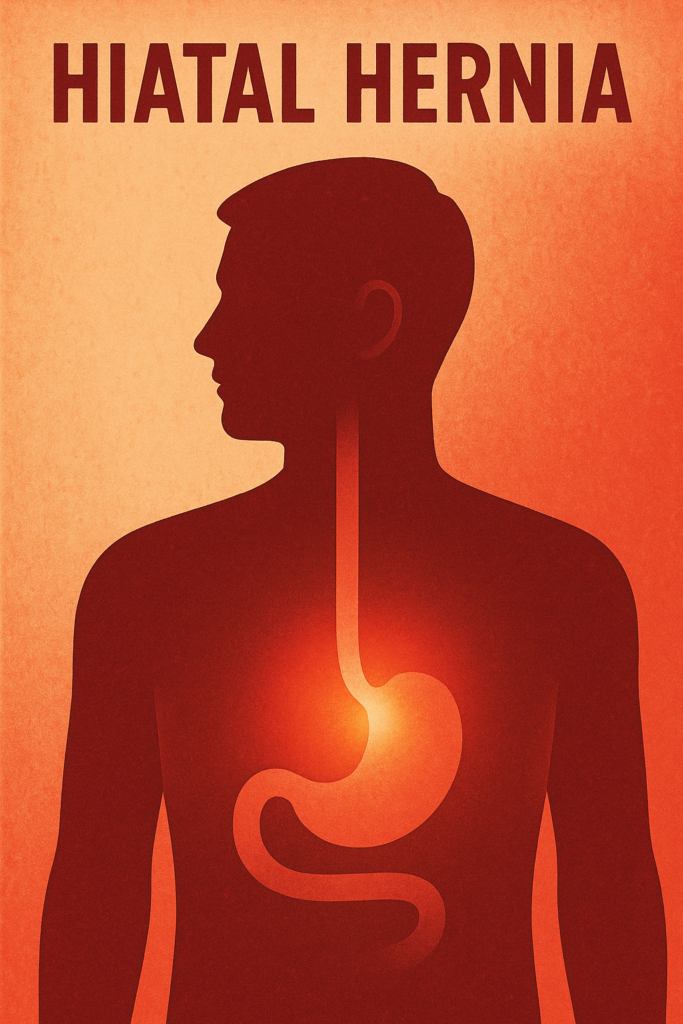
A hiatal hernia occurs when part of the stomach moves upward through the opening in the diaphragm through which the oesophagus normally passes. Many are small and cause few symptoms, while others contribute to reflux, regurgitation or discomfort.
Natural Hygiene usefully asks about the conditions surrounding the structure: abdominal pressure, meal size, body position, weight, breathing, bowel function and digestive comfort. The hernia itself, however, is an anatomical change rather than a deliberate detoxification or pressure-release mechanism created by the body.
Structure and Pressure
The oesophageal hiatus is an opening in the diaphragm. Age-related tissue changes, individual anatomy and repeated increases in abdominal pressure can contribute to hiatal hernia. Obesity, pregnancy, coughing, straining, vomiting and heavy lifting can all increase intra-abdominal pressure.
This gives the Natural Hygiene emphasis on reducing unnecessary pressure a genuine physiological basis without needing to interpret the stomach’s movement as an intelligent attempt to escape digestive overload.
Hiatal Hernia and Reflux
The diaphragm and lower oesophageal sphincter normally work together to help limit reflux. A hiatal hernia can disrupt this relationship and make reflux more likely, although not everyone with a hernia has reflux and not everyone with reflux has a hiatal hernia.
Large meals, lying down soon after eating and individual trigger foods can worsen reflux symptoms because they affect stomach volume, pressure or sphincter function.
Meal Size and Digestive Simplicity
Smaller meals can reduce stomach distension and may be more comfortable. Natural Hygiene’s preference for simple meals can therefore be useful where it helps a person identify which meal sizes and foods repeatedly trigger symptoms.
Proteins and fats do not become incompatible merely because they are eaten together, and fermentation is not the universal cause of hiatal hernia. The practical observation — avoiding meals that repeatedly leave the stomach uncomfortably full — is more useful than rigid food-combining chemistry.
Posture, Movement and Breathing
Remaining upright after meals and gentle walking can reduce reflux for some people. Diaphragmatic breathing may help relaxation and can influence the relationship between breathing mechanics and the gastro-oesophageal junction.
Breathing exercises should not be presented as mechanically pushing a persistent hernia back into place. Their more defensible role is supporting comfortable breathing, reducing unnecessary tension and potentially helping reflux symptoms.
Stress and Digestion
Stress can change digestive sensation, behaviour, breathing and autonomic activity. It may worsen the experience of reflux or indigestion. It does not mean emotional tension physically pulls the stomach through the diaphragm.
Where Fasting Fits
An empty stomach contains less food volume, so symptoms related to fullness or reflux may temporarily diminish when not eating. This does not establish that fasting repairs the hiatus or permanently returns the stomach to its original position.
The more sustainable Natural Hygiene question is what eating pattern reduces unnecessary pressure while still providing adequate nourishment.
When Symptoms Need Attention
Persistent swallowing difficulty, gastrointestinal bleeding, unexplained weight loss, severe chest or upper-abdominal pain, repeated vomiting or symptoms suggesting obstruction should not be interpreted simply as healing or pressure release.
The Natural Hygiene Interpretation
Hiatal hernia demonstrates how structure and terrain can interact. Anatomy matters, but so do the pressures repeatedly placed on that anatomy.
Natural Hygiene’s deeper contribution is the principle of removing unnecessary causes of strain. A structural change may already exist, but the forces acting upon that structure are not fixed. Stomach distension, constipation and straining, body position, abdominal pressure, breathing mechanics and repeated large meals can all alter the mechanical environment from hour to hour.
Vital Economy also adds a useful perspective: digestion, movement, breathing and tissue maintenance occur within a finite physiological capacity. Simpler eating and adequate rest may reduce unnecessary demand without implying that digestive energy is literally transferred to the diaphragm to repair a hernia.
The observation is therefore that anatomy and pressure interact. The Natural Hygiene interpretation is that changing the terrain and removing repeated sources of pressure may allow more comfortable function and better adaptation. That is different from promising that the body will necessarily pull an established hernia back through the hiatus.
Natural Hygiene contributes by reducing unnecessary digestive and mechanical burden through appropriate meal size, comfortable digestion, movement, bowel regularity, rest and attention to the wider terrain. Supporting those conditions can improve symptoms even when the anatomical hernia itself remains.
Related Digestive Reading
Natural Hygiene foundation: The Natural Hygiene approach