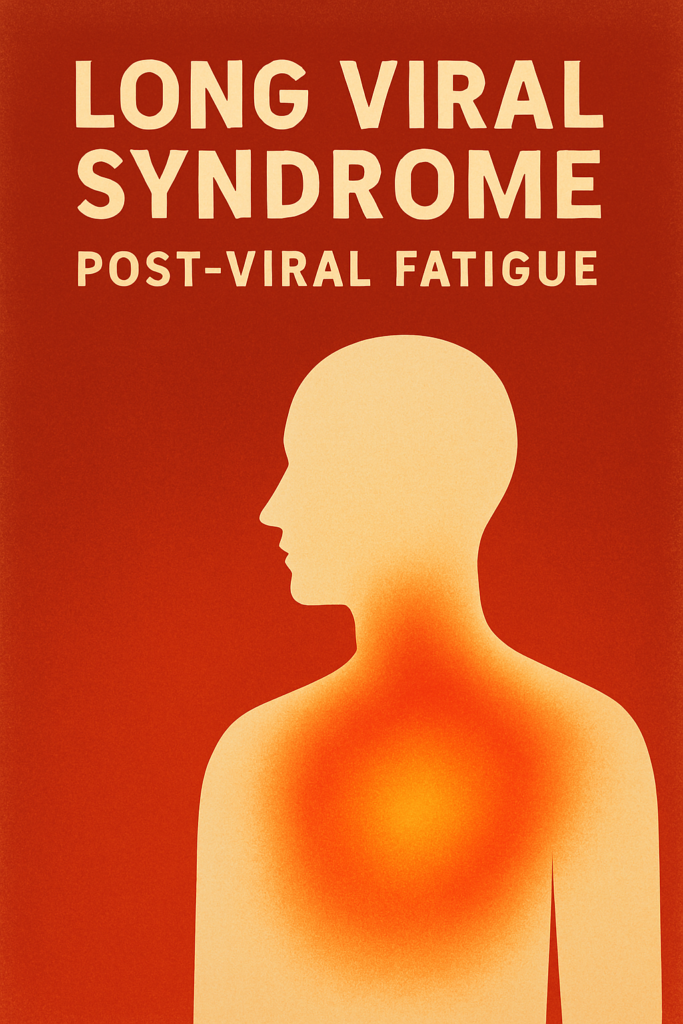
Long Viral Syndrome, sometimes referred to as Post-Viral Fatigue, is commonly described as exhaustion, brain fog, aches, breathlessness and weakness that persist long after an acute illness. Conventional explanations often blame lingering viral fragments or a system that has “not switched off the defence response”. But from a Natural Hygiene viewpoint, this condition is not a mysterious after-effect of infection. It is the body’s structured, intelligent attempt to repair deep internal damage caused by chronic toxicity, prolonged stress and years of energy mismanagement that were present long before the acute episode occurred.
When a person becomes unwell with a strong detox event—what is labelled a virus—the body is already burdened. The acute episode is merely the moment the body finally forces a deeper elimination. If the internal terrain is heavily congested, the body cannot complete this healing crisis in one attempt. Instead of bouncing back, the person remains fatigued because the body is still healing, still detoxifying, and still insisting on rest that the individual may not yet be giving themselves.
Post-viral fatigue is not “post-viral” at all. It is the continuation of the body’s detoxification attempt. The exhaustion is not a defect of energy production; it is an intentional slowing of metabolism to conserve energy for repair. The body deliberately reduces physical capacity so that it can redirect resources toward internal cleansing. In other words, the body knows exactly what it’s doing.
One of the main contributors to Long Viral Syndrome is nervous system exhaustion. For many people, life before the illness involved chronic stress, overstimulation, emotional strain, late nights, stimulants such as caffeine, or prolonged periods without adequate rest. These patterns gradually drain nerve energy. When nerve energy is depleted, the body cannot maintain optimal detoxification, circulation or digestion. This sets the stage for prolonged fatigue after any acute illness. The body continues forcing rest until the nervous system is stable again.
Another major factor is blood toxicity. When the bloodstream is saturated with metabolic waste due to poor diet, stimulants, processed foods or emotional tension, the body initiates a strong elimination process. If the elimination is suppressed—through medication, continued eating during illness, stress or returning to activity too soon—the body cannot complete the process. The result is lingering heaviness, brain fog and aching. These symptoms are the body’s attempt to continue clearing waste at a slower, gentler pace.
Many people with post-viral fatigue experience breathlessness or chest tightness. This is often due to mucus congestion in the lungs and lymphatic stagnation from years of inadequate hydration and shallow breathing. The body is still trying to clear the chest but must do so while conserving energy. It restricts activity to prevent overexertion.
Digestive weakness also plays a role. During a detox crisis, digestion naturally slows. If a person resumes heavy, complex or cooked meals too quickly, the body must divert energy away from healing to deal with digestion. This prolongs the fatigue. The bowels may remain sluggish, the liver overburdened, and the lymphatic system congested. Post-viral fatigue will persist until digestion is simplified and the body is given the chance to reset.
Emotional factors are deeply intertwined with this condition. Many people who develop Long Viral Syndrome carry unresolved stress, grief, trauma or emotional exhaustion. These drain the nervous system and reduce vitality. When the body finally slows down during an illness, these stored emotional tensions surface. The fatigue is partly the body’s attempt to create stillness so that emotional repair can occur.
In Natural Hygiene, the solution is not stimulation, supplements, forcing activity or trying to “boost” anything. These will only prolong the problem by adding more burden to a system already overwhelmed. The body does not need to be pushed; it needs to be heard.
The foundation of recovery is deep, prolonged rest. Not just sleeping more, but truly honouring the body’s request for quiet, stillness and reduced stimulation. This includes withdrawing from stressful environments, lowering mental load and allowing the nervous system to unwind. Many people resist this level of rest because of responsibilities or pressure, but those who surrender to it often recover much faster.
Diet must be simplified. Fresh fruits, leafy greens and water-rich foods lighten digestion and free up enormous energy for healing. These foods also hydrate the tissues, thin the lymph and purify the bloodstream. Heavy meals, cooked fats, animal products and stimulants will prolong symptoms by forcing the body to process additional waste.
Short fasting periods can be transformative. Fasting diverts energy away from digestion and accelerates detoxification. The body clears mucus, metabolic waste and cellular debris far more efficiently when it is not burdened with food. Many individuals experience significant improvement in clarity, breathing and energy after a short fast.
Gentle movement—not strenuous exercise—is beneficial once the body begins to stabilise. Slow walking, stretching and breathwork improve circulation without draining energy. But movement should never be forced. The body will signal clearly when it is ready to increase activity.
Breathwork is particularly powerful. Deep breathing oxygenates the tissues, calms the nervous system and improves lymphatic flow, all of which support recovery.
Above all, Long Viral Syndrome is an invitation to change the lifestyle patterns that allowed the body to become overwhelmed. It is a request for a slower pace, more simplicity and greater alignment with natural rhythms. When these changes are made, the fatigue lifts and vitality returns—not because the symptoms were chased away, but because the cause was finally removed.