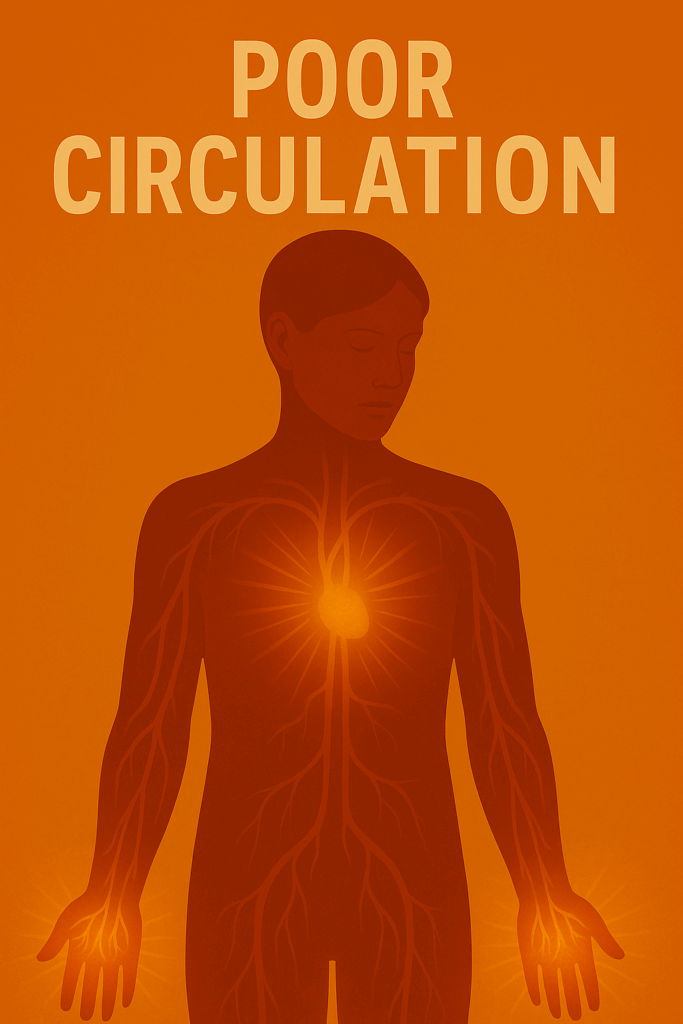
Poor circulation is not a random inconvenience. In Natural Hygiene, it is a sign that the body is struggling to maintain smooth internal flow, warmth and nourishment. Circulation is the body’s transport network. Through blood and lymph movement, every cell receives oxygen, hydration and nutrients, while waste products are carried away. When this movement slows or becomes uneven, symptoms appear. These are the body’s intelligent signals that internal congestion, stagnation or irritants have been disrupting harmony for some time.
People often think of circulation as something controlled mostly by the heart, but the whole body participates. The blood vessels expand and contract depending on temperature, movement and the needs of the tissues. The lungs oxygenate the blood. The muscles help push venous blood upwards. The lymph has no pump and depends entirely on movement and deep breathing. When any part of this system is burdened by poor lifestyle habits, stimulants, dehydration or a lack of rest, the entire flow slows down. The body then expresses this intelligently through symptoms such as cold hands and feet, numbness, tingling, tight muscles, sluggish lymph and slow wound healing.
From a Natural Hygiene viewpoint, poor circulation is not a disease in itself. It is a sign that the internal terrain has become thick, less fluid and harder for the body to move. Blood should flow freely. Lymph should glide effortlessly. When the internal fluids become loaded with waste material that the body has been unable to eliminate, the consistency changes. The body thickens the fluids as a protective measure, and this makes them move more slowly. The result is that tissues receive less nourishment and the nerves do not get the oxygen they need. The body adapts to protect itself, but in doing so it produces sensations that we recognise as poor circulation.
Several lifestyle patterns contribute to this loss of internal flow. Sedentary living is one of the biggest factors. The modern lifestyle involves long periods of sitting, driving and desk work, which means the natural pumping action of the muscles is weak. Muscles act as a second heart, helping to move blood back towards the chest and aiding lymph movement. Without daily movement, fluids simply stagnate. Another major influence is dehydration. Many people live in a chronically dehydrated state due to stimulants, processed foods and inadequate water intake. Dehydration thickens the blood and slows every metabolic process.
Stimulants such as caffeine and nicotine also strain circulation. They cause vessels to constrict, forcing the heart to work harder and making the extremities colder. The body is not malfunctioning; it is responding to a perceived threat. The repeated constriction over time leads to reduced sensitivity, numbness and poor temperature regulation. A common pattern is that someone feels warm immediately after a stimulant, but colder later because the vessels tighten again and the flow reduces.
The lymphatic system plays a major role too. Poor lymph flow often mirrors poor blood circulation. The lymph bathes every cell, collects debris and helps remove waste. If the lymph is sluggish, the tissues become congested and inflamed. Many people notice puffiness, swelling or a heavy, tired feeling in their limbs. These are signs that the lymph has lost its mobility. Because the lymph has no pump of its own, movement becomes the primary driving force. Without it, stagnation builds up gradually until symptoms are noticeable.
Emotionally and energetically, poor circulation reflects a lack of ease, expansion or freedom within the system. Stress tightens the body, alters breathing patterns and reduces oxygenation. People under chronic stress often breathe shallowly, which limits the oxygen intake and reduces the oxygen delivery to the tissues. The body becomes both tense and tired, which is a powerful combination that impedes flow.
Natural Hygiene offers a clear path to restoring circulation. The first step is to allow the body to reduce its internal load. When the body is freed from the task of processing stimulants, heavy foods, oils and irritants, it can gradually thin the blood and restore its natural fluidity. A diet rich in fresh fruits, leafy greens and hydrating foods gives the body the water, electrolytes and natural sugars it needs to improve circulation. Raw fruits in particular have a remarkable ability to hydrate and cleanse the bloodstream.
Movement is essential, not as intense exercise but as consistent daily activation. Walking, gentle rebounding, stretching and bodyweight movement support both blood and lymph flow. Deep breathing practices help oxygenate the blood, relax the nervous system and restore natural rhythms. When people shift from mouth breathing to slow nasal breathing, circulation improves noticeably. This is because nasal breathing activates the diaphragm more effectively, creating a gentle pumping motion in the core that boosts both blood and lymph movement.
Rest and sleep are equally important. The circulatory system repairs and regenerates most effectively when the body is in deep rest. Poor sleep naturally leads to poor circulation because the body has less time to perform maintenance. Light, early dinners, reduced screen time and a consistent sleep schedule support the circulatory system as much as diet and movement.
Cold hands and feet, tingling limbs or poor temperature control are not failures of the body. They are messages that the internal terrain needs cleansing, movement and hydration. When people remove the burden and return to natural living, these symptoms often improve dramatically within weeks. The body wants to move. The body wants flow. And when we provide the conditions for it, circulation becomes smooth, warm and energising again.