
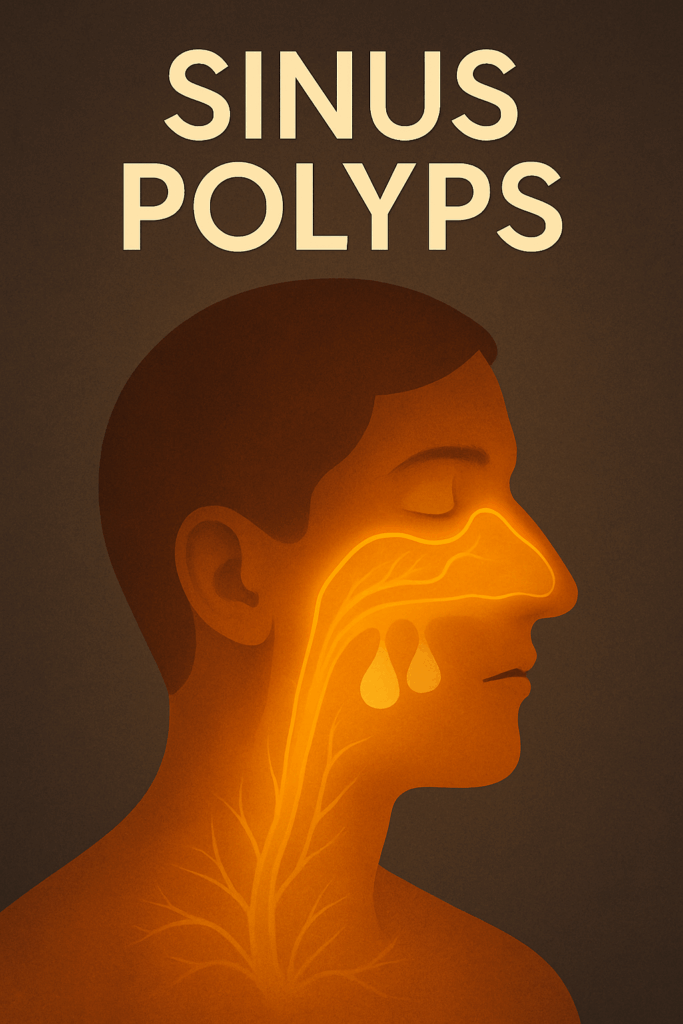
Sinus polyps are often described as small growths inside the nasal passages or sinus cavities, usually blamed on chronic inflammation or recurring infections. But through the Natural Hygiene lens, these soft, swollen tissues are not random growths. They are deliberate responses created by the body to protect itself from long-term irritation, stagnation, or toxic overload within the sinus and respiratory system. Sinus polyps are not the cause of the problem. They are the result of the body trying to cope with unfavourable internal conditions.
The sinuses are delicate, air filled chambers linked directly to breathing, smell, filtration, and pressure regulation. They are lined with mucous membranes that act as the first defence against dust, pollution, smoke, irritants, chemicals, and residues from the foods we eat. When these membranes become overwhelmed, the body increases mucus production to trap and eliminate what should not be there. If this irritation becomes chronic, the membranes swell to protect deeper tissues. Over time this swelling forms what are known as polyps.
From the Natural Hygiene perspective, sinus polyps are signs of congestion and stagnation. The internal terrain has become thick, damp, and inflamed. The body has reached a point where the normal cycles of mucus production and drainage are no longer enough to keep the system clear. When waste cannot exit properly, the membranes thicken and form protective pockets. This is the body adapting to a burden it is struggling to manage.
One major cause of sinus polyps is diet. Heavy foods such as dairy, breads, cooked fats, processed meals, and anything mucus forming load the body with substances that are difficult to break down and eliminate. The sinuses become a major outlet for this waste. Every time a person eats foods that create congestion, the body sends excess mucus to the sinuses to push the material out. When this continues for months or years, the environment becomes a perfect breeding ground for swelling, blockages, and polyp formation.
Environmental irritants are another contributor. Pollutants, synthetic fragrances, mould, smoke, and chemical cleaning products all irritate the mucous membranes. The sinuses are highly sensitive and become inflamed quickly when exposed repeatedly. The body creates polyps as a cushion to shield deeper tissues from ongoing irritation. These polyps often appear after long periods in environments where the air is stagnant, recycled, or polluted.
Emotional stress also plays a role. The sinuses are part of the respiratory system, which is directly influenced by nervous tension. When a person lives in a state of constant pressure, shallow breathing becomes normal. The body receives less oxygen, circulation becomes sluggish, and the sinuses lose their natural ventilation. A poorly ventilated system becomes stagnant, providing the perfect setting for chronic swelling. Stress also weakens elimination pathways, causing more internal waste to be pushed towards the respiratory passages.
From the Natural Hygiene view, sinus polyps are not something to fight or remove. They are signs that the body is working hard to protect delicate tissues. Healing begins not with cutting them out but by addressing the conditions that caused them in the first place.
The first step is to lighten the internal load. A mucus free diet is key. Fresh fruits, leafy greens, raw juices, and hydrating foods help dissolve thickened mucus and reduce inflammation. Removing dairy, wheat, processed foods, and heavy fats allows the body to redirect its energy towards clearing the sinuses. The body cannot clean effectively when the diet is still producing the very substances that created the congestion.
Hydration is essential. Clean water helps thin mucus, increases lymph flow, and allows the body to move waste more freely. Many people with sinus issues unknowingly live in a state of mild dehydration. When the body lacks water, mucus becomes thick and sticky, leading to blockages. Hydration helps reverse this.
Breathing clean air is vital. Spending time outdoors, especially in natural environments, helps ventilate the lungs and sinuses. The fresh air stimulates circulation and encourages natural drainage. Sleeping with windows slightly open, avoiding synthetic fragrances, and keeping living spaces clean all support healing.
Rest is another core pillar. Sinus polyps often appear in people whose bodies have been overworked for long periods. Rest allows inflammation to decrease and gives the body the space to normalise its internal pressures. Deep sleep in a clean environment has a powerful effect on sinus health.
Gentle movement also helps. Walking, stretching, and breathing exercises improve circulation to the head and face, reducing stagnation. The sinuses depend on circulation to stay healthy. When blood and lymph move freely, swollen tissues begin to shrink naturally.
Sinus polyps are not permanent. They reflect the body’s incredible ability to protect itself. When the internal terrain is cleaned, hydrated, ventilated, and restored, the polyps often reduce or disappear completely. Natural Hygiene reminds us that the body is always on our side. It never acts without reason. When we remove the irritants and burdens that forced the body into defence mode, healing becomes not only possible but expected.