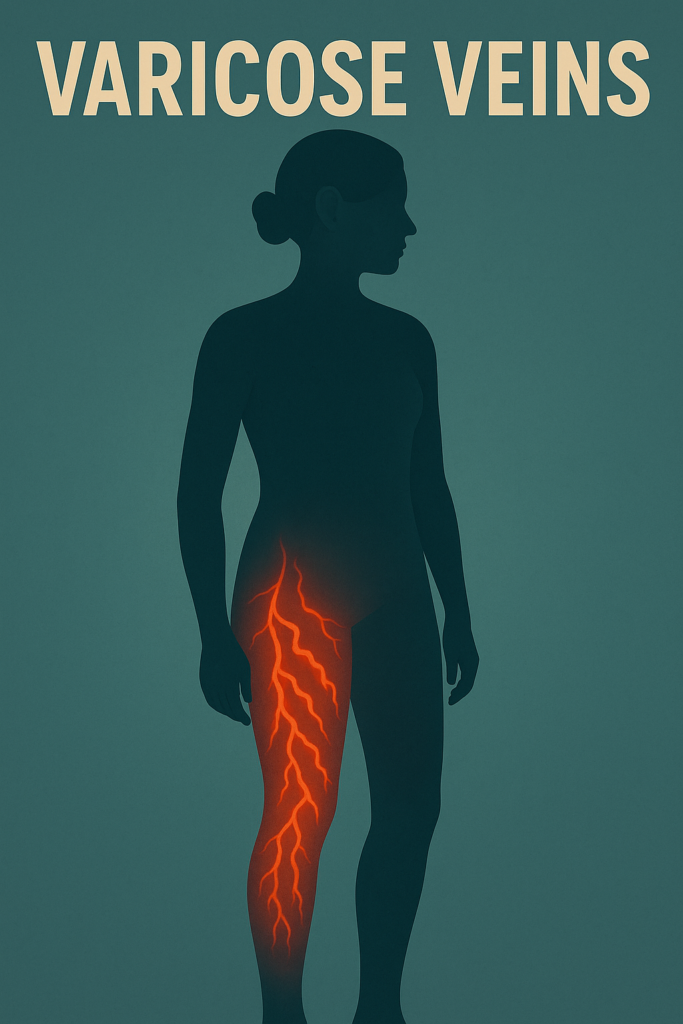
Varicose veins are often seen as a cosmetic issue or an inevitable part of ageing, yet from a Natural Hygiene perspective they reveal a deeper story about circulation, internal congestion and the body’s need for improved flow. Veins are responsible for returning blood to the heart, working against gravity, particularly in the legs. When the internal terrain becomes thick, stagnant or dehydrated, the veins struggle to maintain smooth upward movement. The result is pooling, pressure and the characteristic swelling that becomes visible through the skin. This is not a malfunction. It is the body signalling that circulation is under strain and needs support.
Healthy blood flow depends on several factors: hydration, movement, relaxed muscles, proper breathing and clean blood of the right consistency. When the body is burdened with heavy foods, stimulants, oils, processed fats or dehydration, the blood becomes thicker and more difficult to move. The veins widen and stretch in an attempt to compensate. Over time, these stretched veins lose their elasticity, and valves that normally prevent backflow become less effective. This allows blood to settle in the lower limbs, creating the appearance and discomfort of varicose veins.
The lymphatic system is also deeply involved. The lymph runs parallel to the veins, removing waste from tissues and supporting fluid balance. When the lymph becomes stagnant due to lack of movement, dehydration or internal toxicity, fluid accumulates in the legs. This increases pressure on the veins and weakens their structure. Many people with varicose veins also experience heaviness, swelling or aching legs, which are signs of lymphatic burden as much as venous strain.
Movement is essential for venous health. The calf muscles act as a natural pump, squeezing the veins and helping push blood upwards. Modern living, with long periods of sitting or standing still, deprives the legs of this vital pumping action. Without regular contraction and release, blood stagnates, and veins become engorged. This is why varicose veins are common among those who work long hours at desks, in kitchens, or in static standing roles. The veins are not failing; they are operating without the muscular support they were designed to have.
Hydration plays a major role too. When the body lacks sufficient water, the blood thickens and flows more slowly. Dehydration also affects the elasticity of the vein walls, making them more prone to stretching. True hydration comes not merely from drinking water, but from eating high-water foods such as fruits, leafy greens and fresh juices. These foods deliver water that the body can use immediately, improving circulation and reducing strain on the veins.
Acidity and irritation within the body also influence varicose veins. Acid-forming foods require the body to buffer them, and this buffering often involves drawing minerals from the tissues. Over time, this weakens the connective tissue that supports the veins. When the tissues are weak, veins become more visible and more likely to bulge. A fruit-rich, raw, hydrating diet helps restore mineral balance and strengthen tissue integrity.
Breathing patterns affect venous return too. Shallow breathing, chest breathing and mouth-breathing reduce the natural pressure changes that help draw blood back toward the heart. Deep diaphragmatic breathing, however, acts like an internal pump. Each slow breath enhances circulation and lymph flow. Many people notice that their legs feel lighter simply by incorporating more deep breathing into their daily routine.
Emotionally, varicose veins can reflect a sense of stagnation or pressure. The legs represent movement and direction in life. When someone feels overwhelmed, burdened or stuck, the body may express this through heaviness in the lower limbs. Chronic stress tightens the muscles, restricts breathing and slows circulation. The veins, once again, are responding to the internal environment, not acting independently.
Natural Hygiene teaches that varicose veins are best improved through the restoration of natural flow. Fasting or simplifying the diet gives the bloodstream a chance to clear accumulated waste, allowing the veins to recover some elasticity. Hydrating foods thin the blood naturally, reducing pressure on the vein walls. Regular gentle movement, such as walking, stretching or rebounding, helps pump blood and lymph upward. Rest with the legs elevated can also offer relief by allowing pooled blood to drain.
It is important to understand that the body never works against itself. Varicose veins are a compensation. They widen because they are trying to move thick, stagnant blood through a system under strain. They bulge because the pressure inside them is too high. When we correct the underlying causes, the body needs less compensation. Veins may not return fully to their original appearance, but discomfort, swelling and heaviness can reduce significantly, and progression often slows or stops entirely.
Cold showers, contrast bathing and gentle massage can also support circulation, although these should be approached with awareness. Anything that stimulates excessive contraction may be uncomfortable for sensitive tissues. However, mild practices that encourage flow without shock can be beneficial.
Varicose veins remind us that the body thrives on movement, hydration and lightness. They are not a sign of weakness but a sign that the internal tide needs help rising again. When we support the body with fruit, rest, hydration, breathing and gentle activity, the legs become lighter, the veins calmer, and circulation more harmonious. The body always seeks balance, and varicose veins are one of the ways it asks for support in restoring it.