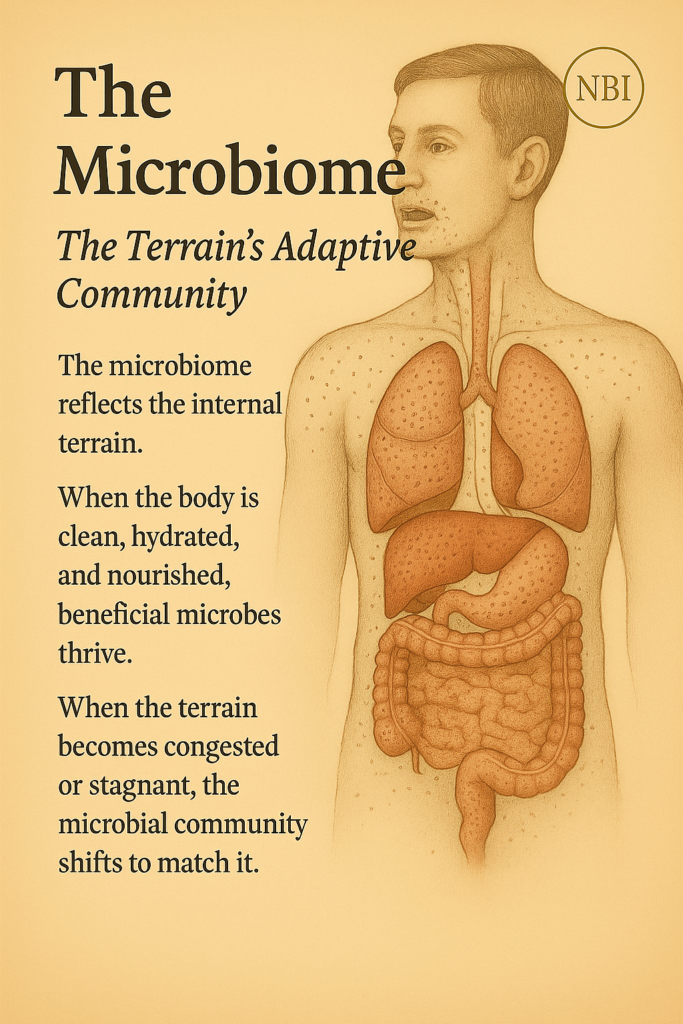
The microbiome system refers to the vast collection of microorganisms that live on and within the human body — primarily in the digestive tract, but also on the skin, in the mouth, and throughout other surfaces. In Natural Hygiene, the microbiome is not seen as a controlling force or a primary driver of health, but as a supporting cast that adapts to the internal environment we create. Microbes thrive in conditions that suit them. When the terrain is clean, hydrated, and nourished with natural foods, the microbial community reflects harmony. When the terrain is congested, acidic, stagnant, or overloaded, the microbial community shifts to match it.
The microbiome does not determine health; it mirrors it. Bacteria, yeasts, and other organisms change according to the chemistry of the body. This is why microbiome “imbalances” are not random infections or invaders — they are responses to an internal environment that has become unsuitable for normal function. Natural Hygiene views microbial action as an adaptive, supportive process rather than an external attack.
The Microbiome Reflects the Terrain, Not the Other Way Around
Modern health models often suggest that microbes cause disease. Natural Hygiene offers a clearer understanding: microbes assist the body in breaking down waste when the internal environment requires it. They proliferate when needed and recede when the body is clean and functioning well.
When the bloodstream and digestive tract are clean, oxygen-rich, and supplied with natural foods, microbes that support harmony flourish — those that break down waste are minimal because there is little waste to process. When the diet becomes heavy with cooked fats, oils, proteins, processed foods, alcohol, medication residues, or emotional tension chemistry, the digestive environment becomes more suitable for microbes that assist in decomposition.
These organisms are not harming the body; they are helping to break down material the body cannot handle.
The Role of Microbes in Digestion
Microbes assist in breaking down fibrous material and fermentable food substances, especially when digestion is sluggish or overloaded. When meals are simple and natural, digestion is quick and efficient, leaving minimal residue for microbes to act upon.
But when meals are heavy or poorly combined, microbes increase their activity to deal with undigested food. This leads to gas, bloating, odours, and fermentation. These are not signs of attack but signs that the digestive system is struggling with the material provided.
Natural Hygiene teaches that the solution is not to manipulate microbes through probiotics or supplements, but to change the conditions so that the digestive tract no longer requires microbial overactivity.
Microbes and Detoxification
When the body enters detoxification — through improved diet, fasting, or rest — the microbiome shifts accordingly. Microbes that help dismantle waste multiply temporarily because their role is needed. This is not infection; it is detox support.
Many detox symptoms are simply microbial activity assisting in breaking down accumulated material:
- Coated tongue
- Changes in stool
- Temporary bloating
- Stronger odours
- Skin eruptions
These signs indicate the internal terrain is changing, and microbes are adjusting along with it.
Why Probiotics and Interventions Miss the Point
Natural Hygiene emphasises that microbes cannot be controlled from the outside. Taking probiotics, antimicrobial herbs, cleanses, or fermented products attempts to manipulate a system that already knows how to organise itself.
The microbiome adapts to:
- What you eat
- How you digest
- The cleanliness of your blood
- The level of stress
- The amount of sleep and rest
- Hydration from natural foods
- Emotional state
Artificially altering microbes without changing the terrain is like sweeping leaves while the tree is still shedding.
Food and the Microbiome: Fuel Determines the Community
Microbes feed on what you feed your body.
When you eat:
- Fruits
- Leafy greens
- Water-rich vegetables
…you support microbes that thrive in clean, oxygenated conditions, producing minimal waste.
When you eat:
- Cooked fats
- Animal products
- Processed carbohydrates
- Fermented or decomposing foods
- Heavy mixed meals
- Stimulants
…you support microbes that assist in breaking down heavier material, producing more by-products and gas.
The microbiome’s composition simply reflects the type of fuel entering the system.
Emotional Influence on Microbial Activity
Emotions have a biochemical signature. Stress creates hormones that acidify the body and slow digestion. Slower digestion leads to increased microbial fermentation. Calmness, rest, and emotional clarity, on the other hand, support digestive ease and reduce microbial overactivity.
This is why emotional healing often improves digestion without changing a single food.
Fasting: Microbial Reset and Internal Clarity
During fasting, the microbiome undergoes a profound shift. With no food arriving, microbial populations naturally reduce, and the body uses the time to cleanse the digestive tract, repair tissue, and rebalance internal chemistry.
After fasting, when natural foods are reintroduced, microbes repopulate in a pattern that matches the cleaner terrain.
The Microbiome’s Message
Microbial changes are not threats. They are signals. They say:
- “This environment needs cleansing.”
- “Digestion is overloaded.”
- “The diet is too heavy.”
- “The internal chemistry is shifting.”
- “I am helping process material that should not be here.”
When the terrain is restored through natural living, the microbiome becomes harmonious without any intervention.
The body is always self-organising — microbes simply follow the internal conditions you create.