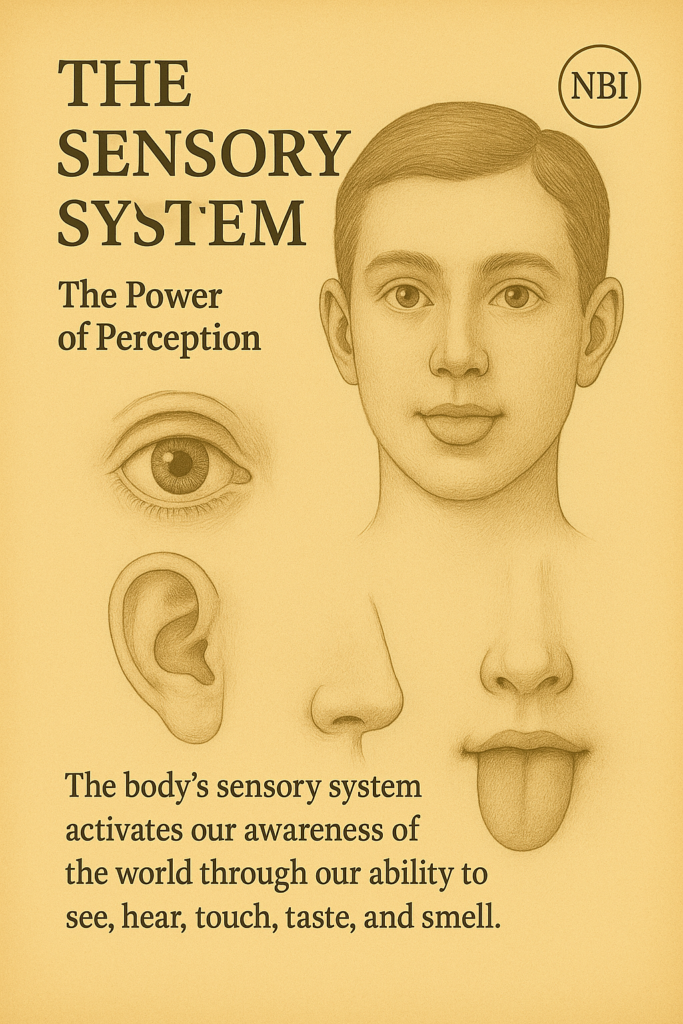
The sensory system allows us to perceive the world — to see, hear, smell, taste, touch, and maintain balance. These senses are not passive. They are living extensions of the nervous system, constantly interpreting the environment and guiding our choices. In Natural Hygiene, the senses are seen as finely tuned instruments that require purity, calm, and healthy blood flow to function optimally. When the internal environment becomes congested or the nervous system is overstimulated, the senses become dulled, distorted, or overly reactive.
The sensory organs — eyes, ears, nose, tongue, skin, and inner ear balance structures — depend on clean blood, proper oxygenation, emotional calm, and stable nerve communication. They are among the first systems to show signs of internal imbalance because they are highly sensitive and require precision. Blurred vision, ringing ears, dizziness, loss of taste or smell, light sensitivity, sound sensitivity, or reduced touch sensation are not random malfunctions. They are messages that the body’s internal environment needs rest and clarity.
The Eyes: A Window Into Blood Quality
Vision depends on clean blood and relaxed nerves. The eyes have one of the highest metabolic rates in the body and require a constant supply of oxygen and nutrients. When the bloodstream becomes thick with metabolic waste, toxins, processed foods, or residues from cooked fats, the tiny vessels in the eyes become congested. This can lead to:
- Blurred vision
- Dryness
- Itching
- Eye strain
- Sensitivity to light
- “Floaters”
- Redness
Natural Hygiene teaches that these symptoms arise when the eyes are receiving blood that is overloaded or difficult to circulate. Instead of blaming the eyes, we look at the internal environment. Light, water-rich foods — especially fruits — improve circulation and oxygen flow, helping restore visual clarity.
Hearing: The Body’s Sensitivity to Internal Pressure
Hearing depends on a delicate balance of fluid, nerve energy, and unobstructed circulation. Ringing in the ears, muffled hearing, or sensitivity to sound often reflect internal congestion or nervous overstimulation.
Stimulants (caffeine, alcohol, nicotine), stress, and processed foods create biochemical pressure that affects the inner ear. Thick blood and sluggish circulation reduce oxygen flow to the auditory nerves.
Tinnitus, for example, is commonly a sign of systemic overload. Natural Hygiene understands it not as a disease of the ears but as a sign of internal pressure — physical or emotional — that needs to be relieved.
Taste and Smell: Detox Channels in Disguise
The senses of taste and smell are deeply connected to detoxification. When the body is cleansing, the tongue may become coated, taste may become metallic or dull, and smells may seem unusually strong. This is not illness but detox signalling.
Heavy foods, medications, stimulants, and environmental chemicals dull these senses because the nerves and mucous membranes become coated with residues.
When the diet becomes simple and natural, many people notice:
- A clean tongue
- Improved taste sensitivity
- Stronger, clearer sense of smell
- Greater pleasure in natural foods
This is a sign that the sensory nerves are recovering.
Touch: A Reflection of Circulation and Nerve Clarity
Touch sensation depends on nerve health, hydration, and blood flow. Tingling, numbness, or reduced sensitivity often reflect compression from muscle tension, thick blood, or poor circulation caused by a heavy diet and emotional stress.
When the body relaxes and the blood becomes cleaner, touch sensations sharpen because the nerves are no longer suffocated by internal congestion.
Balance: The Inner Ear’s Need for Calm
The vestibular system — responsible for balance — is extremely sensitive to internal chemistry. Dizziness, vertigo, or unsteadiness occur when:
- Blood is too thick
- The nervous system is overstimulated
- The body is fatigued
- Emotional stress is high
- Digestion is overloaded
- The body is detoxing
Again, these symptoms are not “faulty balance organs” but indicators that the body has shifted energy towards deeper healing, leaving fewer resources available for fine-tuned sensory processing.
Stimulants and Screens: Two Major Sensory Disruptors
Natural Hygiene highlights two modern issues that strain the senses:
- Stimulants
They overstimulate the nervous system, tightening muscles, reducing blood flow, and placing pressure on sensory pathways. - Screens and artificial environments
Excessive screen use compresses posture, strains the eyes, disrupts natural light rhythms, and overactivates the visual cortex.
Sensory fatigue often follows: eye strain, headaches, mental fogginess, and reduced emotional presence.
The senses heal rapidly when exposure to these stressors is reduced.
Rest, Fasting, and Sensory Renewal
When the body is deeply rested — especially during fasting — the senses often sharpen dramatically. This is because:
- The bloodstream becomes cleaner
- Nerve energy becomes steadier
- Circulation improves
- Internal pressure reduces
- The mind becomes calmer
Many people report brighter colours, heightened taste, clearer sound perception, and a stronger connection to their environment during or after fasting. The senses are returning to their natural clarity.
The Sensory System’s Message
Every sensory symptom is communication:
- The blood is overloaded
- The nerves are fatigued
- The lifestyle is too stimulating
- The internal environment needs clarity
- The mind needs rest
When we return to natural living — fresh fruits, simple meals, sunlight, rest, fresh air, emotional calm, reduced stimulants — the sensory system responds quickly.
The body always moves toward clarity when we remove the causes of overload.