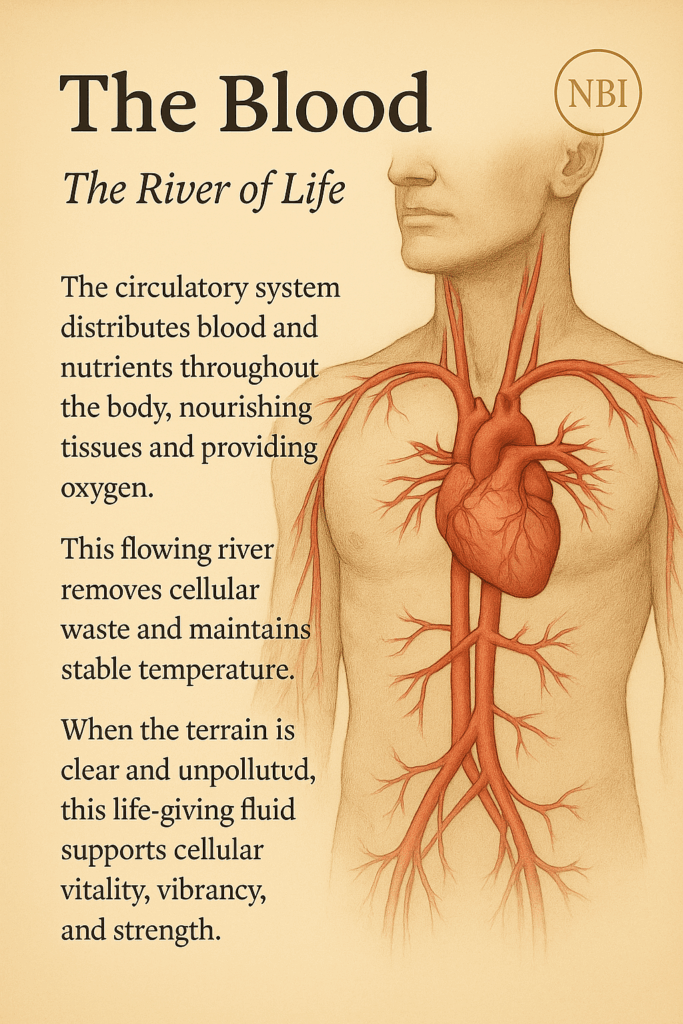
The blood and circulatory system form the great river of life within the body. Every cell depends on it. Through this flowing network, the body transports nutrients, delivers oxygen, removes metabolic wastes, and distributes signals that keep all tissues working in harmony. In Natural Hygiene, the circulatory system is understood as a responsive, self-regulating design that constantly adapts to the internal environment we create. If the blood becomes overburdened or thickened with waste, the body responds with symptoms to protect itself and maintain balance.
Because the circulatory system touches every corner of the organism, it is often the first to show signs of stress when a person lives in ways that conflict with natural biological principles. Yet it is also one of the fastest systems to improve when we restore proper living habits. The blood reflects exactly what we give the body. When we provide fresh air, clean water, rest, sunlight, movement, and natural foods, the blood becomes cleaner, lighter, and easier to circulate. When we overload ourselves with processed foods, stimulants, oils, stress, lack of sleep, and toxic living conditions, the blood must carry the consequences.
Blood: A Living Fluid That Mirrors Lifestyle
Blood is not simply a red liquid. It is a living, dynamic fluid containing plasma, proteins, minerals, hormones, glucose, and specialised cells. Natural Hygiene views the blood as an immediate reflection of the choices a person makes. If the blood contains excess metabolic waste, chemical residue, acids, fats, or toxins from inappropriate foods, it thickens. Thick blood moves more slowly, making the heart work harder and reducing the ease with which oxygen and nutrients reach the cells.
Many of the symptoms people label as “poor circulation” actually arise from years of burdening the bloodstream with foods and habits that the body was never designed to process in large quantities. Cooked fats, oils, animal products, processed starches, alcohol, stimulants, medication residues, and environmental toxins all enter the bloodstream and require the body to work harder to maintain clarity and flow.
In Natural Hygiene, the blood is understood as the transport medium of life. It must stay clean for the whole body to function well. When the blood becomes congested or sluggish, the body uses various signs to communicate: cold hands and feet, heaviness in the legs, headaches, heart strain, and slow healing of tissues.
The Heart: A Responsive Pump, Not a Machine That Breaks Randomly
The heart is often presented as a fragile mechanical device that can fail without reason. Natural Hygiene rejects this view. The heart is a resilient, adaptive muscle that responds with astonishing precision to the body’s requirements. It pumps harder when the lifestyle demands it. It slows down when the body is at rest. It increases output during exercise or stress and restores calmness during sleep.
When the heart becomes strained, it is not because it has become “faulty”. It is because it has been asked to compensate for poor living conditions for too long. Thick blood, clogged channels, chemical stimulants, emotional tension, overeating, dehydration, and lack of proper rest all increase the workload on the heart. The heart simply responds to the conditions it is given.
Circulation and Oxygen: Breath as a Key to Blood Health
The blood’s main job is to deliver oxygen. Without oxygen, no healing, cleansing, or regeneration can happen. Natural Hygiene has always emphasised the importance of fresh air and proper breathing. When breathing is shallow or restricted due to stress, poor posture, lack of movement, or a stagnant lifestyle, the oxygen content in the blood drops.
This forces the body to compensate in several ways:
- The heart beats faster to deliver more oxygen.
- The blood vessels constrict or dilate to redirect flow.
- The body shifts energy away from healing and towards survival.
Simple practices like deep breathing, fresh outdoor air, movement, and improving posture can dramatically improve blood oxygen levels, circulation, and overall vitality.
Digestion and the Blood: How Food Affects Flow
Every meal enters the bloodstream in some form once digested. Natural foods like fruits, leafy greens, and water-rich vegetables support clean blood because they leave minimal metabolic residue. They digest quickly, move through the system smoothly, and contain minerals that keep the blood alkaline and free-flowing.
Large meals, overeating, food mixing errors, heavy cooked foods, and fatty or oily meals create a very different outcome. These foods slow digestion, produce chemical waste, and leave behind substances the body must neutralise and remove. These burdens enter the bloodstream and reduce its clarity.
Natural Hygiene teaches that clean blood is the foundation of healing. When the blood is clear, circulation improves, tissues oxygenate properly, and the body can direct energy towards repair rather than emergency management.
Rest, Sleep, and Emotional Calm: Hidden Keys to Healthy Circulation
Many people overlook the influence of emotions and rest on the blood. Chronic stress creates chemical changes that thicken the blood and elevate its pressure. Emotional tension leads to constricted vessels, rapid heartbeat, and turbulence within the bloodstream. Sleep deprivation reduces the body’s ability to clean and rebalance the blood.
When a person adopts calmer habits, rests deeply, and removes sources of emotional pressure, circulation naturally improves. Blood vessels soften, the heart rate lowers, and the entire circulatory network becomes more efficient.
The Body’s Drive for Clean, Free-Flowing Blood
Natural Hygiene teaches that the body is always trying to restore harmony. The circulatory system is no exception. When we remove the causes of congestion and provide the conditions for health — fresh food, proper hydration, rest, natural movement, sunlight, clean air, and emotional stability — the blood becomes cleaner, the heart works with ease, and circulation becomes strong and natural.
Symptoms are not failures. They are the body asking for change. When we listen, the circulatory system responds quickly and beautifully.