Watch: The Endocannabinoid System
In this Natural Body Intelligence video, Steve explains the endocannabinoid system and its role in internal balance and regulation.
Endocannabinoid System: The Body’s Call for Balance, Ease, and Internal Regulation
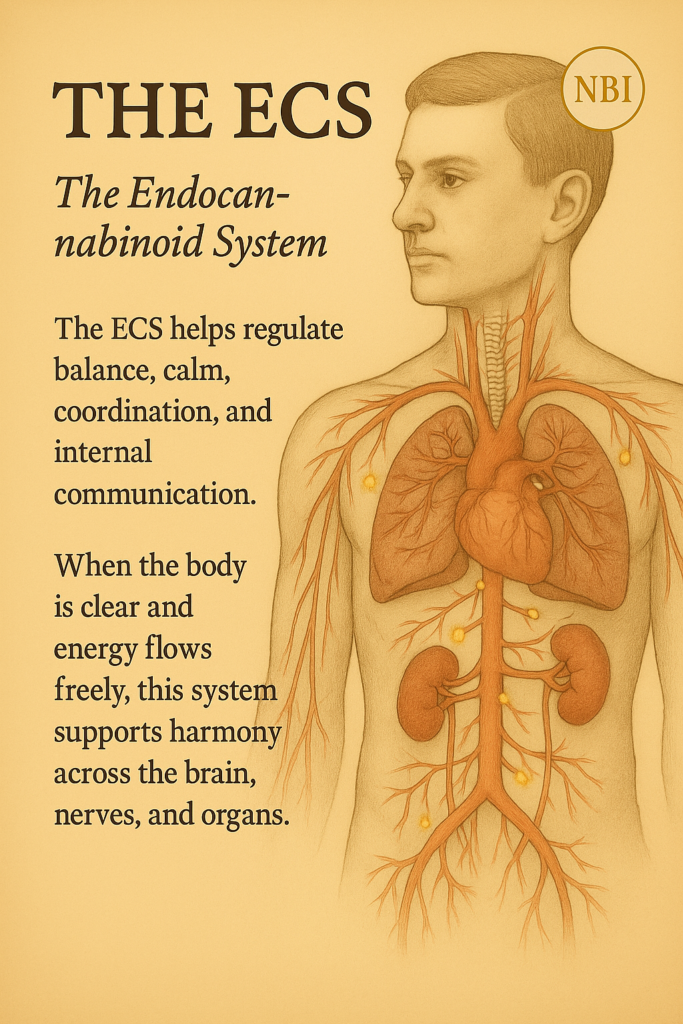
The endocannabinoid system (ECS) is one of the most overlooked yet essential regulatory networks in the human body. In Natural Hygiene, the ECS fits into the principle that the body is always striving for balance when the conditions of health are met. The ECS acts as a balancing mechanism, helping regulate mood, appetite, sleep, pain perception, temperature, and overall physiological harmony. It links the nervous system, digestive system, hormonal system, and emotional state into one communication network.
This system is not driven by external substances; it is an internal, self-regulating design. The body produces its own cannabinoids — chemical messengers — that help maintain equilibrium across multiple tissues. When lifestyle conditions support rest and regulation, the ECS can perform its signalling roles. When the body is under persistent stress, stimulation and lack of rest, symptoms may reflect wider internal imbalance.
What the ECS Actually Does
The ECS is made up of three parts:
- Endocannabinoids – the body’s natural signalling molecules.
- Receptors (CB1 and CB2) – found throughout the brain, organs, nerves, skin and other tissues.
- Enzymes – which help build and break down these signalling molecules.
The ECS is involved in emotional regulation, pain sensitivity, stress responses, appetite and digestive rhythm, sleep, motivation and mood, hormonal signalling, temperature control, and recovery from exertion or strain.
Lifestyle and ECS Function
In Natural Hygiene, the ECS is another example of how closely lifestyle and biology interact. Sleep quality, emotional strain, fresh air, sunlight, food choices, digestive demand, stimulation, movement and the balance between activity and rest all influence the wider conditions in which the body regulates itself.
Stress and ECS Regulation
Chronic emotional, mental or physical stress affects the nervous system and the signalling networks that help regulate the body. Changes may be experienced as anxiety, irritability, low mood, disturbed sleep, altered pain sensitivity, appetite changes, digestive irregularity or the familiar feeling of being “wired but tired”. These experiences are useful signals to look at the conditions surrounding the body rather than viewing each symptom in isolation.
Food, Movement and the ECS
Food, movement, sunlight and the daily rhythm of activity and rest form part of the environment in which the ECS operates. Natural Hygiene emphasises simple foods, avoiding unnecessary stimulation, appropriate movement and adequate rest rather than attempting to manipulate individual pathways in isolation.
The ECS and Pain
Pain perception is influenced by the ECS alongside the nervous system and many other physiological processes. Natural Hygiene treats pain as information from the body rather than simply an isolated problem to suppress. This makes the ECS particularly relevant when looking at pain, stiffness and inflammation as broader patterns.
Sleep and the ECS
Sleep is deeply connected with regulatory processes throughout the body. When sleep is repeatedly disrupted by stimulation, late eating, stress or an irregular routine, those regulatory rhythms can also be disrupted. See sleep and circadian disruption for a wider look at the signals the body may produce when this rhythm is disturbed.
Fasting, Rest and Internal Regulation
Natural Hygiene uses fasting in appropriate circumstances as a period of physiological rest rather than as a treatment aimed at one particular pathway. Reducing digestive demand can change how the body allocates its resources, which is why fasting is considered alongside sleep and rest rather than as an isolated technique. Read more about rest and fasting.
The Body’s Message Through the ECS
Mood shifts, sleep disturbances, appetite changes, altered pain perception and stress reactions can all be viewed in the wider context of regulation. Rather than treating the ECS as an isolated switch, Natural Hygiene looks at the whole environment in which the body is functioning and asks what conditions may need to change.