
Watch: The Endocrine System
In this Natural Body Intelligence video, Steve gives a concise overview of the endocrine system and the way hormones coordinate activity throughout the body.
The Endocrine System: Hormonal Communication, Adaptation and the Natural Hygiene Terrain
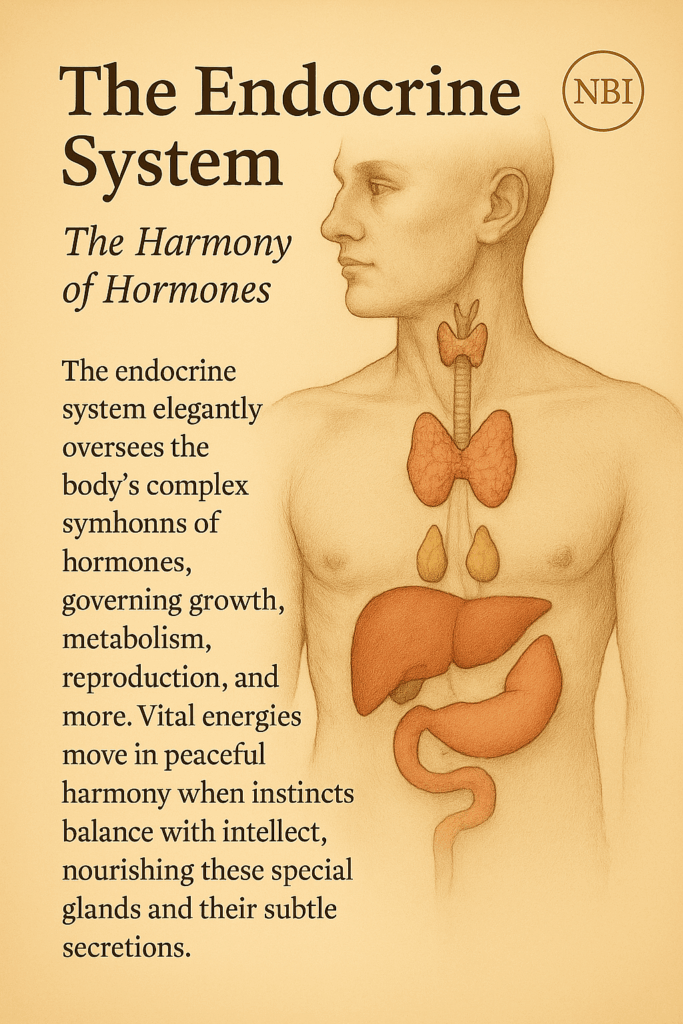
The endocrine system is a network of glands and tissues that use hormones as chemical messengers. Hormones help coordinate metabolism, growth, reproduction, stress responses, sleep-wake rhythms, fluid balance and many other functions.
Hormones Are Part of a Responsive System
Hormone concentrations are not supposed to remain fixed. They change with time of day, meals, activity, sleep, pregnancy, menstrual cycles, stress and many other circumstances. Feedback loops continually adjust hormone production according to information arriving from elsewhere in the body.
This provides a strong physiological basis for Natural Hygiene’s emphasis on adaptation and self-regulation. The body is constantly responding to its internal and external environment.
The Glands Work as Networks
The pituitary and hypothalamus communicate with glands including the thyroid, adrenals and reproductive organs. The pancreas regulates metabolic fuels through hormones including insulin and glucagon, while the pineal gland produces melatonin as part of circadian timing.
Natural Hygiene is therefore right to resist viewing every gland in isolation. But a whole-body perspective does not mean every measured hormonal abnormality is merely a healthy compensation. Glands can be damaged, hormone production can become excessive or deficient, and feedback systems can become disrupted.
Stress, Sleep and Hormonal Signalling
Stress activates hormonal pathways involving cortisol and adrenaline, while sleep and circadian timing influence many hormones. Repeated sleep disruption and chronic stress can therefore affect appetite, glucose regulation, reproductive function and how someone feels.
This is a useful physiological foundation for Natural Hygiene’s concept of enervation: continual demands without adequate recovery can influence multiple systems at once. It is more precise than saying the adrenal glands remain permanently switched on or the thyroid has to work harder simply because someone is emotionally stressed.
Food and Metabolic Terrain
Meals naturally produce hormonal responses. Insulin rises after carbohydrate-containing food, digestive hormones respond to nutrients entering the gut and appetite signals change throughout the day. These are normal adaptations rather than evidence that eating repeatedly “exhausts” the glands.
Over the longer term, dietary pattern, physical activity, body composition and sleep can influence insulin sensitivity and metabolic health. Natural Hygiene’s focus on whole foods, movement and avoiding continual overstimulation therefore fits well within a broader metabolic-terrain model.
Rest, Circadian Rhythm and Recovery
Regular sleep and appropriate light exposure help maintain circadian rhythms. Sleep is not a moment when the endocrine system simply resets to zero; hormones continue to be actively regulated throughout the night. Rest remains biologically important because recovery itself is an active physiological state.
Fasting and Hormonal Change
Fasting produces genuine endocrine adaptations: insulin generally falls, glucagon and other signals change, and the body shifts towards stored fuels. This provides a real physiological basis for Natural Hygiene’s interest in fasting and metabolic rest.
Those changes should not be described as all endocrine glands shutting down to cleanse or automatically “resetting” hormonal disorders. Fasting can be inappropriate in pregnancy, eating disorders, undernutrition and some medical conditions, and it requires particular caution with glucose-lowering medicines.