The Nervous System: Communication, Protection and the Natural Hygiene Terrain
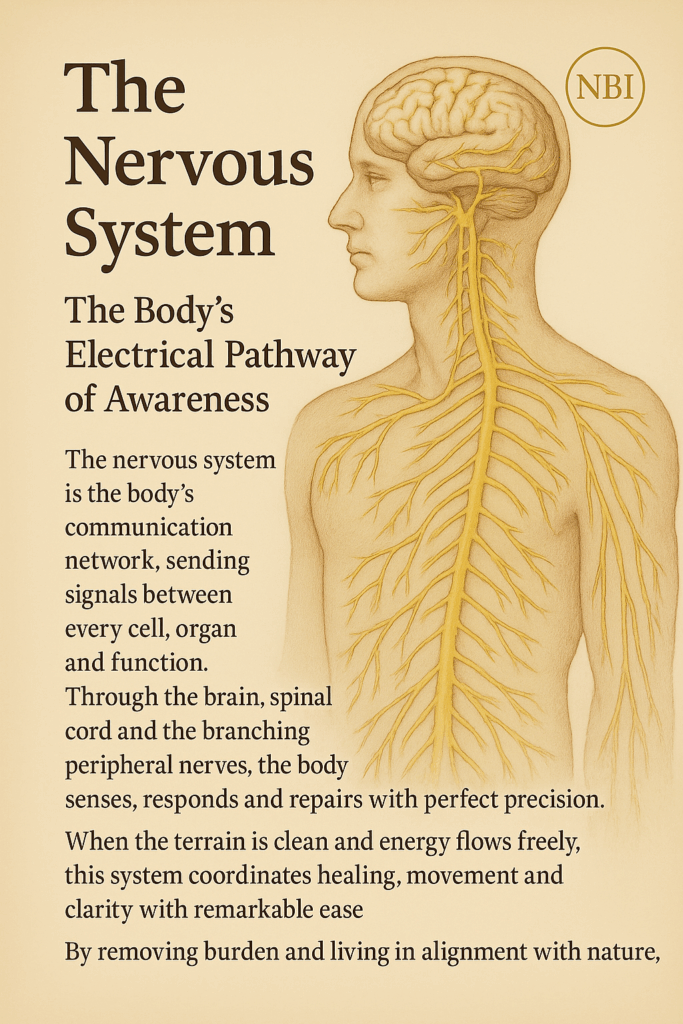
The nervous system is the body’s rapid communication and control network. The brain, spinal cord and peripheral nerves continually receive sensory information, coordinate movement and regulate functions ranging from attention and memory to heart rate and digestion.
Symptoms Can Be Protective Signals
Pain, fatigue, dizziness and changes in arousal can alter behaviour and sometimes protect us from further strain. This gives Natural Hygiene’s principle that symptoms deserve interpretation rather than automatic hostility a genuine physiological basis.
But not every neurological or psychological symptom is a purposeful detoxification response. Nerves can be injured, compressed or diseased, and brain networks can become dysfunctional. A protective interpretation should never erase those possibilities.
Enervation and Nervous-System Load
Natural Hygiene uses enervation to describe a state in which ongoing demands exceed opportunities for recovery. Sleep loss, chronic stress, pain, continual stimulation and overexertion can all affect attention, mood, pain sensitivity and autonomic regulation. This is a useful whole-person framework without requiring the idea that a finite supply of “nerve energy” has literally been used up.
The Internal Environment Matters
Nerve cells depend on oxygen, glucose, electrolytes, circulation and a tightly regulated chemical environment. Nutritional deficiencies, metabolic disturbance, alcohol, medicines and toxins can alter nervous-system function. Natural Hygiene’s terrain concept therefore has a real biological foundation, but “toxicity” should not be assumed to explain every symptom.
Rest, Sleep and Recovery
Sleep, adequate nutrition, movement, daylight, reduced unnecessary stimulation and periods of genuine rest support nervous-system function. Fasting changes metabolism but is not a universal treatment for neurological disease and may be inappropriate when nutritional status or medication management is important.
Explore Related Conditions & Symptoms
- Emotional & Nervous Tension
- Sleep & Circadian Disruption
- Migraine
- Neuralgia
- Dysautonomia
- The Vagus Nerve
- Parkinson’s Disease