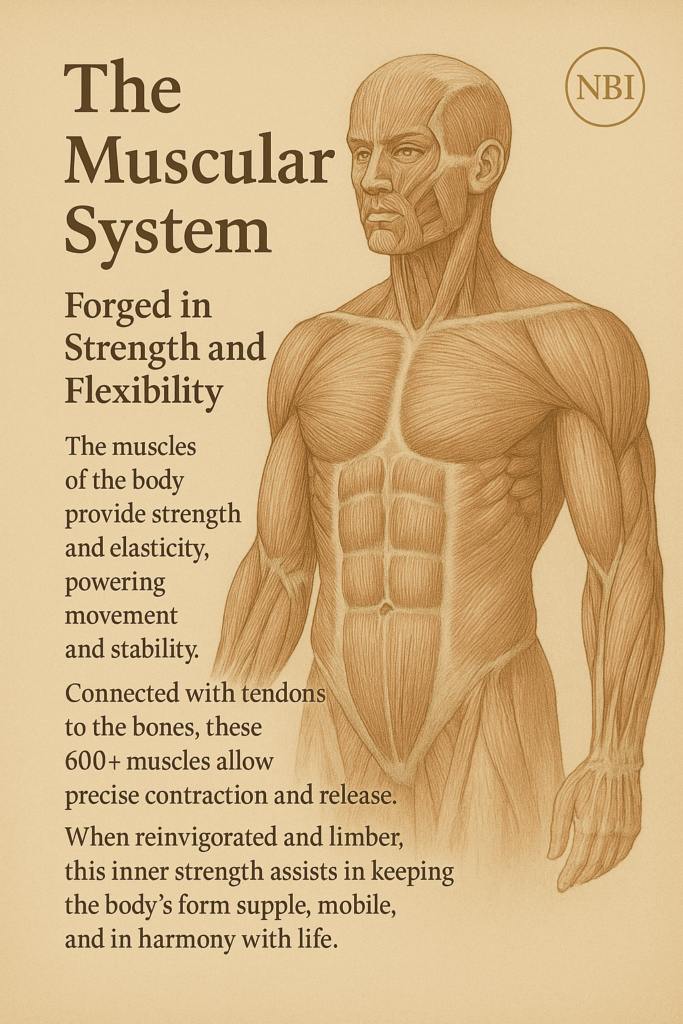
The muscular system allows the body to move, stand, breathe, digest, express emotions, and maintain posture. Muscles are not just mechanical ropes pulling bones; they are living tissues that respond to everything we eat, feel, and do. In Natural Hygiene, the muscular system is understood as a reflection of the body’s overall vitality. When the lifestyle is natural — simple foods, adequate rest, sunlight, fresh air, and emotional balance — the muscles remain strong, flexible, and well-nourished. When the lifestyle is heavy, stressful, or stimulating, the muscles tighten, fatigue easily, and struggle to recover.
Muscles depend on clean blood, stable energy, and proper nerve communication. Their health is tied to the digestive system, the respiratory system, the circulatory system, and the nervous system. When one system is overwhelmed, the muscles are among the first to suffer. Soreness, cramps, weakness, poor posture, tension, and slow recovery are not “muscular problems”. They are messages from the body showing that the entire internal environment is overloaded.
Muscles and Energy: The Fuel Must Be Clean
The muscular system runs on glucose — the simplest and cleanest form of fuel for human cells. Natural Hygiene recognises that fruits supply glucose in its perfect form, along with water and minerals that support muscle function. When the diet is rich in fresh fruit and leafy greens, the muscles receive steady, efficient energy without the metabolic waste created by high-fat or high-protein diets.
Cooked fats, oils, processed foods, and large animal-based meals create thick blood and heavy digestive work. As a result, the muscles receive slower, less efficient fuel. This leads to fatigue, heaviness, and the sensation of “running out of energy” even with small amounts of exertion.
The muscles are not weak — they are simply under-fuelled or metabolically burdened.
Muscle Tension: Often an Emotional Signal
Muscles respond instantly to emotions. Stress, worry, fear, anger, and overwhelm tighten the muscles, especially around the neck, shoulders, jaw, chest, and lower back. This tension restricts breathing, circulation, digestion, and movement. Natural Hygiene views muscular tension as a protective response, not a malfunction. The body holds tension to brace itself against perceived threats — physical or emotional.
When emotional pressure becomes chronic, muscle tension becomes chronic too. Stretching and massage may provide temporary relief, but the root cause is internal overstimulation. Rest, simplicity, emotional honesty, nature, and proper sleep restore muscular softness far more effectively than treatments or force.
Movement and Muscles: The Power of Natural Activity
The human body was designed for natural movement — walking, bending, climbing, stretching, lifting, breathing fully, and using the body throughout the day. These movements keep muscles oxygenated and flexible. In contrast, modern life encourages inactivity: desk work, cars, long sitting, and artificial indoor environments.
When muscles do not move, circulation slows. Waste products accumulate. Flexibility is lost. The body becomes stiff, and even simple movement feels heavier. This is not ageing — it is underuse.
Natural Hygiene supports movement as part of daily life:
- Walking in nature
- Gentle stretching and mobility work
- Simple bodyweight movements
- Breathing exercises that open the chest and diaphragm
- Activities that feel enjoyable rather than forced
Movement improves muscular health far more effectively when paired with a clean lifestyle and natural diet.
Rest and Recovery: Muscles Repair During Stillness
Muscles repair themselves during rest, not during activity. Deep sleep is essential because tissue regeneration, glycogen replenishment, and cellular repair all occur during periods of parasympathetic dominance. When sleep is poor or the nervous system is overstimulated, muscle recovery slows dramatically.
This is why people who exercise but live on stimulants, processed foods, or emotional stress often remain sore, tight, or inflamed. Their lifestyle prevents the repair phase from functioning properly.
Fasting also gives the entire muscular system a profound opportunity to cleanse accumulated metabolic waste. With digestion paused, the body redirects energy towards repairing tissues, reducing inflammation, and restoring strength.
Minerals and Muscles: The Role of Natural Foods
Muscle contraction and relaxation depend on minerals, especially potassium, magnesium, and calcium. Fruits and greens provide these minerals in their most bioavailable form. When the diet lacks these natural sources — or is overloaded with cooked fats and processed foods — cramps, spasms, twitches, and tightness appear.
Supplements are unnecessary when the cause is removed. Natural foods provide everything the muscles require to function smoothly.
The Body’s Intelligent Message Through the Muscles
Muscular symptoms are not random or unlucky. Every ache, tight area, weakness, cramp, or spasm is a message. The body is saying:
- The bloodstream is overloaded.
- The lifestyle is too stimulating.
- The diet is too heavy.
- Rest is insufficient.
- The emotional load is too high.
- Movement is too little.
When we listen and restore natural living conditions, the muscular system responds quickly. Muscles soften, recover faster, gain strength naturally, and regain the flexibility they were designed to have.
The body always moves toward balance when the cause of strain is removed.
How This System Communicates Stress
- Pain, stiffness and inflammation
- Fatigue and exhaustion
- Circulatory and sensory sensations
- Emotional and nervous tension
- Sleep and circadian disruption
Conditions Commonly Associated With the Muscular System
- Chronic muscle pain
- Fibromyalgia
- Muscle tension and spasm
- Chronic fatigue
- Restless legs
- Anaerobic fatigue