
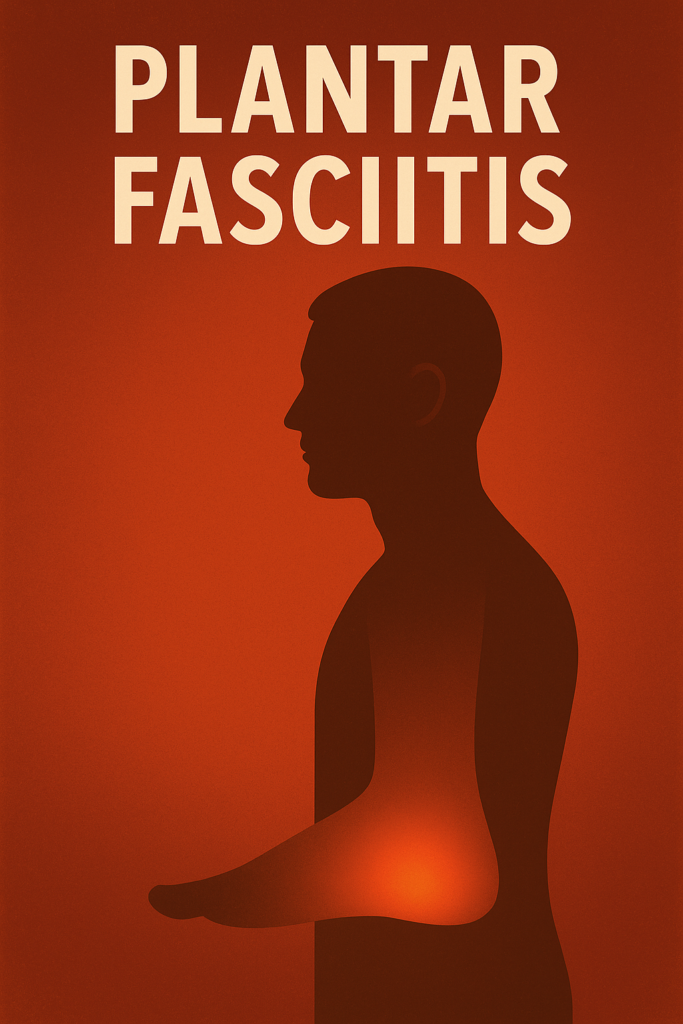
Plantar Fasciitis: A Natural Hygiene Perspective on Load, Repair and the Connective-Tissue Terrain
Plantar fasciitis is a common cause of pain beneath the heel and along the sole of the foot. The plantar fascia is a strong band of connective tissue that helps support the arch and transmit forces as we stand, walk and run.
Natural Hygiene encourages us not to look only at the painful point. Foot loading, calf function, body weight, footwear, activity changes, recovery, sleep, metabolic health and the condition of connective tissue all form part of the terrain in which symptoms develop.
More Than Simple Inflammation
Despite the familiar “-itis” name, persistent plantar fasciitis often shows degenerative and remodelling changes in the fascia rather than simply acute inflammation. Repeated mechanical loading can exceed the tissue’s capacity to adapt and repair.
This maps well onto Natural Hygiene’s broader idea of demand versus recovery: a tissue can be asked to tolerate more load than it is presently able to restore between exposures.
Why the First Steps Can Hurt
Heel pain is often particularly noticeable with the first steps after sleep or prolonged sitting. The fascia and surrounding tissues have been relatively unloaded and shortened, then are suddenly loaded again when standing.
This does not require the explanation that toxins settled in the feet overnight or that circulation stopped while sleeping.
Load, Calves and the Whole Movement Chain
Foot mechanics, ankle mobility, calf capacity, sudden increases in walking or running, prolonged standing and changes in body weight can all influence plantar-fascia loading. The foot is part of a movement chain involving the ankle, knee, hip and trunk.
This gives Natural Hygiene’s whole-body approach a practical mechanical meaning: the painful heel may be the location of symptoms without being the only place worth examining.
Connective Tissue and Terrain
Fascia is living connective tissue containing collagen, cells, extracellular matrix, nerves and water. It continually responds to loading and can remodel over time.
Natural Hygiene’s terrain concept asks whether the tissue has appropriate nutrition, circulation, recovery and graded mechanical stimulation. Toxaemia can be retained as a broader model of internal burden, but there is no established process by which gravity pulls metabolic toxins into the soles of the feet and causes plantar fasciitis.
Hydration and Food
Normal hydration supports every tissue, including connective tissue. Fruit can make a valuable contribution to fluid intake while supplying carbohydrate, potassium, vitamin C and other nutrients. Vitamin C is relevant to collagen synthesis.
Fruit does not uniquely enter cells more efficiently than water, and cooked food does not make fascia dry or brittle. The stronger Natural Hygiene argument is that a simple, nutrient-sufficient dietary pattern supports the environment in which repair occurs.
Rest, Loading and Vital Economy
Complete rest and relentless activity are not the only options. Temporarily reducing aggravating load can allow symptoms to settle, while appropriately graded strengthening and movement can increase the tissue’s capacity over time.
Through the Law of Vital Economy, NBI can interpret this as matching demand to present capacity. The aim is not to force damaged tissue through pain, nor to remove all load indefinitely, but to create conditions in which adaptation can occur.
Fasting and Tissue Repair
Fasting changes metabolism and cellular signalling, including processes associated with nutrient sensing and autophagy. This makes fasting biologically interesting, but it does not establish that fasting removes waste from the heel or directly repairs plantar fascia.
Connective-tissue repair also requires building materials. Someone who is undernourished or struggling to recover from repeated loading may need adequate energy and nutrients rather than additional restriction.
Stress and Pain
Stress can influence muscle tension, sleep, pain sensitivity and recovery. Slow breathing, relaxation and time outdoors may therefore change the experience of pain and the conditions surrounding recovery.
This does not mean the feet physically store the emotional burden of “moving forward”. Symbolic interpretations may be personally meaningful, but they should be distinguished from the mechanism of the tissue injury.
Symptoms as Information
Pain can serve a protective role by changing how we load an irritated tissue. In that sense, Natural Hygiene is right not to regard pain simply as an enemy. But persistent pain can also become limiting, and not every painful sensation represents active healing.
The Observation and the Interpretation
The observation is that plantar fascia responds to load, recovery and the biological condition of the tissue. Natural Hygiene interprets this through terrain, self-regulation and Vital Economy: repair is more likely when demand is appropriate to capacity and the organism has the conditions required for maintenance.
What goes beyond the evidence is the claim that plantar fasciitis is caused by toxins sinking into the feet or deliberately created by the body to force a person to stop.
The Natural Hygiene Interpretation
Plantar fasciitis illustrates a central Natural Hygiene principle: healing depends not only on the damaged part, but on the conditions in which that part is being asked to recover.
Reducing excessive load, restoring appropriate movement, sleeping well, nourishing and hydrating the body and addressing the wider terrain can all support recovery while respecting the real mechanical demands placed on the fascia.
Related Reading
Natural Hygiene foundation: Vital Economy, rest and recovery