
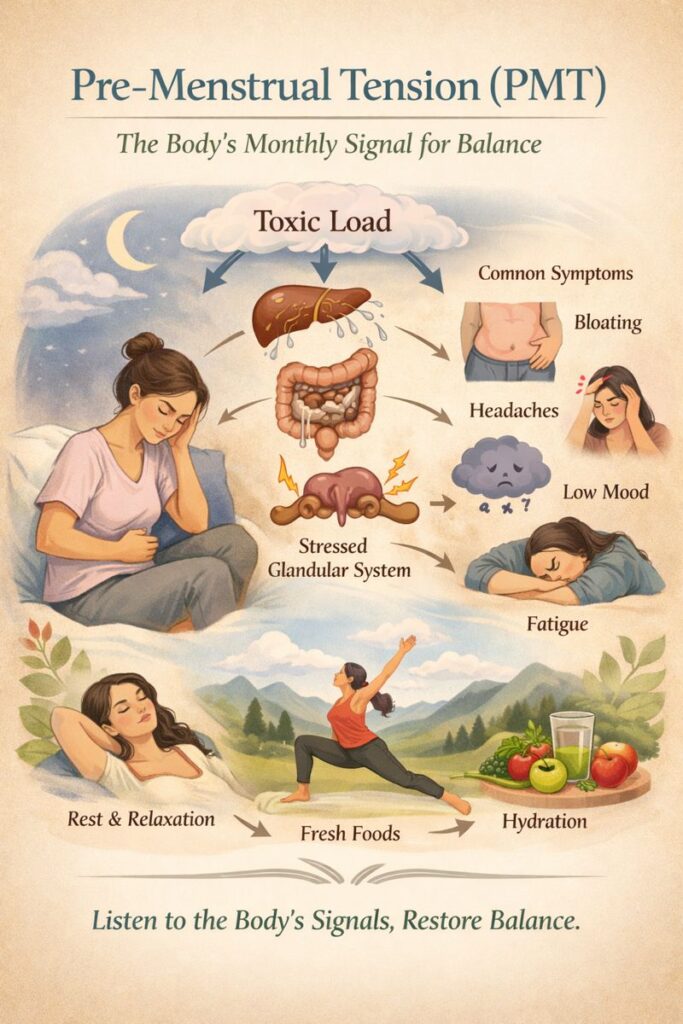
Pre-Menstrual Tension (PMT/PMS): A Natural Hygiene Perspective on Cycles, Elimination and Terrain
Premenstrual symptoms occur during the luteal phase of the menstrual cycle and improve after menstruation begins. They can include mood changes, irritability, breast tenderness, bloating, headache, cravings, fatigue and sleep disturbance.
A Real Cyclical Change
Oestrogen and progesterone change substantially across the menstrual cycle. PMS is thought to involve sensitivity to these normal hormonal fluctuations and their interaction with brain signalling rather than simply an excess or deficiency of one hormone.
Natural Hygiene adds the terrain question: why are symptoms mild in one cycle and much more difficult in another? Sleep, stress, food, alcohol, activity, nourishment and overall physiological load can all influence how someone experiences the premenstrual phase.
Menstruation and the Natural Hygiene View of Elimination
Menstruation is a genuine shedding and removal process. The uterine lining breaks down under hormonal influence and menstrual fluid containing blood, endometrial tissue, mucus and vaginal secretions leaves the body.
Natural Hygiene traditionally interprets this more broadly within its model of elimination. Because material is already being shed, NH considers menstruation a potential additional eliminative opportunity within the wider terrain. Natural hygienists have also long reported the observation that some women experience lighter, shorter or less uncomfortable periods after substantial improvements in diet and lifestyle.
That observation and interpretation should be distinguished from what has been established physiologically. Menstrual flow is principally governed by hormonal and endometrial processes, and it has not been established that general metabolic toxins are routinely transferred into menstrual fluid as a dedicated monthly detoxification mechanism.
So NBI does not need to choose between “menstruation has nothing to do with elimination” and “all menstrual symptoms are detox”. The shedding is real; Natural Hygiene interprets it within a wider eliminative terrain.
Bloating, Cramping and Other Symptoms
Bloating and breast tenderness can involve fluid shifts, while cramps involve uterine contractions and signalling molecules including prostaglandins. Mood and appetite can also change with cyclical hormonal signalling.
These symptoms can provide useful information, but their severity should not be treated as a measure of how effectively the body is cleansing. More pain or heavier bleeding does not automatically mean more beneficial elimination.
Vital Economy and the Cycle
The reproductive system responds to the body’s wider energy and nutritional state. Natural Hygiene’s Vital Economy therefore provides a useful framework for observing whether sleep loss, chronic stress, under-eating, overtraining or other demands are changing the way a person experiences the cycle.
Resting more when energy is lower can be sensible. But severe cyclical symptoms are not proof that the body deliberately creates suffering to force rest.
Supporting the Terrain
Consistent sleep, appropriate movement, adequate nutrition, reducing individually aggravating alcohol or stimulants and making room for recovery all fit the Natural Hygiene approach. Restrictive dieting or prolonged fasting is not automatically appropriate, particularly where energy availability is already low or cycles are becoming irregular.
The Observation and the Interpretation
The observation is that premenstrual symptoms track a real hormonal cycle and can vary with sleep, stress, nourishment, activity and other aspects of the person’s terrain. Menstruation itself is a genuine process of shedding and removal.
Natural Hygiene interprets these observations through elimination, toxaemia, enervation and Vital Economy. What goes beyond the evidence is using PMS severity or menstrual flow as a direct measurement of toxin removal.
The stronger NBI position is that the cycle provides valuable information about the whole terrain while menstruation can retain its broader Natural Hygiene eliminative interpretation.
Severe cyclical mood symptoms, very heavy bleeding, fainting, severe new pelvic pain or symptoms that substantially disrupt life deserve assessment rather than simply being endured as cleansing.
Related Hormonal Reading
Natural Hygiene foundation: The Natural Hygiene approach