
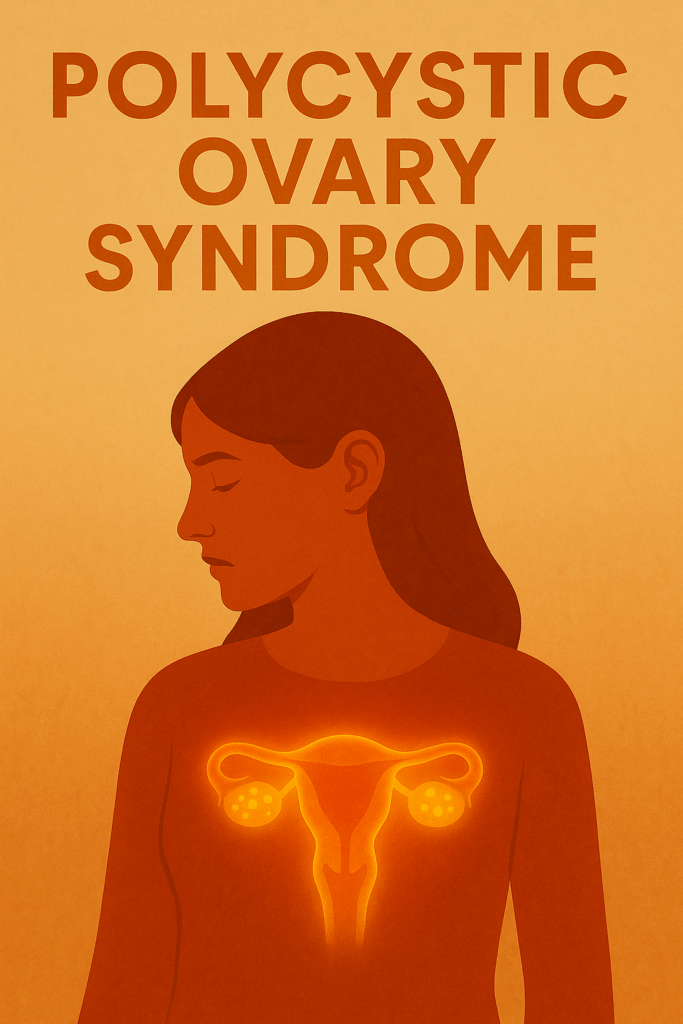
Polycystic Ovary Syndrome (PCOS): A Natural Hygiene Perspective on Insulin, Hormones and Metabolic Terrain
PCOS is a hormonal and metabolic condition that can affect ovulation, menstrual cycles, androgen levels, fertility, skin and hair growth. Despite the name, having ovarian “cysts” is neither required for diagnosis nor the central explanation of the condition.
The “Cysts” Are Not Toxin Storage
The ovarian appearance often associated with PCOS reflects multiple small follicles whose development has not followed the usual ovulatory pattern. These follicles are not sacs created to store hormones or metabolic waste that the liver failed to eliminate.
Insulin Provides a Strong Terrain Connection
Insulin resistance is common in PCOS. Higher insulin levels can encourage ovarian androgen production and interact with the hormonal signals controlling ovulation. Not everyone with PCOS has the same degree of insulin resistance, but this relationship gives Natural Hygiene’s metabolic-terrain perspective a concrete physiological basis.
Food quality, activity, sleep, body composition and stress can all influence metabolic health. Natural Hygiene therefore has a useful role in asking what conditions are supporting better insulin sensitivity and endocrine regulation rather than treating the ovaries in isolation.
Hormones Work as a Network
The ovaries, pituitary, hypothalamus, pancreas, adrenal glands and liver all participate in hormonal or metabolic regulation. This interconnectedness supports NH’s whole-body view, but it does not establish that PCOS results from a congested liver or systemic toxins.
Supporting the Terrain
Regular movement, adequate sleep and a nutritious minimally processed dietary pattern can support metabolic health. Where excess body fat and insulin resistance are present, sustainable weight reduction can improve symptoms for some people. Someone who is lean or undernourished should not be pushed into unnecessary restriction simply because they have PCOS.
Fasting is part of Natural Hygiene tradition, but it is not a universal PCOS treatment and should not replace appropriate investigation of irregular bleeding, infertility or significant metabolic problems.
Vital Economy and Reproductive Signalling
Natural Hygiene’s Vital Economy is relevant because reproductive function responds to the wider metabolic and nutritional state of the organism. But the direction matters: excessive restriction and inadequate energy availability can themselves disturb ovulation and menstrual function. More fasting is therefore not automatically a better response to irregular cycles.
Toxaemia and the Hormonal Terrain
Classical Natural Hygiene uses toxaemia to describe a wider internal burden. In PCOS, NBI applies that idea to the total metabolic terrain rather than claiming that unidentified toxins are trapped in ovarian follicles. Insulin regulation, body composition, nourishment, sleep, activity, stress and liver metabolism all form part of the environment in which hormonal signalling occurs.
The Observation and the Interpretation
The observation is that PCOS can involve altered ovulation, androgen levels, insulin sensitivity and follicle development. Natural Hygiene interprets these within the whole terrain of metabolism, nourishment, endocrine regulation and Vital Economy.
What goes beyond the evidence is calling the follicles toxin-storage sacs or treating every case as the result of a congested liver. The metabolic terrain genuinely matters, but PCOS is not one identical process in every person.
Related Hormonal & Reproductive Reading
Natural Hygiene foundation: The Natural Hygiene approach
Natural Hygiene foundation: The Natural Hygiene approach