
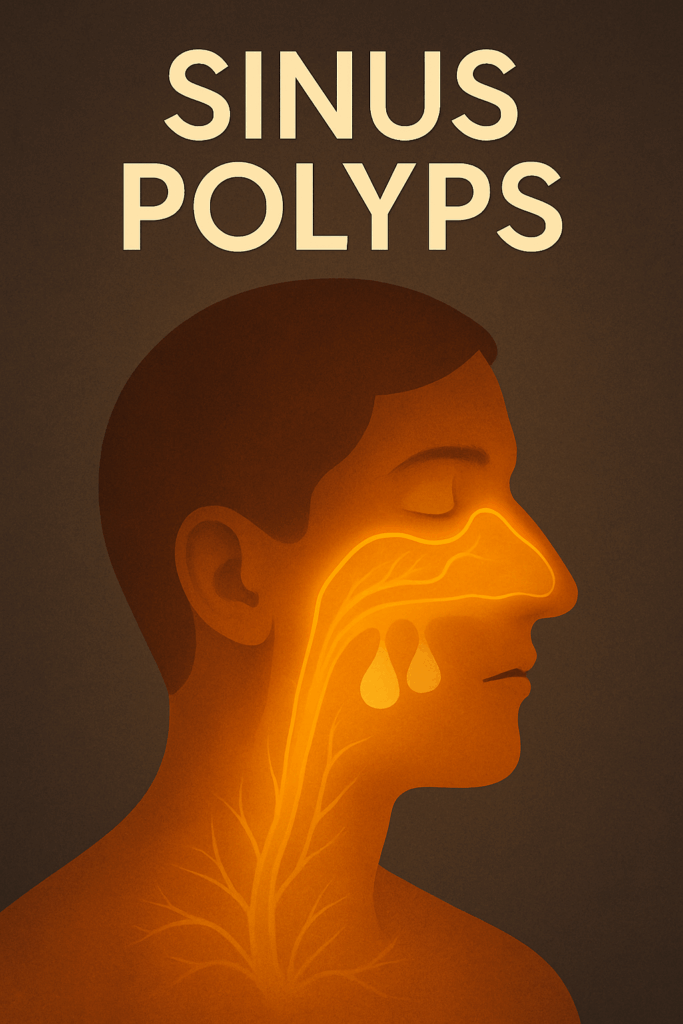
Sinus Polyps: A Natural Hygiene Perspective on Inflammation, Drainage and Terrain
Nasal polyps are soft, non-cancerous growths arising from the lining of the nose or sinuses. They are associated with persistent inflammation and can obstruct airflow and sinus drainage, reduce smell and contribute to pressure or congestion.
The Mucous Membrane Is an Active Protective Surface
The nose and sinuses are lined with mucus-producing tissue and microscopic cilia. Mucus traps particles and helps keep surfaces moist, while cilia move the mucus towards the throat. Increased mucus can therefore be a genuine protective response to irritation.
This gives Natural Hygiene’s emphasis on mucus and elimination a real physiological starting point. The distinction is that a polyp is not known to be a pocket deliberately created to store toxins that could not escape elsewhere. It is tissue growth associated with chronic inflammatory changes.
Drainage, Airflow and the Local Terrain
Swelling and polyps can narrow sinus openings and interfere with normal ventilation and mucus drainage. This creates a genuine local-terrain issue: anatomy, inflammation, moisture, airflow and mucus clearance all affect conditions within the sinuses.
Smoke, pollution and other airborne irritants can aggravate nasal tissue in susceptible people. Allergic inflammation, asthma and other inflammatory conditions are also commonly associated with nasal polyps.
Food, Hydration and Mucus
Adequate hydration helps maintain normal mucus consistency. Water-rich fruits and vegetables can contribute substantially to fluid intake. This is a sound reason for Natural Hygiene to value hydrating foods.
Dairy, wheat and cooked food do not literally become mucus that is redirected into the sinuses. Individual foods can still affect symptoms in particular people, and observing repeatable personal responses is reasonable.
Stress and Breathing
Stress can change breathing pattern and symptom perception, but shallow breathing does not normally deprive the sinuses of oxygen until polyps form. Relaxation and good sleep can support overall regulation without treating emotional tension as the physical cause of the growths.
Persistent one-sided obstruction, repeated significant bleeding, visual symptoms or rapidly changing facial symptoms deserve assessment rather than being assumed to be detoxification.
Toxaemia, Elimination and the Sinus Terrain
Classical Natural Hygiene uses toxaemia and elimination to ask why mucous membranes remain persistently irritated or congested. That broader framework can include air quality, smoking, hydration, sleep, nourishment and the wider inflammatory terrain.
The nose genuinely participates in clearance through mucus and ciliary movement. That is a real eliminative process. A polyp, however, is living tissue growth rather than a bag of metabolic waste waiting to be expelled.
The Observation and the Interpretation
The observation is persistent inflammatory change, tissue growth, altered airflow and impaired mucus drainage. Natural Hygiene interprets these within the wider terrain of irritation, elimination, recovery and self-regulation.
What goes beyond the evidence is claiming that polyps are deliberately manufactured to store toxins or that fasting will selectively dissolve them. The mucous membrane’s cleanup activity is real; the structural growth is real too.
Related Respiratory Reading
Natural Hygiene foundation: Toxaemia and the internal environment