
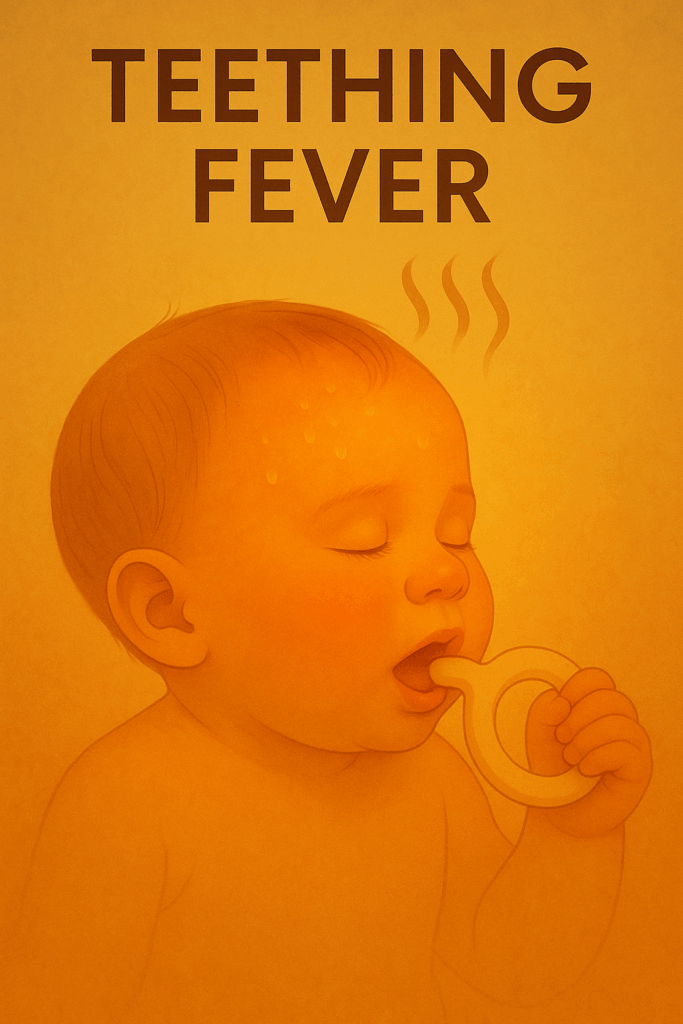
Teething Fever: Teething, Temperature and When to Look Further
“Teething fever” is a phrase many parents search for when a baby feels warm, has flushed cheeks, becomes irritable or sleeps poorly while teeth are coming through. Teething itself commonly causes sore gums, drooling, chewing and unsettled behaviour. A genuine fever, however, should not automatically be attributed to teething.
What Happens During Teething?
As a tooth moves through the gum, the local tissue can become tender and irritated. Babies often chew on fingers or safe objects because pressure can temporarily soothe the gums. Drooling, disrupted sleep and changes in appetite can occur at the same time.
A baby may feel warm or have a small temperature variation, but a temperature of 38°C or above is considered a fever and should prompt parents to consider illness rather than assuming the tooth is responsible.
The Natural Hygiene Perspective
Natural Hygiene encourages close observation rather than automatically suppressing every sign of discomfort. Rest, sleep, hydration, a calm environment and avoiding unnecessary demands all support a child who is unsettled.
That principle should not become a reason to dismiss fever in a baby. A raised temperature can occur for many reasons, and the younger the child, the more important careful assessment becomes.
Comfort During Teething
Safe chilled teething rings, gentle gum massage and additional comfort can help. Breastfed babies may want to feed more frequently. Fluids remain important, particularly if the child is also unwell.
Medicines should not be rejected simply because Natural Hygiene generally favours minimal intervention. Parents who are unsure what is appropriate for their baby’s age or symptoms should ask a pharmacist, GP or other qualified clinician.
When to Seek Medical Advice
A baby under three months with a temperature of 38°C or above needs prompt medical advice. Seek help for difficulty breathing, unusual drowsiness, a seizure, a rash that does not fade under pressure, dehydration, persistent vomiting, a child who is difficult to wake, or whenever the child’s condition is causing serious concern.
The useful distinction is simple: teething is a normal developmental process, but fever should not automatically be explained away as teething.
Self-Regulation Without Assuming Every Fever Is Beneficial
Natural Hygiene regards fever as an organised physiological response rather than meaningless heat. Temperature is actively regulated through nervous, hormonal and metabolic processes during many acute illnesses. That supports the wider NBI principle that the body is responding rather than simply malfunctioning.
The boundary matters especially in babies. A regulated response can still accompany a serious illness, and the fact that fever has biological functions does not mean a high temperature should automatically be labelled a healing crisis or detoxification.
Vital Economy, Rest and Appetite
An unwell child may naturally sleep more, play less or temporarily eat less. Natural Hygiene can interpret this through Vital Economy: activity and appetite can change while the organism is under additional demand. Babies and young children, however, should not be deliberately fasted as a cleansing strategy. Hydration and appropriate nourishment remain particularly important.
The Observation and the Interpretation
The observation is that tooth eruption can cause local gum discomfort, while a genuine fever can occur for many other reasons at the same age. Natural Hygiene interprets fever as an organised whole-body response when it occurs.
What goes beyond the evidence is assuming the tooth itself caused a significant fever or that fever proves toxins are being burned away. Respect the body’s response while still asking why the temperature is raised.