
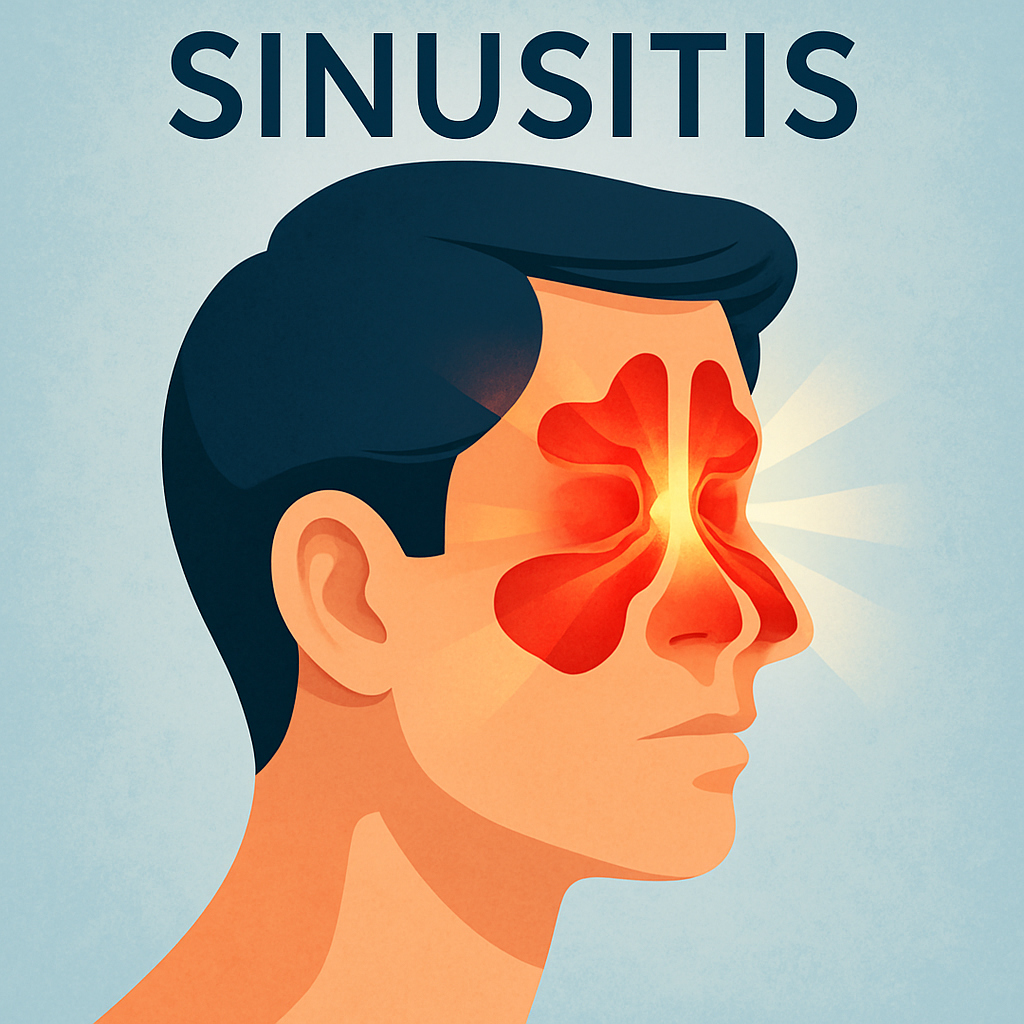
Sinusitis: A Natural Hygiene Perspective on Congestion and Drainage
Sinusitis is the familiar term for inflammation of the lining of the sinuses. People may also search for “sinus infection” when they experience facial pressure, blocked nasal passages, thick mucus, reduced smell or headache. Natural Hygiene keeps these familiar terms while examining the wider conditions surrounding congestion and recovery.
The Natural Hygiene View
The sinuses are lined with mucous membranes, and mucus plays a normal role in trapping particles and keeping these surfaces moist. During sinusitis the lining becomes swollen and drainage can become impaired. Natural Hygiene is interested in factors that can add to this burden, including dehydration, smoke and other irritants, poor air quality, inadequate rest and recurring nasal congestion.
Within the Natural Hygiene framework, mucus and inflammation are not viewed as meaningless nuisances. They are part of an active physiological response. That does not mean every episode has the same cause or that all treatment should be avoided.
Supporting Comfortable Drainage
Rest, adequate fluids, avoiding smoke and strong airborne irritants, and maintaining comfortable humidity can support the respiratory environment. Simple food according to appetite and sufficient sleep fit the wider Natural Hygiene approach of reducing unnecessary demands during recovery.
Recurring sinus problems may also warrant looking at allergies, structural obstruction, dental problems or other causes rather than assuming every episode is simply a detoxification event.
When to Seek Medical Advice
Severe facial swelling, swelling around the eye, changes in vision, severe headache, confusion, neck stiffness, significant deterioration or persistent symptoms should be medically assessed. Repeated or long-lasting sinusitis also deserves investigation.
Why Mucus and Drainage Matter
The sinuses continually produce mucus, which normally moves through drainage pathways. During sinusitis the lining swells and drainage can become obstructed. Conventional medicine recognises inflammation, impaired drainage and several possible triggers. Natural Hygiene uses those observations to focus on the terrain of the mucous membranes: hydration, irritants, congestion, rest and the body’s wider eliminative activity.
Thus NH does not have to claim that every sinus episode is a detoxification crisis. Its distinctive point is that mucus has a function and that restoring favourable conditions for normal drainage is different from regarding mucus itself as the enemy.
Microorganisms and Terrain
Some sinus episodes occur alongside microorganisms, while others are dominated by other inflammatory or structural factors. Natural Hygiene’s terrain model asks what conditions exist around the mucous membranes — drainage, moisture, airflow, irritation, mucus movement and the wider state of the person. Microorganisms proliferate according to the conditions available to them, so identifying an organism need not make the surrounding terrain irrelevant.
Toxaemia, Enervation and Vital Economy
Classical Natural Hygiene interprets increased mucus and acute symptoms within its broader ideas of toxaemia, elimination and enervation. NBI retains that perspective while distinguishing function from assumption. Mucus genuinely traps and transports material; it is not evidence that every thick nasal secretion consists of stored systemic toxins.
Vital Economy helps explain why rest becomes valuable during an acute episode: reducing unnecessary demand can support recovery without claiming that sinusitis was deliberately created to force the person into bed.
The Observation and the Interpretation
The observation is swelling of the sinus lining, impaired drainage and altered mucus, sometimes with microbial involvement. Natural Hygiene interprets this within the terrain of the mucous membranes and the whole organism.
What goes beyond the evidence is treating every sinus episode as a detoxification crisis. Mucus has a real clearance function, terrain can influence the episode, and persistent obstruction or inflammation can still require investigation.