
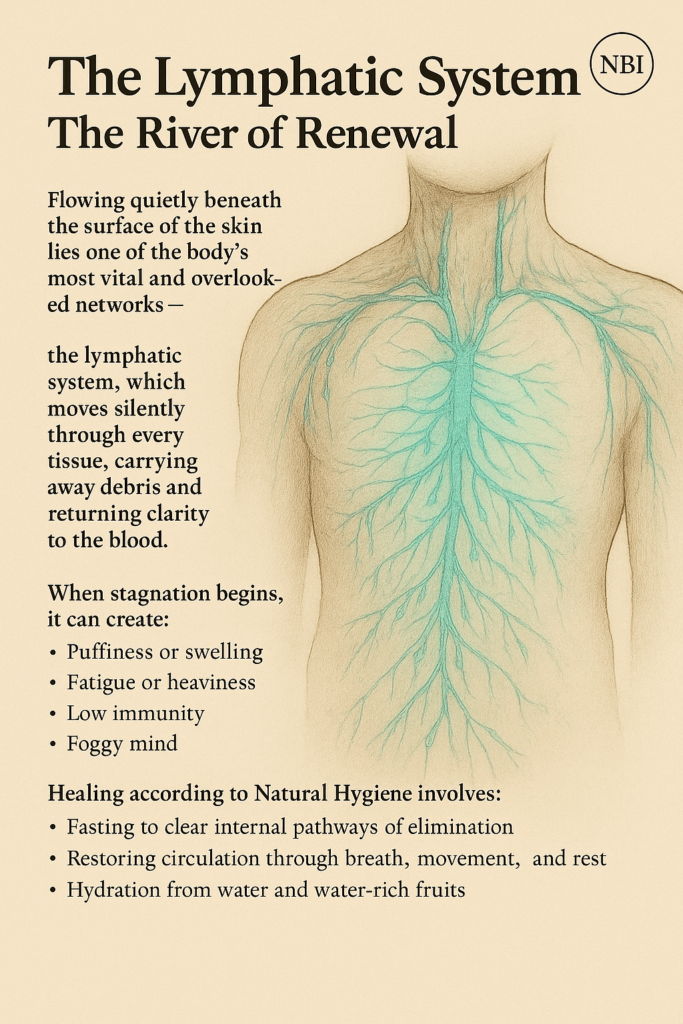
The Lymphatic System and Detoxification: A Natural Hygiene Perspective
The lymphatic system is a genuine drainage, transport and defence network. It returns excess fluid and proteins from tissues to the bloodstream, transports absorbed dietary fats from the intestine and carries immune cells through lymphatic vessels and nodes.
What Lymph Actually Carries
Fluid continually leaves small blood vessels and enters surrounding tissues. Most returns directly to the circulation, while the lymphatic system collects the remainder together with proteins, cellular material and transported substances. Lymph eventually returns to the venous bloodstream.
This gives Natural Hygiene’s emphasis on drainage and elimination a real physiological foundation. Cells live within an extracellular fluid environment, and normal tissue health depends on effective exchange and return of that fluid.
How Lymph Moves
The lymphatic system has no single central pump equivalent to the heart. Lymph movement is assisted by contractions of lymphatic vessels themselves, skeletal-muscle movement, breathing and pressure changes, with valves helping maintain direction.
Natural Hygiene therefore has good physiological reasons to value walking, movement and breathing. What needs more care is the claim that sedentary living simply turns lymph into a thick toxic sludge responsible for most disease.
Detoxification and Toxaemia
Natural Hygiene uses toxaemia for a broader state in which internal burdens exceed the body’s capacity to process and eliminate them efficiently. The lymphatic system can be discussed within that framework because it genuinely transports tissue fluid and cellular material.
But lymph does not independently detoxify the body. The liver transforms many substances, the kidneys excrete numerous water-soluble wastes, the lungs remove carbon dioxide and the digestive tract eliminates material through the bowel. These systems work together.
Supporting Normal Lymphatic Function
Regular movement, adequate hydration, sleep and good general nutrition support normal physiology. Massage or compression can have specific uses, particularly in diagnosed lymphoedema, but ordinary skin eruptions, sinus symptoms or joint pain should not automatically be labelled blocked lymph or secondary toxin outlets.