The Skin: Barrier, Regulation and the Natural Hygiene Terrain
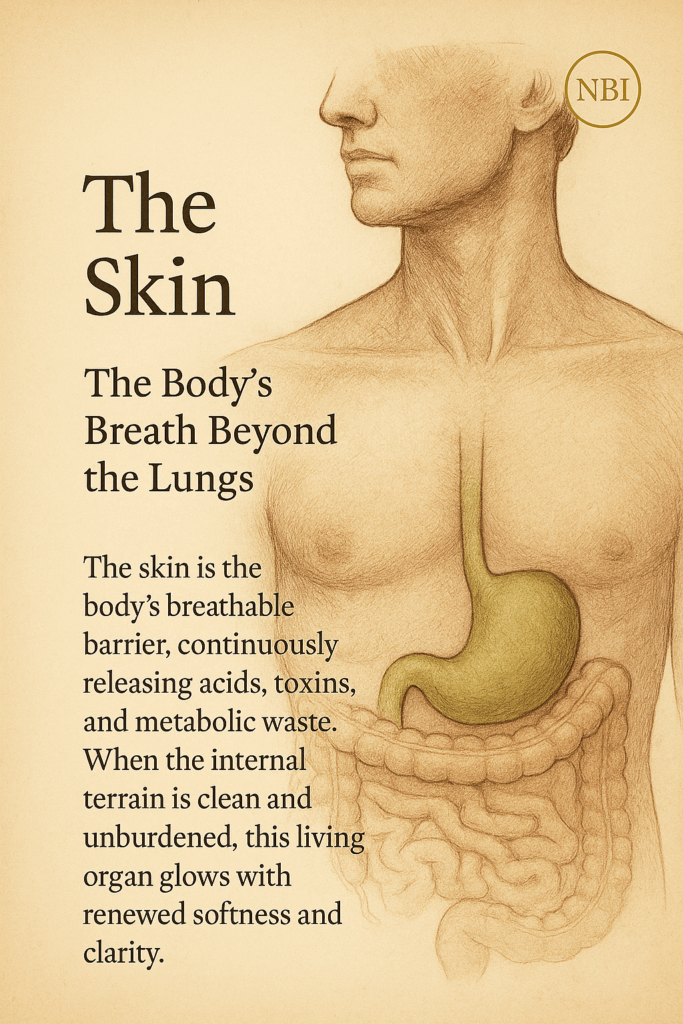
The skin is the body’s largest organ by surface area and an active boundary between the internal and external environment. It provides physical protection, helps regulate temperature, participates in sensation and immune activity and loses water, salts and small quantities of other substances through sweat.
Is the Skin an Organ of Elimination?
Sweat glands genuinely excrete water, electrolytes and small amounts of metabolic substances. In that limited sense, the skin participates in excretion. However, the kidneys, liver, lungs and digestive system handle the major routes of metabolic processing and elimination.
Natural Hygiene historically gives the skin a larger role in elimination and interprets many eruptions through the concept of toxaemia. That interpretation can be discussed without calling the skin a “second kidney” or assuming that rashes occur because deeper organs have diverted toxins to the surface.
What Skin Eruptions Actually Contain
Different skin conditions involve different processes. Acne lesions contain sebum, keratin and inflammatory material. Psoriasis involves unusually rapid skin-cell turnover and inflammation. Eczema involves inflammation and altered barrier function. These observations give us more precise starting points than treating every eruption as the same detoxification process.
Natural Hygiene then asks the broader terrain question: why is this person’s skin repeatedly inflamed or reactive, and what role might sleep, stress, nutrition, metabolic health, environment, irritants and overall vitality play?
Hydration and the Skin Barrier
Hydration matters to normal physiology, but dry skin is not simply proof that the whole body is dehydrated. Skin dryness can result from barrier changes, low humidity, washing practices, age and specific skin conditions. Water-rich fruit can contribute to fluid intake, while ordinary drinking water also hydrates effectively.
Emotion and Skin Reactivity
The connection between the nervous system and skin is genuine: stress can influence itching, sweating, flushing and inflammatory symptoms. Natural Hygiene is therefore right to include emotional and nervous-system load in the terrain. It is more accurate, however, to describe this as physiological interaction than to say the skin literally releases emotions the mind has suppressed.
Supporting Healthy Skin
Good nutrition, sleep, movement, appropriate sunlight, hydration and reducing irritating exposures support general and skin health. Local skin care can also protect the barrier and should not automatically be regarded as suppressing internal cleansing.