
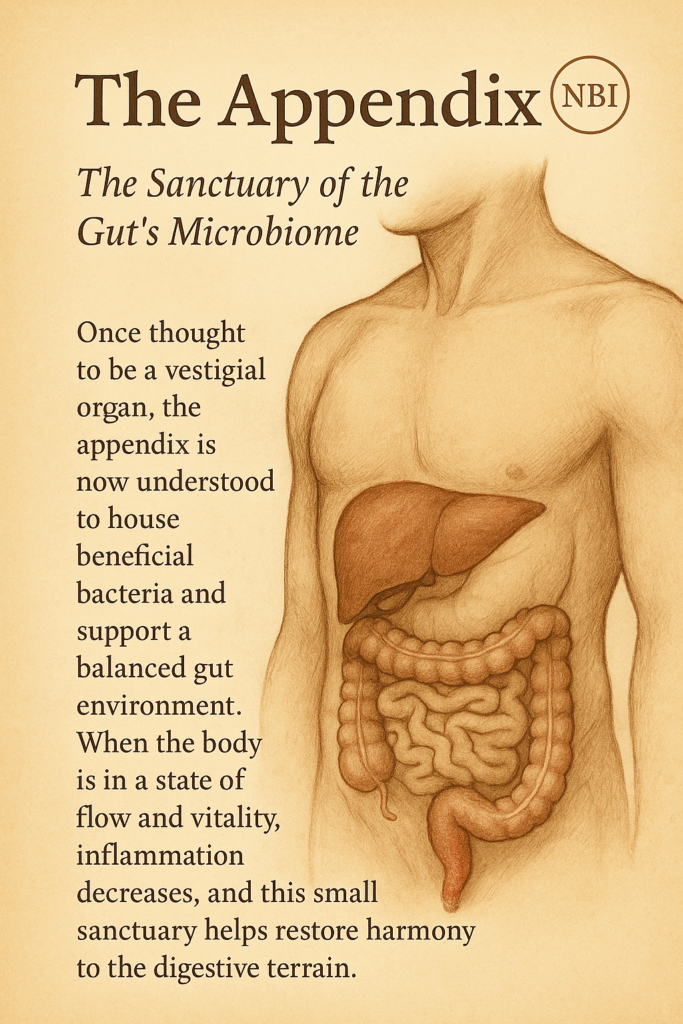
The Appendix: Microbial Ecology, Protection and the Natural Hygiene Terrain
The appendix is not simply a useless leftover organ. It contains lymphoid tissue and sits at the beginning of the large intestine, where it interacts with the intestinal microbial community.
One influential hypothesis is that the appendix can provide a protected niche for beneficial gut microorganisms and may help reseed the colon after major disturbances. This is biologically plausible and supported by aspects of its anatomy, although describing it as a guaranteed bacterial “backup drive” goes beyond what has been established.
A Natural Hygiene Perspective
The appendix is a useful example of the body’s interdependence: tissue structure, immune activity, microbes and the intestinal environment interact rather than operating as isolated parts. Natural Hygiene’s terrain principle asks what conditions favour stable digestive function and microbial ecology.
Regular movement, adequate nourishment, fibre where tolerated, hydration and sleep all contribute to the wider conditions of digestive health. Fasting changes the intestinal environment, but it is not required for the appendix to repopulate the colon.
Waste, Reabsorption and Autointoxication
The colon absorbs water, electrolytes and microbial metabolites. Constipation prolongs transit and can cause discomfort and harder stool. Natural Hygiene historically extended this into autointoxication — the idea that retained bowel contents create a systemic toxic burden.
That broader concept should not be confused with the claim that ordinary constipation causes decomposing faecal toxins to leak into the bloodstream and directly create unrelated conditions throughout the body. The intestinal barrier and liver normally regulate what reaches the circulation, although severe bowel disease can genuinely disrupt barrier function.
Severe or increasing right-sided abdominal pain, especially with fever, vomiting or marked tenderness, requires prompt assessment because appendicitis can become an emergency.