
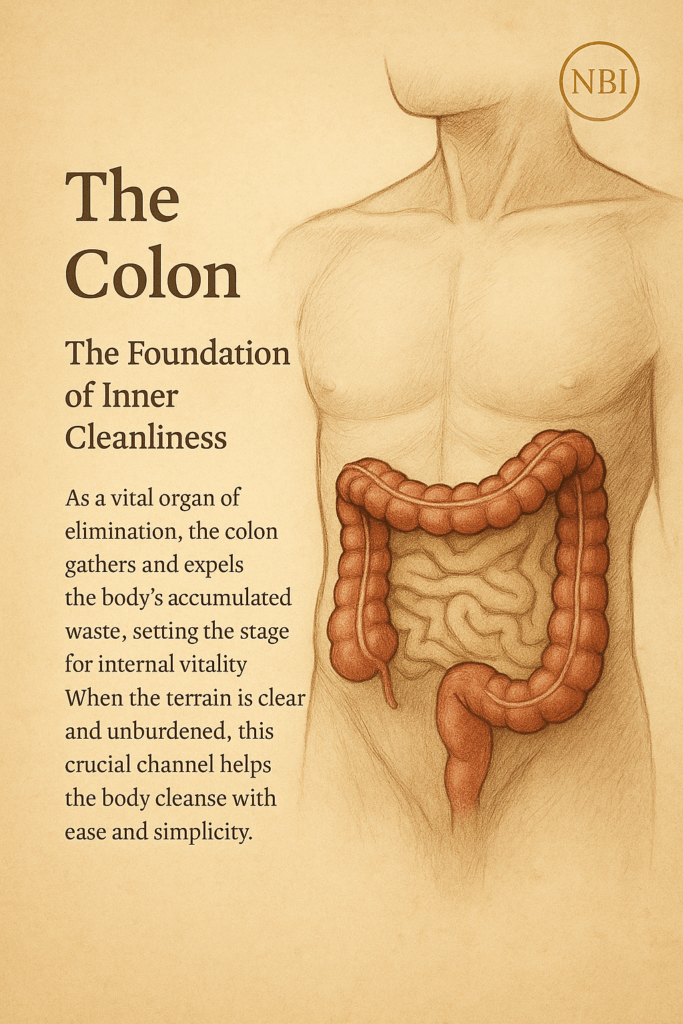
The Colon: Elimination, Water Balance and the Natural Hygiene Terrain
The colon is the final major section of the digestive tract. It receives material from the small intestine, reabsorbs water and electrolytes, supports microbial fermentation and forms and stores faeces before elimination.
Elimination Is a Genuine Core Function
The bowel is unquestionably one of the body’s routes of elimination. Faeces contain water, undigested food components, bacteria, shed intestinal cells, bile-derived pigments and substances delivered into the gut for excretion.
This gives Natural Hygiene’s emphasis on regular bowel elimination a firm physiological basis. The colon is not merely a passive pipe: muscular contractions move its contents, while water handling changes stool consistency.
Constipation and “Autointoxication”
When stool moves slowly, the colon has longer to reabsorb water, making it harder and often more difficult to pass. Constipation can cause bloating, discomfort and a sense of incomplete evacuation.
Natural Hygiene historically links prolonged retention with toxaemia. The useful distinction is that constipation genuinely means material remains in the bowel longer, but ordinary constipation does not establish that years of faecal matter are plastered onto the colon wall or that the body must divert this material through the skin, sinuses or lungs.
The Microbial Environment
The colon contains a large microbial community. Bacteria ferment substances that reach the large bowel, especially certain fibres, producing gases and metabolites including short-chain fatty acids. Within the Natural Hygiene terrain model, the intestinal environment — available food, transit time, pH and other conditions — helps shape which microorganisms flourish.
Food, Fibre, Fluid and Movement
Fibre can increase stool bulk or alter consistency, while fluid intake and physical activity also influence bowel function. Different people tolerate different fibre amounts, particularly when IBS or inflammatory bowel disease is present. Fruit and vegetables can provide both fibre and water, while ordinary water also contributes to hydration.
Rest and Fasting
Natural Hygiene traditionally uses fasting to provide physiological rest from digestion. During a fast, less food residue enters the colon, so bowel movements commonly become less frequent. That does not mean the bowel has stopped cleansing or that a fast must produce old deposits to be successful.
Persistent rectal bleeding, black stools, unexplained weight loss, severe abdominal pain or a major unexplained change in bowel habit requires assessment.