The Integumentary System: Barrier, Regulation and the Natural Hygiene Terrain
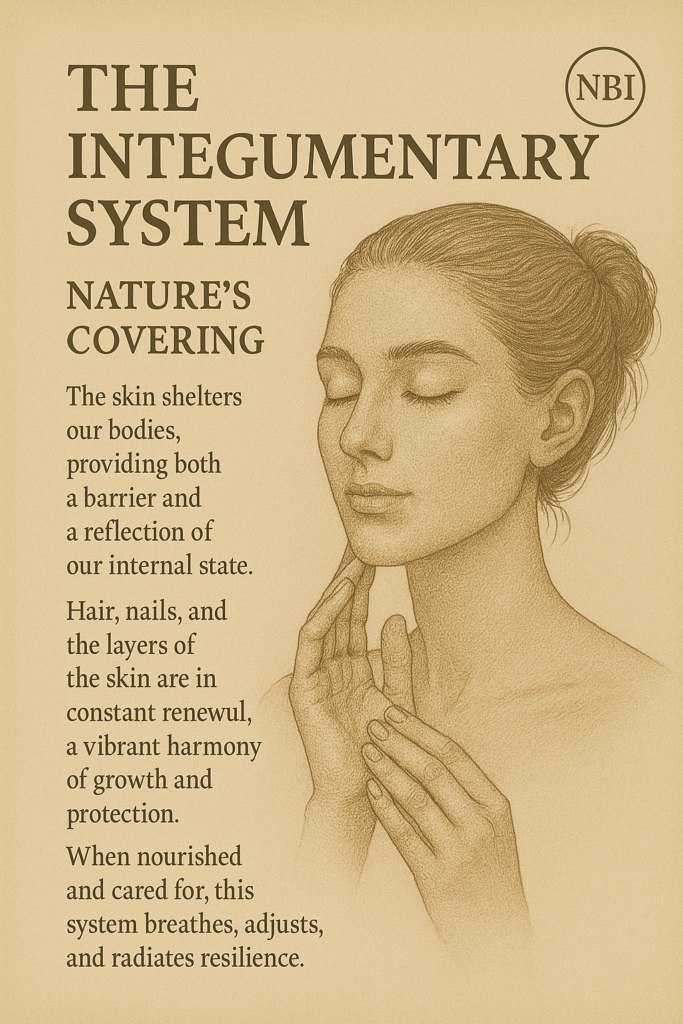
The integumentary system consists principally of the skin and its associated structures, including hair, nails, sweat glands and sebaceous glands. It forms the body’s outer barrier, helps regulate temperature, limits water loss, detects sensation and participates in vitamin D production.
Natural Hygiene is right to look beyond appearance. Skin, hair and nails are living tissues whose condition can reflect nutrition, hormones, circulation, environmental exposure, stress and general health.
Skin as a Barrier and Excretory Surface
Sweat contains mostly water and electrolytes, along with small quantities of substances such as urea. The skin therefore does participate in excretion, but on a much smaller scale than the kidneys and liver in handling metabolic products.
This provides a genuine physiological starting point for Natural Hygiene’s historic description of the skin as an eliminative organ. The broader claim — that acne, eczema, psoriasis or rashes are the body diverting toxins to the surface because the bowel, kidneys or lungs are overloaded — is not established by the fact that sweat contains waste products.
Inflammation and Skin Symptoms
Redness, warmth, swelling and itching can involve organised inflammatory and nervous-system responses. These responses have biological functions, but persistent inflammation can also damage the skin barrier and cause substantial discomfort.
Relieving inflammation does not automatically force toxins deeper into the body. Local treatment and investigation of wider causes can coexist with a Natural Hygiene approach focused on improving the terrain.
Hair: A Responsive Tissue
Hair follicles respond to hormones, genetics, age, nutrition and physiological stress. Significant illness, rapid weight loss or major stress can shift more follicles into a resting phase and cause increased shedding weeks or months later.
This is a good example of the Natural Hygiene idea of vital economy: under some forms of physiological strain, resources and growth patterns change. Hair loss is not always evidence of dirty blood or poor scalp circulation, however, and different forms of hair loss have different mechanisms.
Nails as Clues, Not Diagnostic Charts
Nails are made primarily of keratin. Their growth and appearance can be influenced by trauma, ageing, skin disease, nutrition and systemic illness. Some changes can provide useful clues, but ridges or brittleness do not reliably diagnose mineral deficiency, toxic blood or poor digestion on their own.
Hydration and Water-Rich Food
Normal hydration supports circulation and tissue function. Fruits and vegetables can contribute substantial water along with nutrients. Their water hydrates through the same body-fluid physiology as water from other dietary sources; it does not need to be described as special “structured water” that reaches cells differently.
Dry skin can occur despite adequate fluid intake because barrier lipids, environmental humidity, washing practices, age and skin conditions also matter.
The Natural Hygiene Terrain
A whole-person view remains valuable. Sleep, nourishment, movement, smoking, alcohol, sunlight exposure, stress, environmental irritants and metabolic health can all affect the tissues at the body’s surface.
The strongest Natural Hygiene question is therefore not simply “How do I suppress this skin symptom?” but “What local and whole-body conditions are surrounding this tissue, and which of those conditions can be improved?”