
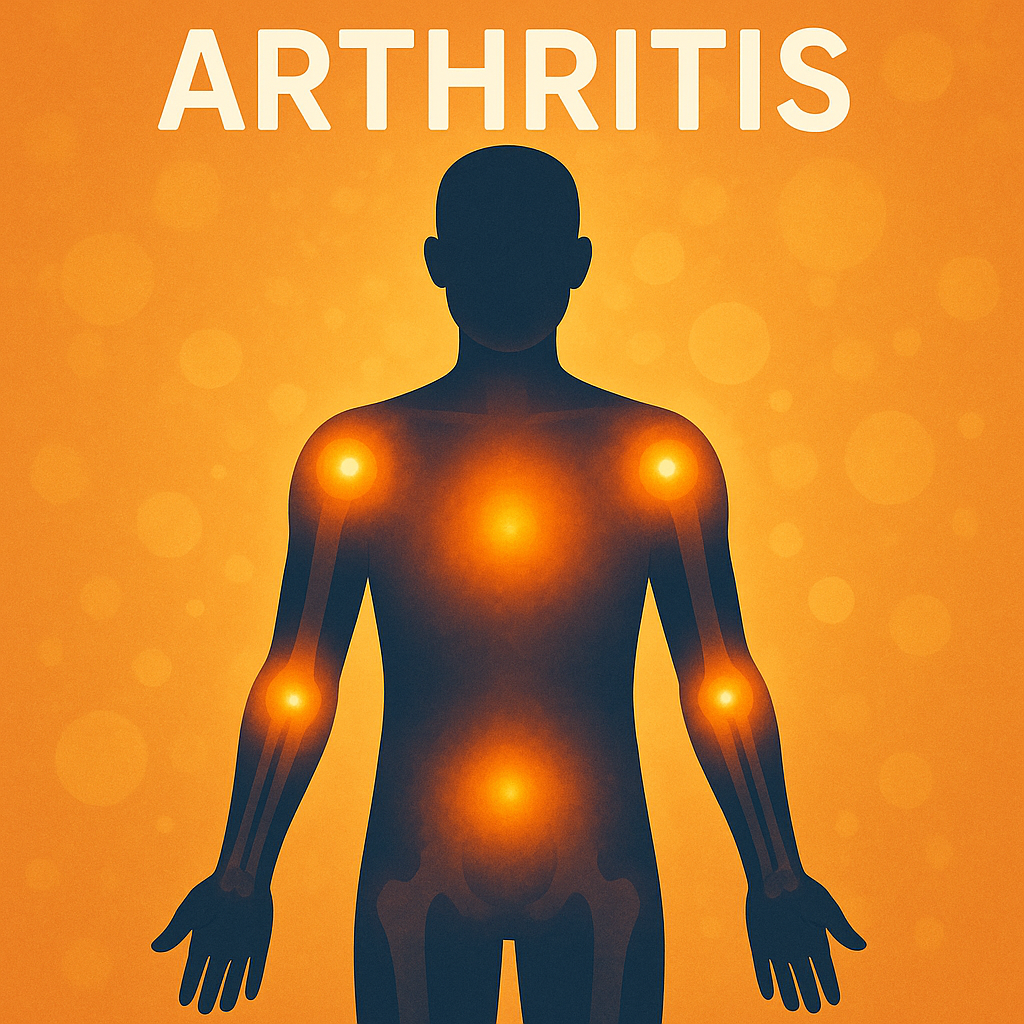
Arthritis: A Natural Hygiene Perspective on Inflammation, Joints and Internal Terrain
Arthritis is a broad term covering conditions that cause joint pain, stiffness, swelling or structural change. Different forms have different mechanisms, so osteoarthritis, rheumatoid arthritis and gout should not be treated as though they are identical.
What Inflammation in a Joint Tells Us
Inflammation involves increased blood flow, chemical signalling and movement of fluid and cells into affected tissue. Pain and stiffness can also limit movement and protect a painful area. These are organised biological responses, even though persistent inflammation can contribute to tissue damage.
Natural Hygiene starts from the principle that the response has meaning and then asks about the terrain in which it is occurring. Rather than seeing the painful joint as an isolated defective part, NH considers circulation, movement, body weight, food, sleep, stress, previous injury, metabolic health, elimination and overall vitality.
Waste, Crystals and the Terrain
There is a particularly useful observation in gout: urate crystals can physically accumulate within and around joints and trigger intense inflammation. This demonstrates that substances circulating in the body can, under particular conditions, form deposits in tissues.
Natural Hygiene extends this observation into its broader concepts of toxaemia and elimination. However, it would be too broad to say that every form of arthritis consists of acids or toxins deliberately stored in the joints. The stronger NH argument is that the chemical and metabolic environment surrounding joint tissues matters, while the exact mechanism differs between conditions.
Enervation, Movement and Recovery
Natural Hygiene also considers enervation: chronic lack of sleep, excessive stress and inadequate recovery can reduce a person’s capacity to move and recover comfortably. Appropriate movement can maintain strength and joint function, while excessive loading during an acute flare may increase symptoms. The aim is neither permanent inactivity nor forcing painful joints beyond their present capacity.
Food, Fasting and Symptom Relief
A minimally processed dietary pattern, appropriate body weight and good metabolic health can support joint health. Natural Hygiene traditionally uses fasting as physiological rest, but fasting should not be described as a guaranteed method of dissolving all arthritic deposits. Medication used for serious inflammatory arthritis should not be abruptly stopped simply because symptom suppression is viewed critically within NH.
Vital Economy and the Joint Environment
The Law of Vital Economy adds another useful layer. Repair, remodelling and movement all require resources, while pain can temporarily alter behaviour and reduce loading. During an acute flare, the body may benefit from reduced demand; over the longer term, appropriate loading helps maintain muscle, bone and joint function.
This is more precise than saying the body deliberately creates arthritis to force rest. The observation is that painful tissues change how we move. Natural Hygiene interprets that signal within the wider balance between demand, recovery and the conditions available for repair.
The Observation and the Interpretation
The observation is that different forms of arthritis involve measurable changes in joints, inflammation, crystals, cartilage, bone or surrounding tissues. Natural Hygiene broadens the investigation to terrain, metabolic health, movement, nourishment, sleep, enervation and elimination.
What goes beyond the evidence is treating every arthritic joint as a storage site for generic toxins or acids. The terrain matters, but the particular mechanism matters too.
A suddenly hot, very swollen joint, severe unexplained pain, fever with joint symptoms, inability to bear weight or rapidly worsening symptoms deserves medical assessment.