
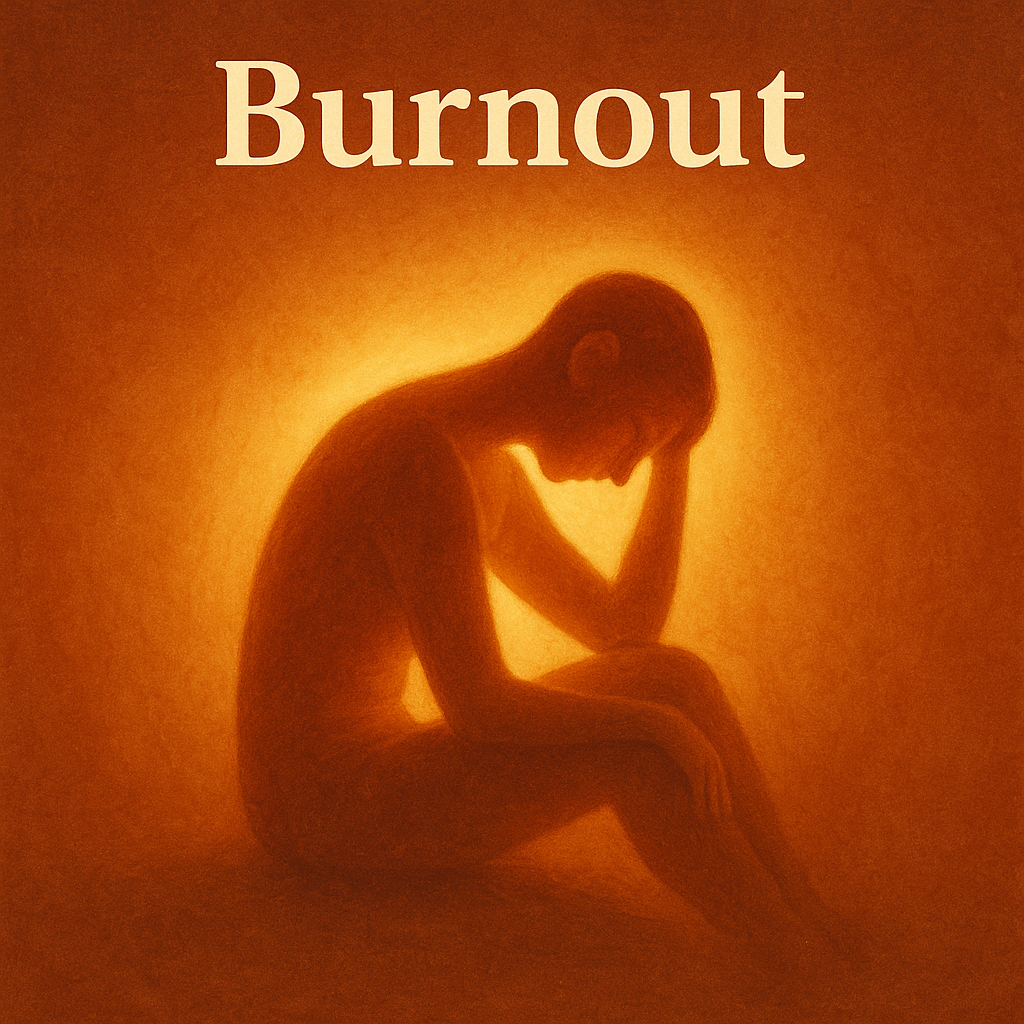
Burnout: A Natural Hygiene Perspective on Enervation, Demand and Recovery
Burnout describes a pattern of profound exhaustion, reduced capacity, detachment or cynicism and difficulty continuing under sustained demands. It is especially associated with chronic occupational stress, although people commonly use the word more broadly for similar exhaustion caused by prolonged caring, study or other relentless pressures.
Natural Hygiene has an old concept that maps remarkably well onto this experience: enervation — a state in which demands repeatedly exceed the opportunity for adequate recovery.
The Energy Economy of the Body
Classical Natural Hygiene spoke of “nerve energy” and the Law of Vital Economy. Modern physiology does not identify a single measurable reservoir of nerve energy. The underlying observation, however, remains useful: human capacity is finite at any particular moment, and sleep, nutrition, physical health, mental workload, stress and recovery all affect what we can sustainably do.
Burnout can therefore be viewed through Vital Economy without imagining a battery that has literally become empty. The important question is whether the pattern of living continually demands more than the person can restore.
Is Burnout a Protective Shutdown?
Severe exhaustion can certainly make continued effort difficult or impossible. Fatigue, poor concentration, emotional detachment and loss of motivation may effectively cause someone to reduce activity.
Natural Hygiene interprets this as meaningful: when capacity falls, continually overriding the signals with stimulants and willpower may increase the mismatch between demand and recovery.
The distinction is that we cannot assume the body deliberately manufactures burnout as an emergency brake or redirects a hidden supply of energy into healing. The reduced capacity is real; describing its purpose is an interpretation.
Stress, Sleep and the Nervous System
Prolonged stress can affect autonomic activity, hormones, sleep, appetite, attention, muscle tension and emotional regulation. Poor sleep then reduces recovery and can make the following day’s demands feel still greater.
This creates a practical cycle: high demand → inadequate recovery → reduced capacity → ordinary demands become harder → greater perceived strain. Breaking that cycle often requires changing both recovery and the demands themselves.
Stimulants and “False Energy”
Caffeine can increase alertness by blocking adenosine signalling. It does not create the sleep that has been missed. This gives the Natural Hygiene phrase “false energy” a useful modern interpretation: stimulation can temporarily change how tired we feel without necessarily correcting the reason we are tired.
That does not make caffeine inherently poisonous, but repeatedly using stimulation to override exhaustion can obscure useful information about recovery needs.
Food and the Terrain
Adequate energy, protein, essential fats, vitamins, minerals and hydration matter during prolonged stress. NBI favours simple, minimally processed foods and abundant fresh plant foods. Whole fruit also contributes water, carbohydrate, potassium, fibre and micronutrients.
Cooked food does not inherently cause burnout, and digestion does not consume such enormous resources that it prevents the body repairing itself. Simpler meals may nevertheless be easier and more comfortable when appetite, time and energy for food preparation are limited.
Rest Is More Than Sleep
Recovery may involve adequate sleep, but also freedom from constant decisions, notifications, deadlines, conflict and performance demands. Someone can spend eight hours in bed while still living in an environment that continually overwhelms their available capacity.
Natural Hygiene’s concept of physiological rest can therefore be widened beyond lying down. Reducing unnecessary demand can itself be restorative.
Movement, Daylight and Nature
Appropriate movement can support sleep, cardiovascular health and mood, while daylight helps organise circadian rhythm. The amount matters. Someone profoundly exhausted may initially tolerate gentle walking better than strenuous training.
Fresh air and nature can provide a quieter sensory environment and opportunities for movement and daylight. Their value does not depend on the idea that deep breathing floods an oxygen-starved body with new life force.
Fasting During Burnout
Natural Hygiene traditionally regards fasting as physiological rest because digestion stops and metabolism shifts. But fasting is also a metabolic stressor. A person who is already undernourished, losing weight, physically depleted or taking medication should not assume that a prolonged fast is automatically restorative.
Sometimes nourishment and rest are the more appropriate response to depletion.
Burnout, Depression and Physical Illness
Persistent exhaustion should not automatically be labelled burnout. Depression, anaemia, thyroid problems, sleep disorders, medication effects and other physical or psychological conditions can produce overlapping symptoms.
The Natural Hygiene principle of observation therefore matters: understand the pattern and its context rather than forcing every case into one explanation.
Change the Conditions
Burnout is often treated as an individual resilience problem: meditate more, become more efficient or learn to tolerate stress. But if workload, working hours, caring responsibilities, conflict or lack of control are driving the problem, improving the terrain may require changing those conditions.
This is where Natural Hygiene is strongest. Instead of continually suppressing the signal or finding another way to push through it, ask: what is creating the repeated mismatch between demand and recovery?
The Natural Hygiene Interpretation
Burnout does not prove that the body has exhausted a literal store of nerve energy or entered a deliberate healing shutdown. But it strongly illustrates the Natural Hygiene concepts of enervation and Vital Economy.
Rest, nourishment, daylight, appropriate movement, sleep and simplicity can support recovery. Just as importantly, sustainable recovery may require removing or redesigning the demands that produced the exhaustion in the first place.
Related Recovery Reading
Natural Hygiene foundation: Vital Economy, rest and nervous-system recovery