
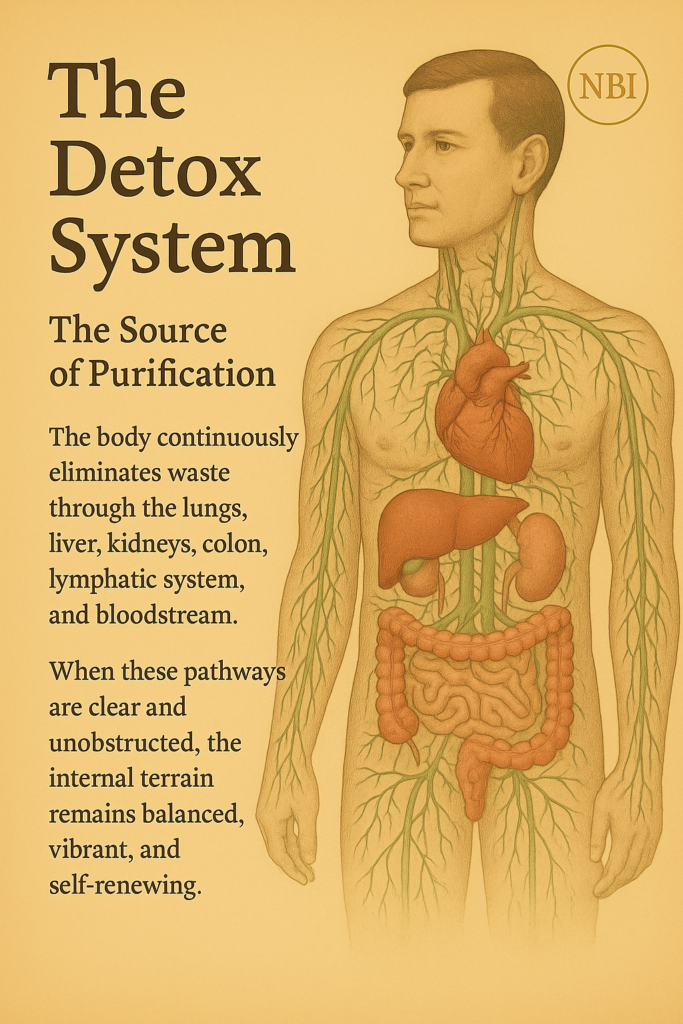
The detoxification system is not a separate organ system in the way the liver or kidneys are. Instead, it is the combined, integrated action of multiple body systems working together to maintain internal purity and balance. In Natural Hygiene, detoxification replaces the flawed “immune system” narrative entirely. The body does not attack itself, fight invaders, or malfunction at random. It simply cleans, restores, and regenerates — always according to natural laws.
Every major body system contributes to detoxification:
- The liver neutralises and transforms metabolic waste
- The kidneys filter and eliminate water-soluble wastes
- The colon disposes of digestive residue
- The lungs exhale acidic and volatile wastes
- The skin eliminates through sweat and oil
- The lymphatic system collects and transports cellular debris
- The circulatory system carries waste to the exit channels
None of these systems act alone. Detoxification is a multi-system event, reflecting the entire body working in harmony to keep the internal environment clean.
Detoxification Is the Body’s Primary Healing Mechanism
All symptoms traditionally called “illness” — fever, mucus, diarrhoea, coughing, rashes, fatigue — are detox processes, not diseases. The body uses these actions to expel material that interferes with normal functioning. When waste accumulates to a certain level, detoxification accelerates. This acceleration is what people mistake for sickness.
In reality, detox episodes are powerful signs that the body is healing.
The Liver: The Chemical Processing Hub
The liver is constantly working behind the scenes, modifying waste, breaking down chemicals, and preparing substances for safe elimination. When diet is light and natural, the liver operates quietly. When the diet is heavy — cooked fats, oils, processed foods, alcohol, stimulants — the liver must intensify its detoxification actions. This is why many cleansing symptoms originate here.
The Kidneys: Maintaining Fluid and Mineral Clarity
The kidneys filter the blood and excrete dissolved waste. When blood becomes thick from overeating or consuming dehydrating foods, the kidneys must work harder. Burning urine, dark urine, or frequent urination all signal increased detoxification load, not kidney failure.
The Colon: Clearing the End of the Line
The colon is responsible for eliminating digestive waste. When digestion slows or the diet is constipating, waste sits too long and circulates back into the bloodstream. This burdens every other detox organ. Gas, bloating, sluggish bowels, and foul odours indicate detoxification working against resistance.
The Lymphatic System: Internal Rinsing
The lymph acts as the body’s internal waste-collection service. It gathers debris from every cell and moves it toward elimination. Only movement, hydration from fruits, and deep breathing keep lymph flowing. When lymph stagnates, the body feels heavy, swollen, and fatigued — all signs of detox slowing down.
The Lungs: Removing Acid Waste
Every breath eliminates volatile waste from cellular metabolism. When internal acidity rises, the lungs increase their activity through deeper breathing, coughing, or mucus production. These actions are detoxification events, clearing waste the blood is unloading.
The Skin: The Emergency Exit
When the internal organs are overwhelmed, the skin opens as an auxiliary detox channel. Rashes, acne, hives, boils, and eczema are the body’s intelligent choice to push waste outward to protect deeper organs. Suppressing these actions forces the body to redirect waste back inside.
The Blood: The Transport Highway
Blood carries nutrients to cells and waste away from them. When the diet is natural and digestion light, the blood stays clear and easy to circulate. When the lifestyle creates metabolic congestion, the blood becomes thick, burdening the entire detox network. Many symptoms arise simply from slow blood movement.
Detoxification Is Always Multi-System
Detoxification is never the action of a single organ.
A fever involves lungs, blood, liver, and lymph.
A skin eruption involves liver, colon, kidneys, and lymph.
A cough involves lungs, stomach, and lymphatic drainage.
A headache involves blood, liver, nerves, and hydration.
Every symptom reflects cooperation, not failure.
Emotional Influence on Detoxification
Emotions are biochemical events. Stress hormones must be metabolised and eliminated just like physical waste. Chronic tension slows detoxification because the body enters a protective state where cleansing is deprioritised. Emotional rest is therefore one of the most powerful detoxifying forces.
Rest and Fasting: The Deepest Cleansing States
Detoxification accelerates most strongly during rest and fasting.
When digestion pauses, the entire ecosystem of detox organs redirects energy to deep cleaning and repair. This is why fasting produces clearer skin, lighter digestion, better breathing, improved circulation, and heightened mental clarity.
The Unifying Principle
Across all the body systems you’ve described so far, one truth repeats:
The body is always attempting to detoxify itself.
Symptoms are the evidence of this intelligent process.
Healing happens through removal of obstacles, not addition of substances.
The Detoxification System chapter binds all the other systems into a single, coherent Natural Hygiene worldview. It shows that every body system contributes to cleansing — and that true healing is always a coordinated, whole-body action.
How This System Communicates Stress
- Skin changes and surface elimination
- Digestive discomfort
- Fatigue and exhaustion
- Pain, stiffness and inflammation
- Circulatory and sensory sensations