
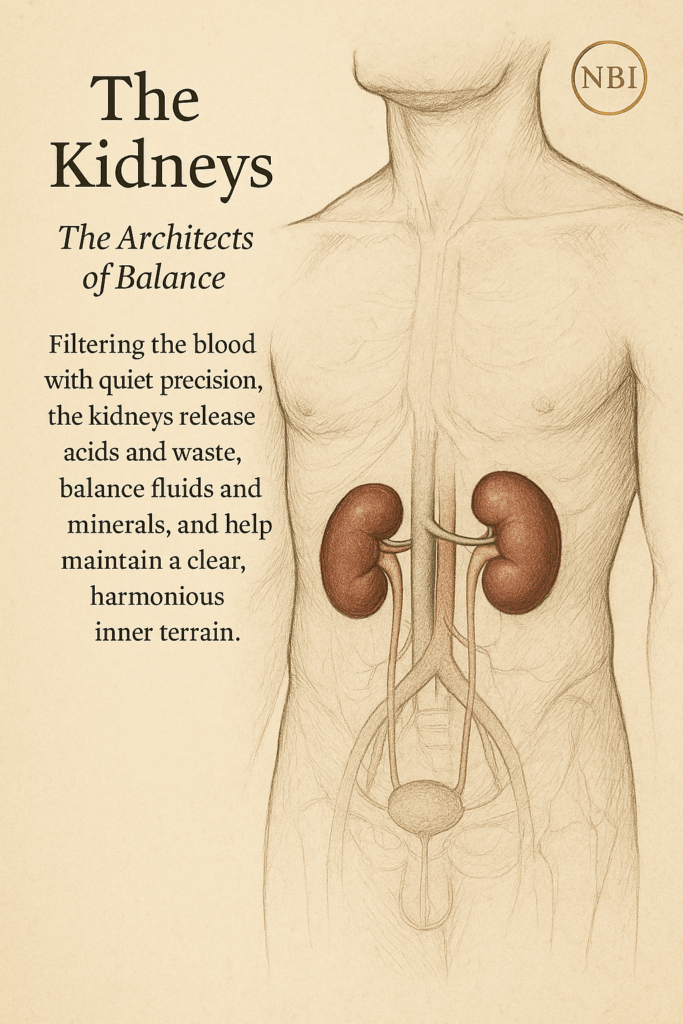
The Kidneys: Filtration, Balance and the Natural Hygiene Terrain
The kidneys are major organs of regulation and elimination. They continuously filter plasma from the blood, return most useful water and substances to the circulation and excrete selected metabolic products and excess substances in urine.
Filtration Is Only the Beginning
Each kidney contains around a million microscopic filtering units called nephrons. Filtration occurs at the glomerulus, after which the kidney tubules selectively reabsorb water, glucose, electrolytes and other useful substances while secreting or retaining others according to the body’s needs.
This is an unusually strong physiological foundation for Natural Hygiene’s emphasis on elimination. The kidneys really do continually separate, conserve, regulate and excrete material from the internal environment.
Metabolic Waste and Acid-Base Balance
Protein metabolism produces nitrogen-containing waste, including urea, which the kidneys excrete. They also regulate hydrogen ions and bicarbonate and work with the lungs to keep blood pH within a narrow life-compatible range.
Natural Hygiene can reasonably describe this as part of maintaining the internal terrain. The important distinction is that ordinary food does not usually make the bloodstream progressively “acidic”. Healthy lungs and kidneys regulate blood pH continuously, although diet can influence the acid load the kidneys process and the chemistry of urine.
Water and Electrolyte Balance
The kidneys adjust urine concentration according to hydration and hormonal signals. When water intake is low, they conserve more water and urine generally becomes more concentrated. When more water is available, they can excrete a larger volume of dilute urine.
Water-rich fruit and vegetables can contribute substantially to hydration, but their water is not a separate “structured” form uniquely recognised by the kidneys. Ordinary drinking water also enters the body’s fluid compartments and supports hydration.
Blood Pressure, Hormones and the Wider Terrain
The kidneys help regulate blood pressure through fluid balance and hormonal systems and produce signals involved in red-blood-cell production. This illustrates why kidney function cannot be separated from circulation, endocrine regulation and the health of the body as a whole.
Stress can influence blood pressure and fluid regulation through nervous and hormonal pathways. That provides a physiological connection between chronic stress and kidney workload, but fear or anxiety should not be assumed to cause kidney disease or lower-back pain.
Natural Hygiene, Rest and Fasting
Natural Hygiene supports adequate hydration, nutritious food, movement, sleep and avoiding unnecessary burdens such as smoking and excessive alcohol. During fasting, metabolism changes and the kidneys continue regulating fluid, electrolytes and metabolic products; they do not simply switch from processing food to a special cleansing mode.
Fasting can also alter fluid and electrolyte balance and is not automatically appropriate in kidney disease. Persistent swelling, blood in the urine, markedly reduced urine output, severe flank pain or significant unexplained changes in urination deserve assessment.
Conditions Commonly Associated With the Kidneys
- Kidney disease
- Kidney stones
- Oedema and fluid retention
- High blood pressure
- Changes in electrolyte balance