
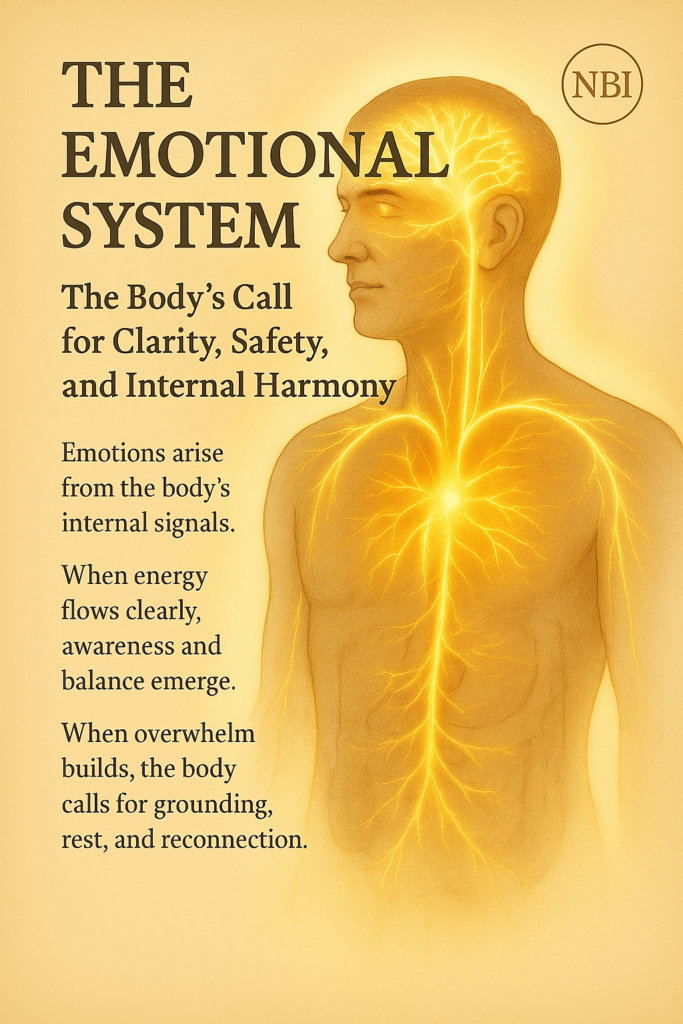
The emotional system is one of the most influential forces in human health. Every thought, reaction, belief, and emotional state produces measurable biochemical changes in the body. These changes are carried through the bloodstream, stored within the fascia, expressed in posture, and reflected in detoxification, digestion, sleep, and overall vitality. In Natural Hygiene, emotions are not separated from physical health. They are an integral part of the internal environment — shaping whether the body can heal or whether it remains in a state of tension and stagnation.
Emotions are not abstract experiences. They are biochemical events, with hormones, neurotransmitters, electrical patterns, and muscular responses. When a person feels safe, calm, connected, and supported, the body opens into healing mode. When a person feels overwhelmed, afraid, frustrated, ashamed, or constantly pressured, the body tightens, contracts, and conserves energy. This contraction slows detoxification, digestion, and repair.
Mindset is therefore not positive thinking — it is the emotional terrain that determines whether the body has permission to heal.
The Emotional System Is Constantly Communicating
The emotional system influences:
- the nervous system
- the electrical field
- the fascia
- the digestive organs
- the detoxification organs
- hormonal rhythms
- breathing patterns
- muscular tension
- circulation
When emotions are stable, the internal environment becomes more coherent. Blood chemistry is calmer, the electrical system steadier, and the biofield more organised. This creates the ideal conditions for healing.
When emotions are chaotic, suppressed, or ignored, internal coherence collapses. Circulation becomes restricted, breathing shallow, digestion heavy, and detoxification delayed.
Stress Chemistry: The Main Disruptor of Healing
Stress is not just a feeling. It is a flood of chemicals — adrenaline, cortisol, lactate, inflammatory messengers — that circulate through the body and demand immediate action. These chemicals:
- tighten muscles
- stiffen fascia
- reduce digestive enzymes
- restrict blood flow to organs
- disturb sleep
- increase acidity
- weaken cellular charge
The emotional system’s primary job is to determine whether the body is safe enough to heal. If the emotional landscape suggests danger — even mild, continuous stress — the body remains in protection mode rather than repair mode.
This is why mindset is a central part of Natural Hygiene: healing requires a sense of safety.
Emotional Suppression and Body Stagnation
Emotions that are felt and released quickly leave the body clean.
Emotions that are suppressed lodge in the tissues.
Long-term suppression affects:
- the fascia (hardening and rigidity)
- the breath (shallow, upper chest breathing)
- the digestive tract (knots, tightness, pain)
- the nervous system (overactivity or shutdown)
- the biofield (chaotic or weakened patterns)
Many chronic symptoms have emotional tension as a contributing factor. This does not mean “it’s in the mind” — it means emotions create real physiological load.
Mindset and Belief Patterns Shape Biology
Studies on placebo and nocebo effects show that belief alters measurable physical processes.
Natural Hygiene explains this clearly:
- Hope expands the biofield and relaxes fascia.
- Fear contracts the body and restricts oxygen.
- Confidence increases electrical charge.
- Helplessness depresses hormonal function.
- Connection stabilises the nervous system.
- Shame or guilt tighten the digestive organs.
Mindset can therefore accelerate or delay healing because it modifies the internal terrain.
Emotional Detox: The Mental Equivalent of Physical Cleansing
Just as the body detoxifies physically, it detoxifies emotionally.
During fasting, rest, trauma release, grief, or major life changes, old emotional material rises to the surface.
This appears as:
- sudden tears
- irritability
- emotional swings
- vivid memories
- restlessness
- deep fatigue
- unusual dreams
These are not signs of breakdown. They are cleansing events.
The emotional system is clearing old chemistry and tension stored in the tissues — the same process seen in physical detoxification.
Breath and Emotion Are Deeply Connected
The breath changes instantly with emotion. Fear shortens breathing. Calmness deepens it.
Because the lungs are a major detox organ, emotional breath patterns directly influence healing.
A calm emotional system produces:
- deeper oxygenation
- clearer thinking
- improved circulation
- lymphatic movement
- relaxed digestion
- better sleep
This is why breath awareness supports Natural Hygiene — it stabilises the emotional terrain.
Connection and Community Support Healing
Humans are social beings. Emotional safety is amplified through connection, trust, touch, and shared understanding. When a person feels supported, the emotional system signals:
“You are safe enough to heal.”
This shifts the entire body into parasympathetic, repair-focused activity.
Connection is therefore not optional — it is a biological requirement.
Rest, Sleep, and Solitude Reset the Emotional System
Just as physical detox accelerates during sleep, emotional processing also intensifies.
Dreams, night-time release, and morning clarity are signs that emotional chemistry is being reorganised.
Solitude and quietness give the emotional system space to recalibrate, lowering stress hormones and allowing the deeper processes of healing to begin.
The Emotional System’s Message
Every emotional signal carries meaning.
Anxiety says, “Something needs attention.”
Anger says, “A boundary is being crossed.”
Sadness says, “Something needs releasing.”
Fatigue says, “I am overwhelmed.”
Peace says, “This is alignment.”
When we honour these messages and remove the emotional burdens — just as we remove physical burdens — the body responds with extraordinary vitality.
Healing happens best in an emotional environment of safety, clarity, honesty, and compassion.
When the emotional system is under sustained pressure, imbalance is often experienced through specific emotional and nervous symptoms rather than through a single diagnosis.
Common expressions of emotional system strain include:
These symptoms are not separate problems. They are ways the emotional system communicates overload, unresolved stress, or a need for safety and restoration.