Fasting and Healing Crises: What Happens in the Body During a Fast
Fasting is one of the oldest practices associated with rest, reflection and health. It is also a normal biological state. Every night, between the final meal of one day and the first meal of the next, the body spends time without incoming food.
Longer periods without food take this much further. Metabolism begins to change, stored fuel is mobilised, ketone production increases and many of the processes associated with growth and food storage give way to processes concerned with maintenance, recycling and energy conservation.
Within Natural Hygiene, fasting has traditionally been viewed not as something that heals the body from the outside, but as a way of removing demands and allowing the body to use its own resources differently.
This change in demand is closely connected with the Law of Vital Economy — the Natural Hygiene principle describing how the body continually adjusts where its available resources are used.
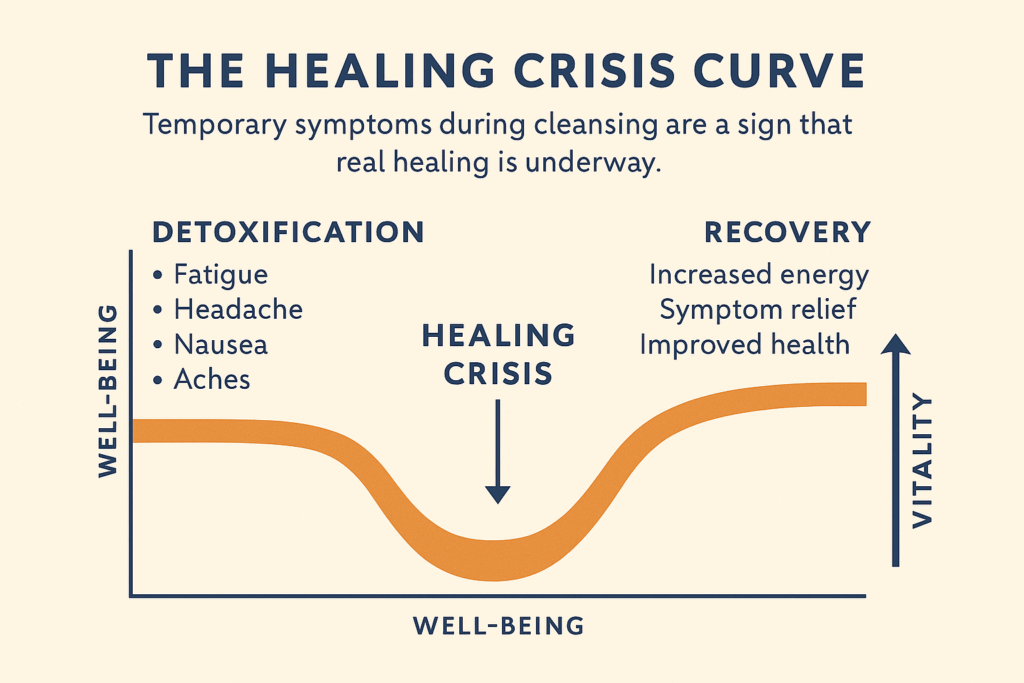
Some people feel remarkably well while fasting. Others experience headaches, weakness, nausea, changes in sleep, coated tongue, dizziness, changes in body odour, irritability or other temporary symptoms. Natural Hygiene has historically used the term “healing crisis” to describe periods in which symptoms appear or temporarily intensify as conditions change.
But what is actually happening during a fast? And does feeling worse necessarily mean that healing is taking place?
What Happens When We Stop Eating?
The body does not suddenly run out of energy when food stops arriving.
During the early part of a fast, it continues to use glucose and stored glycogen. As fasting continues and insulin levels fall, stored fat increasingly becomes available for energy.
Fatty acids can be used directly by many tissues. The liver also converts some of them into ketone bodies, which can provide an important alternative fuel, including for the brain.
This transition is sometimes called the metabolic switch.
It does not occur at exactly the same time for everybody. The previous meal, carbohydrate intake, glycogen stores, activity levels, body composition and individual metabolism all influence how quickly the shift occurs.
This is why statements such as “ketosis starts at exactly 18 hours” or “autophagy begins at exactly 24 hours” should be treated cautiously. Human metabolism does not operate according to a universal stopwatch.
You can explore how these processes fit into the wider organisation of the body through our guide to the body’s systems.
Ketosis During Fasting
As fasting continues, ketone production progressively increases.
The three main ketone bodies are beta-hydroxybutyrate, acetoacetate and acetone. They are produced largely from fatty acids in the liver.
This is an important survival adaptation. Without it, the body’s demand for glucose during prolonged food deprivation would require far greater breakdown of body protein. Increased use of fat and ketones therefore helps conserve protein while allowing stored body fat to provide much of the body’s energy.
Ketosis during fasting should not be confused with diabetic ketoacidosis, which is a dangerous medical condition associated particularly with insufficient insulin.
The ability to switch between incoming food and stored energy demonstrates something fundamental about human physiology: the body is designed to cope with periods in which food is temporarily unavailable.
What About Autophagy?
Autophagy literally means “self-eating”, but the term can be misleading if taken too literally.
It is a normal cellular recycling process. Cells break down and reuse damaged, unnecessary or dysfunctional components. Autophagy happens all the time at varying levels, rather than remaining completely switched off until somebody begins fasting.
Nutrient availability influences the signalling pathways involved in autophagy, and fasting is associated with conditions that favour increased cellular maintenance and recycling.
This has generated enormous interest in fasting research.
However, it is important not to exaggerate what is currently known. Much of the detailed research into fasting-induced autophagy comes from laboratory and animal studies. Measuring whole-body autophagy in living humans is difficult, and science cannot yet tell an individual that a particular number of fasting hours guarantees a particular degree of cellular recycling.
So fasting may influence autophagy, but claims such as “36 hours gives maximum autophagy” go beyond what we can confidently say.
Does Digestion Really “Use Up” Healing Energy?
Natural Hygiene has traditionally explained fasting by saying that when digestion stops, energy can be redirected towards repair.
That is a useful way of visualising the change, although the actual physiology is more complicated.
The digestive system does require energy, but fasting does much more than simply save the calories that would otherwise have been used digesting a meal. Hormones change, insulin falls, stored fuels are mobilised, cellular signalling changes and the body moves from a predominantly fed state into a fasting state.
From an NBI perspective, the important principle remains: when continual food intake stops, one major external demand has temporarily been removed and the internal environment changes considerably.
What Is a Healing Crisis?
The term healing crisis belongs primarily to Natural Hygiene and other traditional natural-health philosophies. It is not a recognised medical diagnosis.
Within Natural Hygiene, it describes a temporary period of discomfort that may occur after significant changes such as fasting, resting, stopping stimulants or changing the diet.
Possible experiences include:
Headache, tiredness, weakness, nausea, dizziness, changes in bowel activity, altered breath or body odour, coated tongue, disturbed sleep, changes in mood and sometimes the temporary return or intensification of familiar symptoms.
Some of these experiences have straightforward physiological explanations.
A person who normally consumes caffeine may develop a caffeine-withdrawal headache when fasting. A reduction in food intake changes blood glucose and insulin patterns. Fluid and sodium balance can change. Blood pressure may fall. Ketone production increases. Bowel movements naturally change because little or no food is entering the digestive tract.
Sleep and mood may change as well.
If you are experiencing symptoms and want to understand how different symptom patterns may connect, visit the NBI Symptoms section.
This matters because not every symptom during a fast should automatically be labelled “detoxification.”
Feeling Worse Does Not Automatically Mean You Are Healing
This is one of the most important distinctions to make.
Natural Hygiene encourages us to observe rather than immediately suppress every bodily response. But trusting the body should not mean ignoring warning signs.
A headache during fasting might be temporary and relatively harmless.
It could also result from dehydration, caffeine withdrawal, low blood pressure or another cause.
Feeling weak after several days without food is not in itself proof that the body has entered a deeper level of cleansing.
Vomiting, persistent diarrhoea, fainting, confusion, severe weakness, chest pain, significant breathlessness, severe abdominal pain, neurological symptoms or an inability to keep fluids down should not simply be interpreted as evidence that a fast is “working.”
The severity of a symptom is not a measure of the amount of healing taking place.
This is especially important because the old idea of deliberately pushing somebody into an intense “healing crisis” can encourage people to continue when their body may actually be signalling that circumstances need to change.
At Natural Body Intelligence, the aim is not to create the most dramatic reaction possible. It is to reduce unnecessary burden gradually enough that the individual can adapt.
What About “Toxins Leaving the Fat”?
Another common fasting explanation is that stored toxins suddenly pour out of fat cells and cause a healing crisis.
The reality is more nuanced.
Fat tissue is metabolically active, and some persistent environmental chemicals can accumulate in body fat. When fat is mobilised, concentrations and distribution of certain compounds may change.
But this does not mean that every headache, rash, bout of nausea or period of fatigue experienced during fasting is caused by unspecified toxins being released into the bloodstream.
The body is continuously processing metabolic waste through the liver, kidneys, lungs, digestive tract and other pathways whether a person is fasting or eating.
You can read more about these normal processes in The Detoxification Process: Understanding the Body’s Natural Clean-Up Cycle.
NBI therefore uses toxic load as a broader concept encompassing the substances and conditions the body must continually manage, rather than claiming that every fasting symptom proves that a particular toxin is being expelled.
The traditional Natural Hygiene concept of toxaemia provides further background on how this idea developed within Natural Hygiene.
Rest During a Fast
One principle from traditional Natural Hygiene remains particularly valuable: fasting and strenuous activity are not the same thing as fasting and resting.
When food intake is absent, energy is coming from internal reserves. Prolonged hard exercise, heavy manual work and significant physical stress increase demand at the same time that no new energy is arriving from food.
A short overnight or intermittent fast is very different from several days without food, but as fasting length increases, reducing unnecessary physical demands becomes increasingly sensible.
Rest also allows people to observe what is happening rather than continually overriding fatigue with caffeine, stimulants or sheer determination.
Fasting should never become a test of toughness.
For a deeper look at why rest matters, read Rest and Fasting: Nature’s Most Powerful Healers.
Why Fasts Feel Different From One Person to Another
There is no universal fasting experience.
Two people can undertake the same length of fast and experience it completely differently.
Their responses may be influenced by:
Their normal diet, recent food intake, caffeine use, alcohol use, medications, activity level, sleep, body composition, metabolic health, hydration, environmental temperature, previous fasting experience and underlying medical conditions.
Even the same person may experience two fasts very differently.
This is why rigid fasting timelines can be misleading.
They are useful for explaining broad physiological changes but should not be interpreted as guarantees about what an individual body will do at a particular hour.
Short Fasts and Prolonged Fasting Are Not the Same Thing
Missing breakfast is not physiologically equivalent to going without food for seven days.
An overnight fast or time-restricted eating pattern usually occurs while the person is still receiving their full nutritional intake regularly.
With prolonged water-only fasting, the situation progressively changes. Fat stores become increasingly important, ketone concentrations rise, electrolyte and fluid balance require more consideration, and nutritional depletion eventually becomes relevant.
The longer the fast, the more important individual circumstances become.
There is therefore no sensible rule that says:
“If three days are beneficial, ten days must be better.”
More fasting is not automatically more healing.
Who Needs Particular Caution?
Prolonged fasting is not appropriate for everybody, and some people should obtain appropriate medical guidance rather than attempting it independently.
Particular caution is needed where there is diabetes, medication that affects blood glucose or blood pressure, significant kidney or liver disease, pregnancy or breastfeeding, current or previous eating disorders, significant underweight or malnutrition, serious recent illness, or other conditions in which food, fluid or electrolyte changes could present additional risk.
People taking prescribed medication should not simply stop it because they have decided to fast.
For people with diabetes, for example, fasting can alter medication requirements and can increase the risk of hypoglycaemia, hyperglycaemia, dehydration and, in some circumstances, ketoacidosis.
Breaking a Fast
Breaking a prolonged fast deserves as much thought as beginning one.
Hunger and enthusiasm can make overeating extremely tempting, yet the body has just adapted to an extended period with little or no incoming nutrition.
After shorter fasts, most healthy people can resume eating without difficulty, although starting gently can be more comfortable.
After longer periods with little or no food, refeeding becomes more important.
Natural Hygiene traditionally favours easily digested, water-rich whole foods in modest quantities when ending a fast, allowing appetite and digestive activity to return progressively.
The important principle is gradual reintroduction rather than compensation.
Do not finish several days without food by trying to “make up” all the missed meals.
Refeeding Syndrome
After sufficiently prolonged or severe nutritional deprivation, restarting nutrition can occasionally trigger a dangerous metabolic disturbance known as refeeding syndrome.
When carbohydrate intake rises again, insulin increases and electrolytes including phosphate, potassium and magnesium can shift rapidly into cells. In somebody who is depleted, blood concentrations can fall dangerously.
Potential consequences can affect the heart, muscles, nervous system and breathing.
Risk is not determined simply by the number of fasting days. Nutritional status, body weight, previous weight loss, alcohol use, underlying illness and electrolyte status all matter.
People who are malnourished, significantly underweight or who have eaten little or nothing for an extended period require particular care.
Refeeding syndrome is one reason prolonged fasting should never be treated casually.
Fasting Is Not a Competition
Modern fasting culture can easily become obsessed with numbers:
24 hours.
72 hours.
Seven days.
Twenty-one days.
But the value of fasting cannot be measured simply by how long somebody can tolerate not eating.
Natural Hygiene was fundamentally concerned with removing obstacles to normal function, not collecting fasting records.
Sometimes the appropriate response is to fast.
Sometimes it is to eat.
Sometimes it is simply to sleep, reduce stress, stop overworking, improve the quality of food or allow the body more time between meals.
The aim is not deprivation. The aim is to create better conditions.
The Natural Body Intelligence Perspective
Natural Body Intelligence begins with a simple principle: the human body is dynamic, adaptive and continually working to maintain internal stability.
Fasting demonstrates that intelligence particularly clearly.
Food disappears, yet metabolism does not stop. Fuel use changes. Stored fat becomes available. Ketones rise. Hormonal signalling alters. Cellular maintenance continues. The body adapts to a radically different external environment.
Natural Hygiene interprets periods of temporary discomfort during these changes as possible manifestations of adaptation and adjustment — historically called a healing crisis.
But this idea should never become a reason to dismiss every symptom.
The better question is not:
“How bad can I make myself feel so that I know I am healing?”
It is:
“What is my body communicating, and what conditions does it need now?”
Sometimes the answer may be more rest.
Sometimes it may be water.
Sometimes it may be food.
And sometimes it may be medical assessment.
Working with the body means remaining observant enough to recognise the difference.
The Bigger Lesson of Fasting
Perhaps the most valuable lesson from fasting is not that everybody should undertake long fasts.
It is that the body is not completely dependent on constant food intake every few hours. It possesses sophisticated mechanisms for switching fuels, conserving resources and adapting to periods without food.
Fasting provides a striking demonstration of biological adaptability.
Used appropriately, it can also provide a period in which eating stops, stimulation is reduced and attention turns inward.
But fasting should support the body rather than become another source of stress imposed upon it.
The goal is never to force healing. It is to create conditions in which the body has fewer obstacles to overcome.
Continue Exploring Natural Body Intelligence
If you want to understand how fasting fits into the wider Natural Body Intelligence approach, explore Natural Hygiene, the body’s systems, and symptoms and what they may be communicating.
References
Rebello, C. J. et al. From starvation to time-restricted eating: a review of fasting physiology. International Journal of Obesity.
de Cabo, R. & Mattson, M. P. Effects of intermittent fasting on health, aging, and disease. New England Journal of Medicine.
Longo, V. D. & Panda, S. Fasting, circadian rhythms, and time-restricted feeding in healthy lifespan. Cell Metabolism.
Mizushima, N. & Levine, B. Autophagy in human diseases. Nature Medicine.
National Institute for Health and Care Excellence (NICE). Nutrition support for adults: oral nutrition support, enteral tube feeding and parenteral nutrition (CG32).