
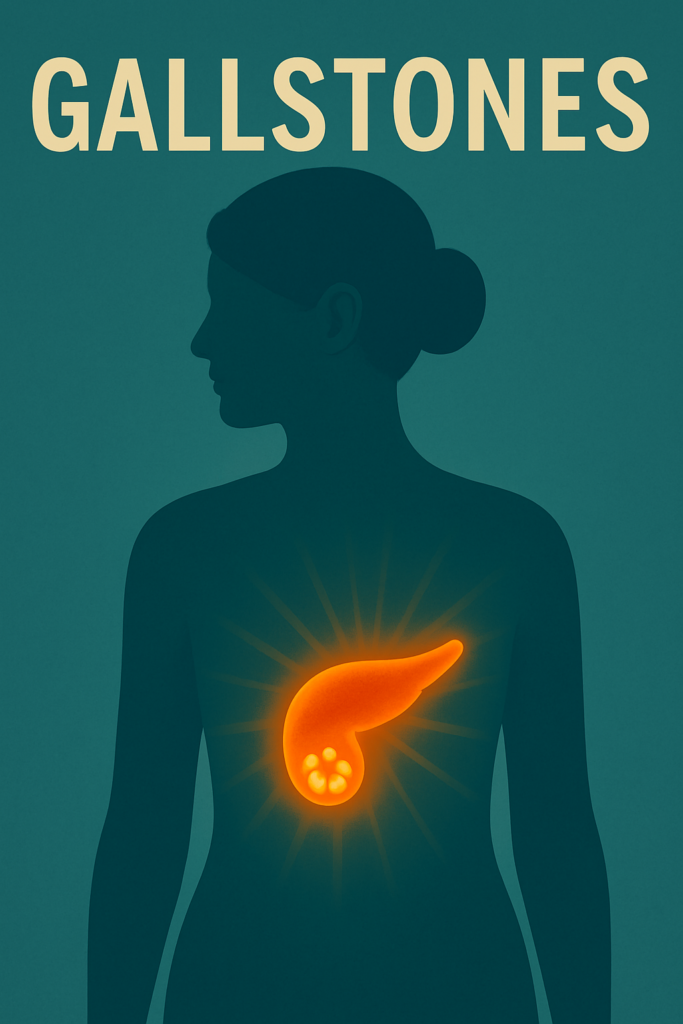
Gallstones: A Natural Hygiene Perspective on Bile, Digestive Load and Internal Terrain
Gallstones are hardened deposits that form in the gallbladder, most commonly from components of bile such as cholesterol or bilirubin. Some cause no symptoms; others can obstruct bile flow and produce severe pain or complications.
What Stone Formation Tells Us
Bile is produced by the liver and concentrated and stored in the gallbladder. Conventional physiology recognises that stone formation is influenced by the composition and concentration of bile, gallbladder emptying and other metabolic factors.
Natural Hygiene finds this highly relevant to terrain. A stone does not appear independently of the environment in which bile is produced, concentrated and moved. NH therefore asks about food patterns, body composition, metabolic health, hydration, movement, eating patterns and the wider digestive load.
This preserves an important Natural Hygiene insight without needing to say that the body deliberately manufactures stones as containers for toxins. The observable starting point is that the physical and chemical environment of bile influences whether material remains dissolved or precipitates into sludge and stones.
Fat Digestion and Gallbladder Emptying
Fat entering the small intestine stimulates gallbladder contraction and bile release. This helps explain why a gallbladder containing stones may produce pain after some meals. Natural Hygiene traditionally favours avoiding excessive rich and heavily processed foods and reducing unnecessary digestive burden.
It is too simple, however, to say that all dietary fat merely “clogs” the gallbladder. Gallstone risk is influenced by several factors, and very rapid weight loss or prolonged fasting can also increase stone formation in susceptible people.
Can the Body Pass Gallstones?
Small stones can sometimes move out of the gallbladder, but this is not always beneficial: a stone can lodge in a bile duct and cause obstruction, inflammation or pancreatitis. Claims that a cleanse has safely “flushed” stones should therefore be treated cautiously.
Natural Hygiene’s useful contribution is upstream: improve the digestive and metabolic terrain, simplify food, avoid habitual excess, maintain appropriate movement and support overall health rather than repeatedly forcing the gallbladder to cope with an unhealthy lifestyle.
When Gallstone Symptoms Need Assessment
Severe or persistent upper abdominal pain, fever, jaundice, repeated vomiting, dark urine, pale stools or rapidly worsening illness require medical assessment because obstruction or inflammation of the gallbladder, bile ducts or pancreas can become serious.
Toxaemia, Enervation and Vital Economy
Natural Hygiene can view gallstones within its broader concepts of toxaemia, enervation and Vital Economy by asking what long-term metabolic and digestive conditions have shaped bile composition and gallbladder function. That terrain perspective does not require treating a stone as a bag of systemic toxins or assuming that pain represents successful elimination.
The Observation and the Interpretation
The observation is that substances within bile can precipitate and form solid stones under particular conditions. Natural Hygiene interprets this as evidence that the internal chemical and metabolic environment matters and asks how food, movement, body composition, metabolism and overall health influence that terrain.
What goes beyond the evidence is claiming that gallstones are deliberately manufactured for detoxification or that passing a stone is necessarily healing. A stone moving into a duct can create dangerous obstruction even though changing the longer-term terrain remains worthwhile.