
Scarlet Fever: A Natural Hygiene Perspective on Rash, Fever and Recovery
Scarlet fever is the familiar medical and search term for an illness involving a characteristic rough red rash, sore throat and often fever. Conventional medicine associates it with certain strains of group A streptococcal bacteria. Natural Hygiene keeps the recognised name while looking more broadly at the body’s responses and the conditions that support recovery.
Understanding the Symptoms
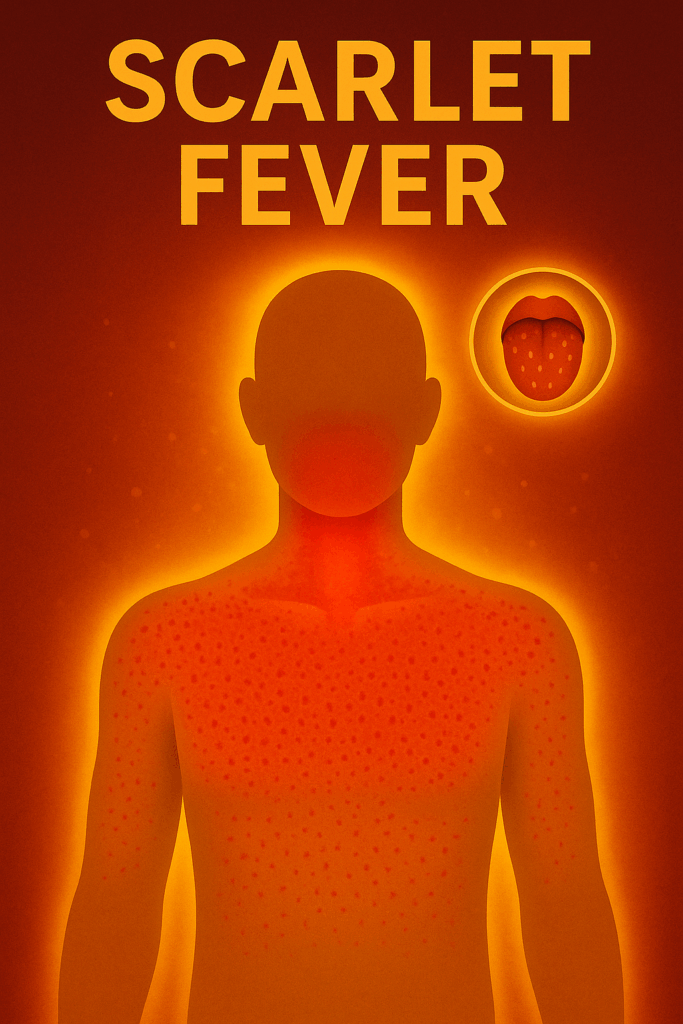
The rash, fever, sore throat, swollen glands and “strawberry tongue” are all visible parts of an acute whole-body illness. Natural Hygiene encourages people to observe what the body is doing rather than treating every symptom as meaningless. Fever, for example, is a regulated physiological response, while tiredness naturally reduces activity and encourages rest.
That perspective does not mean scarlet fever should be regarded as harmless or assumed to be simply a detoxification event. The diagnosis has recognised complications and deserves appropriate assessment.
The Natural Hygiene View
Natural Hygiene places emphasis on the person’s wider terrain: sleep, hydration, nutrition, environmental conditions, stress and available vitality. Concepts such as enervation and vital economy help explain why rest becomes particularly important during an acute illness.
Within this framework, the aim is to reduce unnecessary demands while the body is under strain. This can complement appropriate medical care; it is not a reason to ignore the diagnosis or avoid treatment that is needed.
Supporting Recovery
Rest, adequate fluids, a comfortable environment and simple food according to appetite are sensible supportive measures. A child should not be forced to fast during an acute illness. Maintaining hydration is especially important when fever or painful swallowing reduces normal intake.
Natural Hygiene also encourages a gradual return to normal activity rather than pushing a child or adult back to full activity before energy has returned.
Medical Assessment Matters
Scarlet fever should be medically assessed because appropriate antibiotic treatment is commonly recommended to reduce complications and transmission. Natural Hygiene lifestyle principles should not be used as a reason to delay that assessment or prescribed treatment.
Seek urgent help for difficulty breathing or swallowing, severe dehydration, marked drowsiness or confusion, rapidly worsening illness, severe headache or neck stiffness, or other worrying changes.
The useful Natural Hygiene question is therefore not whether the diagnostic label should be ignored, but what conditions best support the person while the body is recovering: sufficient rest, hydration, appropriate nourishment, low stress and careful attention to changing symptoms.
Elimination and the Acute Response
Natural Hygiene has traditionally interpreted acute episodes as periods in which the body redirects energy towards regulation, repair and elimination. Within that model, fever, reduced appetite, tiredness, increased secretions and skin changes are not regarded as random failures of the body. They are viewed as organised responses occurring while the body is attempting to restore more workable internal conditions.
This is where vital economy becomes important: activity and appetite may fall while the demand for rest rises. Natural Hygiene therefore seeks to cooperate with those signals while still recognising that scarlet fever can develop complications requiring medical care.
The Same Symptoms, Two Levels of Explanation
Scarlet fever combines bacterial findings with an organised whole-body response including fever, rash, throat inflammation and reduced energy. Conventional medicine explains the illness through toxin-producing group A streptococci and the body’s response. Natural Hygiene asks what the pattern of fever, skin activity, appetite change and enforced rest tells us about self-regulation and vital economy.
The NH interpretation does not require pretending the bacteria are absent. It places the microorganism inside a larger terrain model and focuses on how the person supports recovery while recognising that this particular diagnosis can have complications.
The Observation and the Interpretation
The observation is a recognisable acute illness associated with toxin-producing group A streptococci, accompanied by an organised response that can include fever, rash, throat inflammation, fatigue and appetite change. Natural Hygiene interprets that whole response through terrain, self-regulation, enervation and Vital Economy.
What goes beyond the evidence is denying the bacterial finding or assuming that the rash and fever are simply systemic toxins being expelled through the skin. The microorganism and the body’s response can both be real; Natural Hygiene’s distinctive question concerns the terrain in which that interaction occurs.