
Sciatica: A Natural Hygiene Perspective on Nerve Irritation, Movement and Terrain
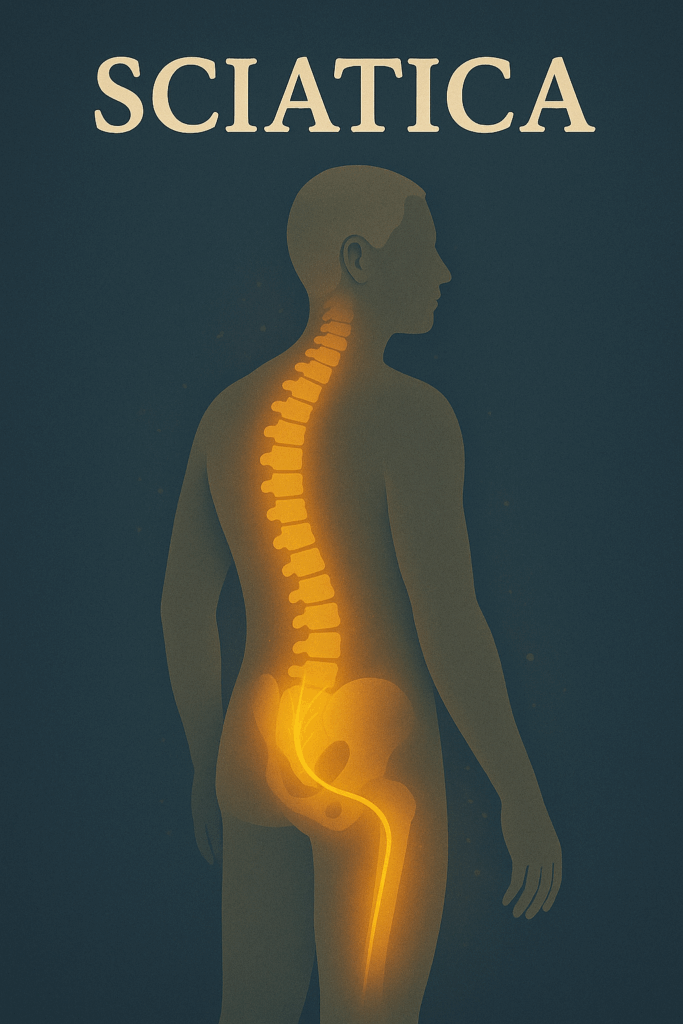
Sciatica describes pain or other symptoms travelling along the distribution of the sciatic nerve, usually from the lower back or buttock into the leg. It commonly occurs when a spinal nerve root contributing to the sciatic nerve becomes irritated or compressed.
Structure Really Matters
Disc herniation, narrowing around spinal nerves and other structural changes can irritate a nerve root. Inflammation around the affected nerve can add to pain even when mechanical compression is not extreme.
Natural Hygiene can build from this rather than denying it. Posture, movement, muscular strength, prolonged sitting, recovery, sleep, body weight and general health all form part of the terrain surrounding the spine and nervous system.
Pain as Protective Information
Pain changes behaviour. It may cause someone to avoid movements that strongly irritate a nerve and therefore has a protective signalling role. But pain is not proof that toxins have accumulated around the sciatic nerve or that the body has deposited waste into connective tissues.
Natural Hygiene’s useful question is what can reduce unnecessary load while maintaining enough safe movement to preserve function. Complete prolonged bed rest is generally different from intelligent physiological rest.
Movement, Rest and Recovery
Gentle activity according to tolerance, changes to aggravating positions and gradual restoration of strength and mobility can support recovery. Sleep, good nutrition and avoiding smoking support tissue health more broadly. Fasting should not be presented as a method for dissolving a disc problem or clearing toxins from a compressed nerve.
New bladder or bowel dysfunction, numbness around the saddle area, rapidly increasing weakness in the leg or symptoms affecting both legs require urgent medical assessment.
Enervation and Vital Economy
Natural Hygiene’s concepts of enervation and Vital Economy can be useful when pain has disrupted sleep, reduced movement or made ordinary activity more demanding. The practical question is whether current loading exceeds the irritated nerve and surrounding tissues’ present capacity.
This is a demand-and-recovery framework, not a claim that the sciatic nerve has run out of energy. Appropriate reduction of aggravating load can sit alongside gradual rebuilding of movement and strength.
Toxaemia and the Nerve Terrain
Classical Natural Hygiene uses toxaemia as a broad internal-terrain concept. NBI can apply that to metabolic health, smoking, nourishment, circulation, sleep and recovery without claiming that unspecified toxins physically collect around the sciatic nerve and compress it.
The Observation and the Interpretation
The observation is that nerve-root irritation, inflammation or compression can produce pain, tingling, numbness and sometimes weakness along a recognisable nerve distribution. Natural Hygiene interprets recovery within the wider terrain of load, movement, nourishment, sleep, enervation and tissue health.
What goes beyond the evidence is treating radiating pain as toxins leaving the nerve or assuming fasting can mechanically reverse a disc herniation. The terrain matters around a real neurological and mechanical process.
Related Musculoskeletal Reading
Natural Hygiene foundation: Vital Economy, rest and recovery