
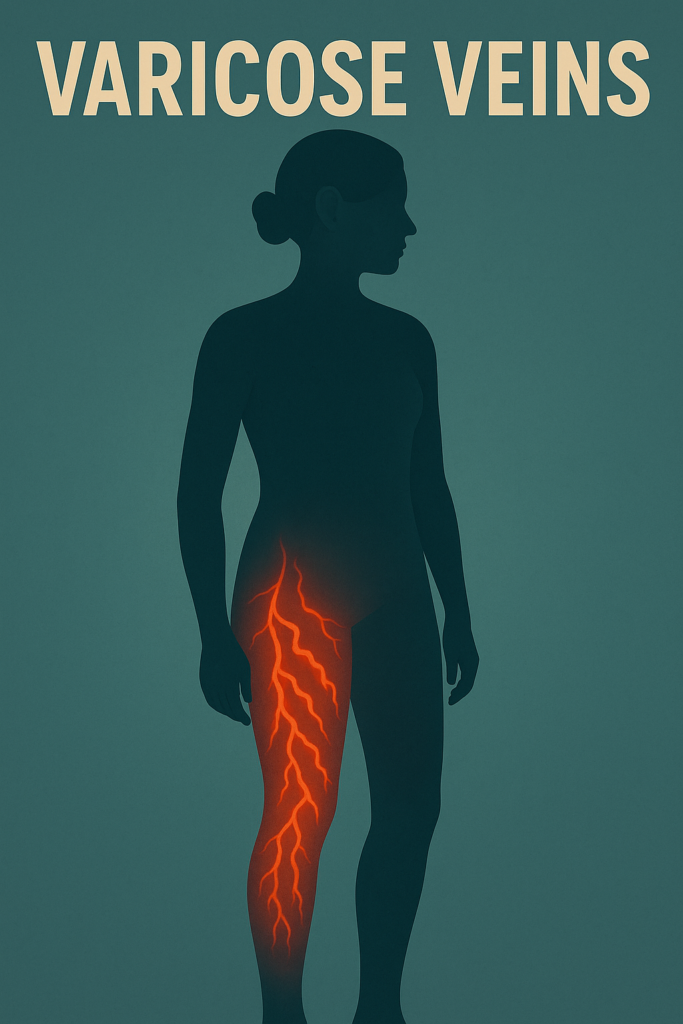
Varicose Veins: A Natural Hygiene Perspective on Venous Flow, Pressure and Movement
Varicose veins are enlarged, twisted superficial veins, most often in the legs. Veins return blood towards the heart, and valves inside leg veins help prevent blood flowing backwards under gravity.
What Actually Causes the Vein to Enlarge?
When vein walls and valves no longer maintain efficient one-way flow, blood can pool and venous pressure rises. The vein then stretches and becomes more visible. Age, inherited tendency, pregnancy, prolonged standing and other factors can contribute.
Natural Hygiene’s emphasis on movement has a strong physiological foundation here. Contraction of the calf muscles compresses deep veins and helps return blood upwards. Long periods without movement remove much of this muscular pumping assistance.
Circulation, Fluid and Terrain
Leg swelling can also reflect movement of fluid between blood vessels and surrounding tissues, with the lymphatic system helping return excess tissue fluid to the circulation. Natural Hygiene therefore has good reason to consider movement, body weight, cardiovascular health and the wider circulatory terrain together.
Where greater precision is needed is the idea that dietary toxins make blood and lymph physically thick until veins stretch in compensation. Dehydration can affect blood volume and concentration, but varicose veins are primarily a problem of venous structure, valves and pressure rather than dirty blood becoming too thick to move.
Supporting Venous Flow
Regular walking and calf movement, avoiding very long periods of immobility and maintaining healthy metabolic and cardiovascular conditions fit well with Natural Hygiene. Nutritious water-rich foods can contribute to hydration, but ordinary water also hydrates effectively.
Sudden one-sided leg swelling or pain, marked redness or warmth, chest pain or unexplained breathlessness requires urgent assessment because these symptoms can indicate a blood clot rather than ordinary varicose veins.
Vital Economy and the Muscle Pump
Natural Hygiene’s Vital Economy is useful when understood through actual demand and function. Walking and calf-muscle contraction assist venous return, while long periods of immobility remove that assistance. Appropriate movement therefore supports a mechanism the veins genuinely use rather than supplying an undefined form of vital force.
Toxaemia and Circulatory Terrain
Classical Natural Hygiene uses toxaemia as a wider internal-terrain concept. NBI can apply that to smoking, metabolic health, nourishment, activity, hydration and overall cardiovascular conditions without claiming that varicose veins are reservoirs created to hold toxic blood.
The Observation and the Interpretation
The observation is structural valve or vein-wall dysfunction with raised local venous pressure and pooling. Natural Hygiene interprets the person within the wider terrain of movement, circulation, body composition and recovery.
What goes beyond the evidence is claiming that cleansing the blood will mechanically restore damaged venous valves. Terrain can influence circulation while the structural problem remains real.
Related Circulation Reading
Natural Hygiene foundation: Toxaemia and the internal environment