
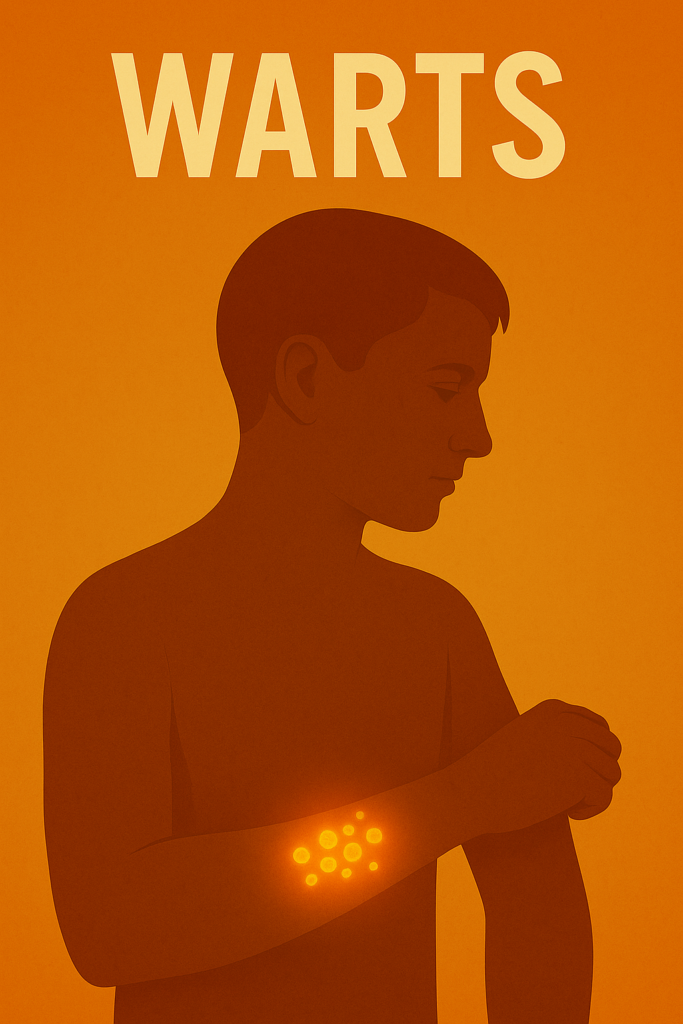
Warts and verrucas are visible skin growths, but Natural Hygiene looks beyond the surface. Rather than treating the growth as an isolated enemy, the Natural Hygiene approach asks about the condition of the skin, circulation, local irritation, recovery capacity and the wider terrain of the person.
Warts often appear in places exposed to friction, pressure, moisture or repeated minor damage. Natural Hygiene therefore considers both the local environment of the tissue and the overall condition of the body rather than viewing the growth in isolation.
The Natural Hygiene View
Within Natural Hygiene, skin changes are understood as part of a whole-body process. Sleep, stress, hydration, movement, diet, circulation, lymphatic flow and the condition of the skin all influence how well tissue maintains and repairs itself.
NBI is therefore interested not only in removing a wart but in asking why the same person develops recurring or persistent growths while another person does not. That question — why this tissue, in this person, at this time? — is central to the terrain-based approach.
Local Conditions Matter
Hands and feet are especially prone to repeated friction, pressure and small breaks in the skin. Verrucas on the soles of the feet also sit under constant mechanical pressure. These local conditions may help explain why certain areas are more vulnerable to persistent growths.
Natural Hygiene adds another layer by looking at circulation, movement, hydration and the body’s overall capacity for repair. A person who is exhausted, highly stressed, poorly nourished or inactive may not maintain tissue in the same way as someone who is well rested and physically robust.
How This Differs From the Conventional Model
Conventional medicine attributes common warts and verrucas primarily to human papillomavirus (HPV). Natural Hygiene places much more emphasis on the terrain of the tissue and the person: why the growth persists, why it appears in a particular location, and what conditions may make the skin more or less able to restore normal structure.
NBI does not present the conventional viral model as the entire explanation for susceptibility, persistence and recurrence. The Natural Hygiene framework focuses on the conditions in which the tissue is living, not simply on the presence of a labelled agent.
Supporting the Body
- Sleep and rest: consistent recovery supports normal tissue maintenance.
- Movement: regular activity supports circulation and lymphatic movement.
- Hydration: adequate fluid intake supports general tissue function.
- Simple food: Natural Hygiene favours minimally processed, plant-based foods rather than a heavily processed diet.
- Less irritation: avoid picking, cutting or repeatedly traumatising the area.
- Patience: many warts change slowly, and the body’s timing does not always match our impatience.
Do They Need to Be Removed?
Not always. Many warts disappear over time without treatment. Some people choose salicylic acid, freezing or other removal methods because the growth is painful, persistent or inconvenient. Natural Hygiene asks a different question: if the growth is removed, have the conditions that allowed it to persist actually changed?
That does not mean every wart must be left alone. It means symptom removal and whole-person health are not automatically the same thing.
What About Fasting or Dietary Simplification?
Fasting and dietary simplification are traditional Natural Hygiene tools used to reduce digestive demand and simplify the internal environment. They should not be presented as guaranteed wart-removal techniques. If someone chooses to use them, the goal should be broader physiological rest rather than attacking the wart itself.
When to Get a Growth Checked
Get medical advice if a growth changes rapidly, bleeds repeatedly, is unusually painful, is on the face or genitals, or you are not sure that it is actually a wart. People with diabetes, poor circulation or impaired healing should be especially cautious about self-treating growths on the feet.
Microorganisms, Toxaemia and Skin Terrain
Warts provide a useful organism-and-terrain example. Human papillomavirus is associated with these growths, while local skin conditions and the person’s wider health influence whether a lesion persists or eventually regresses. Natural Hygiene adds toxaemia, enervation and recovery to that terrain discussion without needing to deny the microorganism.
The Observation and the Interpretation
The observation is a localised overgrowth of skin cells associated with HPV, and many ordinary warts eventually regress. Natural Hygiene interprets persistence and recovery within the wider terrain of skin integrity, nourishment, sleep, stress and general health.
What goes beyond the evidence is claiming that the wart itself is stored toxic waste or that its disappearance proves systemic detoxification. The growth is real, the microorganism is real, and the condition of the host terrain remains a legitimate additional question.
Explore Further
Want Personal Guidance?
If you would like help reviewing the wider factors around recurring skin issues — diet, sleep, stress, movement and general health — you can complete the free NBI health questionnaire.