
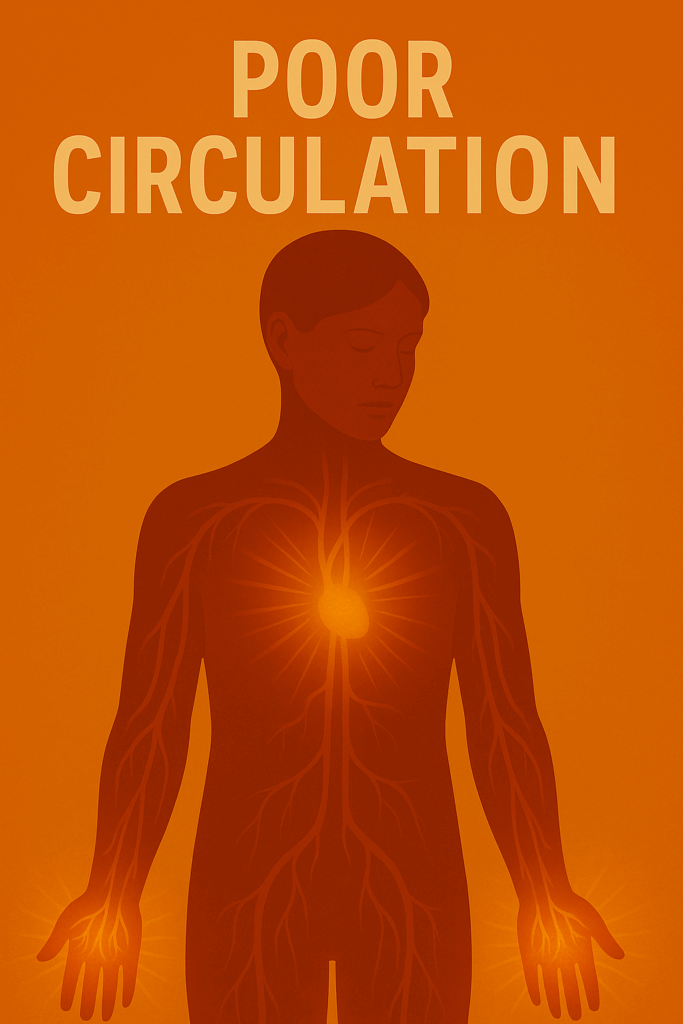
Poor Circulation: A Natural Hygiene Perspective on Blood Flow, Movement and Terrain
“Poor circulation” is a description rather than one diagnosis. Cold hands and feet, pain on walking, numbness, swelling or slow wound healing can arise from very different processes involving arteries, veins, nerves or other conditions.
Circulation Is a Whole-Body Process
The heart generates pressure, arteries distribute blood, small vessels regulate local delivery and veins return blood towards the heart. Muscular contraction assists venous return, while the lymphatic system returns excess tissue fluid and transported material to the circulation.
This interconnectedness fits Natural Hygiene’s terrain model extremely well. Movement, smoking, metabolic health, blood pressure, sleep, food and overall cardiovascular condition can all influence the environment in which tissues receive oxygen and nutrients.
Does Blood Become “Thick With Toxins”?
Blood viscosity can genuinely change with factors such as cell concentration, proteins and hydration. However, the common causes of clinically impaired circulation are more specific than general toxic waste physically thickening the blood. Arterial narrowing, impaired vessel function, venous valve problems and changes in small-vessel regulation are examples.
Natural Hygiene can retain toxaemia as its broader model of physiological burden while distinguishing it from the literal viscosity of blood. The practical terrain question is still valuable: which habits are supporting or damaging vascular health?
Movement and Vital Economy
Regular appropriate movement stimulates muscular pumping and increases blood flow to active tissues. Avoiding smoking, maintaining good metabolic health, adequate nutrition and hydration and balancing activity with recovery are all compatible with Natural Hygiene.
Sudden coldness or severe pain in a limb, new weakness, a non-healing wound, one-sided swelling, chest pain or unexplained breathlessness warrants medical assessment rather than assuming the body is merely experiencing temporary congestion.
Hydration and Blood Viscosity
Hydration deserves precision. Dehydration can reduce plasma volume and produce haemoconcentration. Restoring fluid increases plasma volume and reduces the concentration produced by dehydration. Water-rich fruit can make a meaningful contribution to hydration while also supplying nutrients.
This is different from saying that fruit “thins the blood” like an anticoagulant or washes toxic sludge from the circulation.
Enervation and Present Capacity
Natural Hygiene’s concept of enervation can help when poor sleep, inactivity, chronic stress and exhaustion coexist with reduced physical capacity. Vital Economy encourages movement appropriate to current capacity rather than alternating between prolonged inactivity and excessive exertion.
The Observation and the Interpretation
The observation is that blood flow can be altered by specific arterial, venous, small-vessel, cardiac or blood-volume mechanisms. Natural Hygiene interprets circulation within the wider terrain of movement, cardiovascular health, hydration, metabolism, nourishment and recovery.
What goes beyond the evidence is using “poor circulation” as proof that toxins have made the blood generally thick or stagnant. Flow matters, terrain matters, and identifying which part of the circulatory system is actually impaired matters too.
Related Circulation Reading
Natural Hygiene foundation: Toxaemia and the internal environment
Natural Hygiene foundation: Toxaemia and the internal environment