
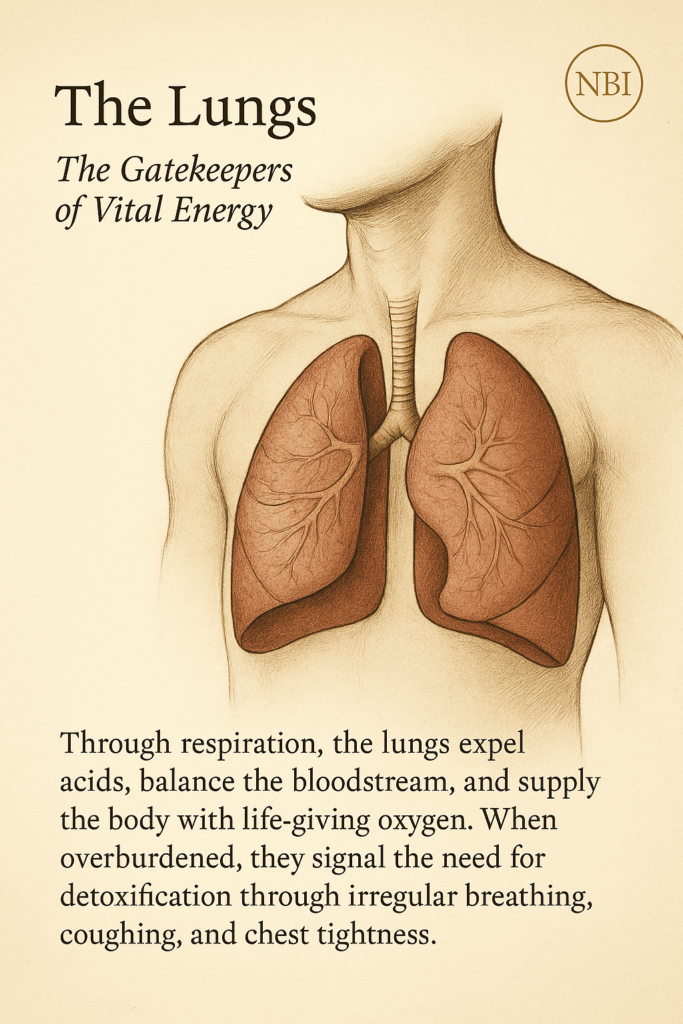
The Lungs: Gas Exchange, Elimination and the Natural Hygiene Terrain
The lungs are both respiratory organs and genuine organs of elimination. With every breath they bring oxygen into contact with the blood and remove carbon dioxide produced by metabolism. This continuous exchange also plays a major role in maintaining the body’s acid-base balance.
What the Lungs Actually Eliminate
Cells produce carbon dioxide as they use nutrients for energy. Blood transports much of that carbon dioxide to the lungs, where it is breathed out. Water vapour and small quantities of volatile substances can also leave through the breath.
This gives Natural Hygiene’s description of the lungs as an eliminative system a real physiological basis. The important refinement is that the lungs do not normally take over the work of the kidneys or colon by coughing out general metabolic waste when those organs are “overloaded”. Their principal eliminative role is respiratory gas exchange.
Breathing and Internal Balance
Breathing rate changes according to carbon dioxide, oxygen, acidity, exercise, temperature and nervous-system signals. Faster or deeper breathing can therefore genuinely alter internal chemistry. This is a much stronger foundation for the NH idea of respiratory balance than describing every change in breathing as detoxification.
Mucus and Airway Protection
Respiratory mucus traps inhaled particles and helps protect airway surfaces. Tiny cilia move mucus upwards, while coughing can provide additional clearance. Natural Hygiene can reasonably emphasise these protective processes while recognising that excessive mucus or persistent cough can also signal significant airway disease.
Breath, Stress and the Nervous System
Emotion and breathing are closely connected. Fear, anxiety, pain and relaxation can rapidly change breathing pattern through the nervous system. Slow controlled breathing can in turn influence arousal. This provides a physiological bridge between emotional state and breath without requiring the claim that unexpressed grief physically accumulates as congestion in the lungs.
Supporting Lung Terrain
Avoiding tobacco smoke and polluted air, regular appropriate movement, good nutrition, adequate sleep and fresh air all support respiratory and cardiovascular health. Breathwork can help awareness and relaxation, but it should not be used to push through significant breathlessness.
New or severe breathlessness, blue or grey lips, chest pain, coughing blood, confusion or rapidly worsening breathing requires urgent assessment.