
Gallbladder: A Natural Hygiene Perspective on Fat Digestion, Bile and Internal Flow
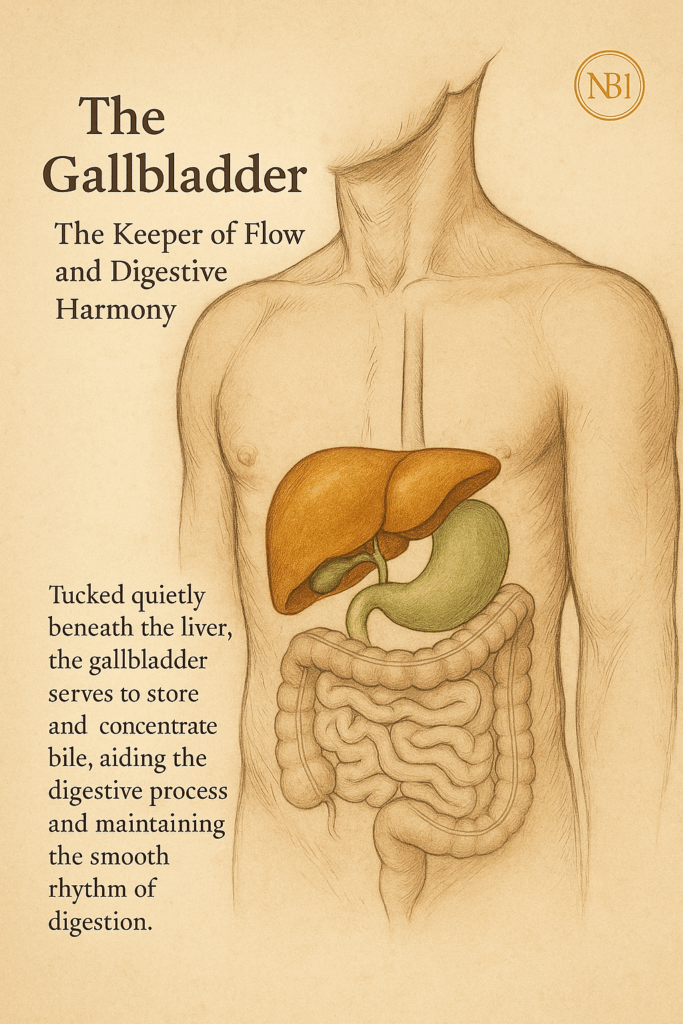
The gallbladder is a small organ beneath the liver that stores and concentrates bile before releasing it into the small intestine. Its function illustrates an important Natural Hygiene principle particularly well: an organ never works in isolation from the environment in which it operates.
Bile: Digestion and Elimination
Bile helps emulsify fats so they can be digested and absorbed. It also carries bilirubin, cholesterol and other substances from the liver into the intestine. That means the connection Natural Hygiene makes between the liver, gallbladder, digestion and elimination has a genuine physiological foundation.
Natural Hygiene then asks a broader question: what long-term conditions influence this system? Food quantity and quality, body composition, metabolic health, movement, hydration and eating patterns all form part of the digestive terrain.
Why Bile Can Become Sludgy or Form Stones
Bile is a complex fluid. If its components become imbalanced or sufficiently concentrated, material can precipitate as sludge or stones. Gallbladder emptying also matters. This is an observable example of the environment changing what happens to material within the body.
Natural Hygiene interprets this through terrain and physiological burden. It is reasonable to ask how lifestyle influences that environment; it is more speculative to say the body deliberately creates stones specifically to encapsulate toxins. We can preserve the terrain principle without turning an interpretation into an established mechanism.
Fat, Meals and Gallbladder Contraction
Fat in the small intestine stimulates the gallbladder to contract. Someone with stones or an inflamed gallbladder may therefore notice symptoms after rich meals. Natural Hygiene’s preference for avoiding habitual dietary excess and heavily processed foods fits naturally here.
But the relationship is not as simple as “fat makes bile thick”. Gallstone risk is influenced by multiple metabolic factors, and very rapid weight loss or long periods without food can also increase risk in some people.
Supporting the Terrain
A health-supportive pattern includes appropriate body weight, regular movement, adequate nutrition, hydration and avoiding repeated dietary excess. Natural Hygiene also values rest and a calmer eating environment as part of good digestive function.
Severe persistent upper abdominal pain, fever, jaundice, repeated vomiting, dark urine or pale stools require assessment because a blocked or inflamed gallbladder or bile duct can lead to complications.