
The Cellular System: Renewal, Recycling and the Natural Hygiene Terrain
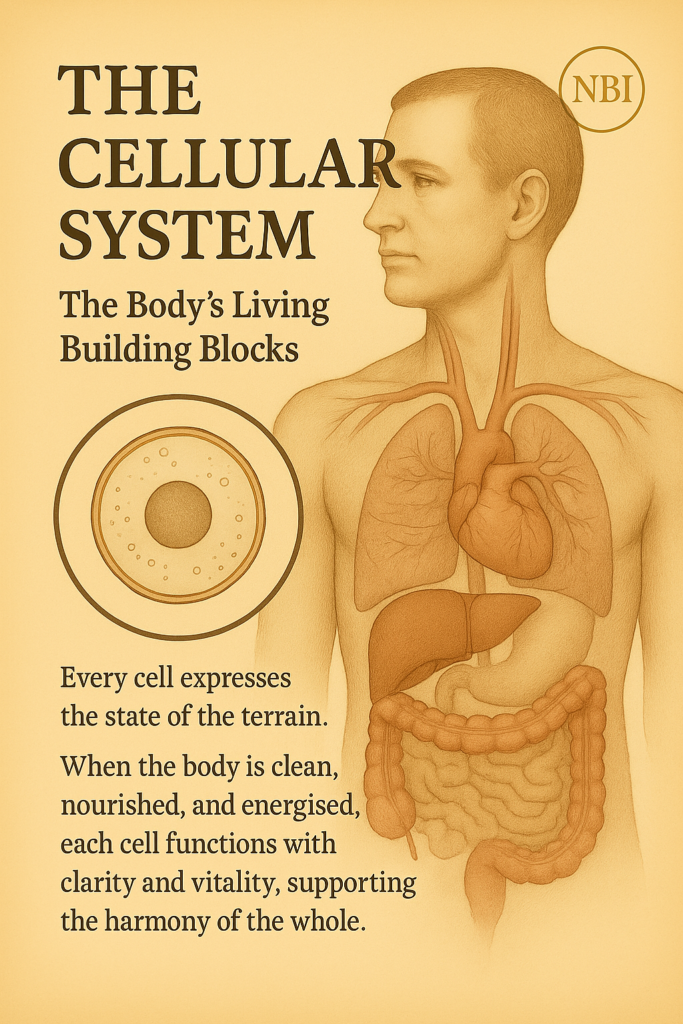
Every tissue and organ depends on cells continually sensing their environment, producing energy, repairing structures, communicating and removing damaged material. Natural Hygiene places this cellular environment — the terrain — at the centre of health.
Cells do not exist in isolation. They are surrounded by extracellular fluid and supplied through blood circulation. Oxygen, nutrients, hormones and signalling molecules arrive; carbon dioxide and metabolic products are carried away. The condition of this environment matters.
The Body Already Has a Cleanup Crew
The body continuously dismantles, recycles and replaces material. This is not merely a Natural Hygiene theory; several of the underlying processes can be directly studied.
Autophagy allows cells to break down and recycle damaged or unnecessary cellular components. Apoptosis is a regulated process through which particular cells are dismantled when they are no longer required or are seriously damaged. Phagocytic cells such as macrophages engulf cellular debris and other material and participate in tissue maintenance and repair.
This provides a strong physiological foundation for the Natural Hygiene idea that the body possesses its own internal cleanup and renewal machinery. It is working every day, not only when someone becomes ill.
Cellular Turnover and Repair
Different tissues renew at very different rates. The intestinal lining turns over rapidly, blood cells are continually replaced, skin renews over time, while some specialised cells persist for years. Cells also repair DNA, replace proteins and maintain membranes without necessarily replacing the entire cell.
This constant maintenance supports one of Natural Hygiene’s central observations: the body is not a static object waiting to be repaired from outside. It is continuously repairing, replacing and reorganising itself.
The Cellular Terrain
Blood flow, oxygen delivery, glucose regulation, hydration, electrolytes, amino acids, fatty acids, micronutrients, hormones and waste removal all influence cellular function. Severe disturbances in any of these can alter how cells work.
Natural Hygiene traditionally describes an excessive internal burden as toxaemia. This is a broader philosophical model than any single laboratory measurement. Its useful question is whether the demands being placed upon the organism are exceeding its capacity to process, repair and eliminate.
Cellular Energy: More Than One Fuel
Glucose is an important cellular fuel, and carbohydrate-rich foods such as fruit can supply it readily. But human cells can also use fatty acids and, under particular metabolic conditions, ketone bodies. Different tissues have different fuel requirements and metabolic flexibility.
Whole fruits additionally provide water, carbohydrate, potassium and other nutrients. Their high water content contributes to hydration and therefore to the fluid environment in which circulation, kidney filtration and cellular exchange occur.
Oxygen and Movement
Most cells rely heavily on oxygen-dependent metabolism. The lungs, heart, blood and circulation work together to deliver oxygen. Ordinary shallow breathing does not normally starve healthy tissues of oxygen because breathing and circulation are tightly regulated, but movement increases metabolic demand and blood flow and supports overall cardiovascular function.
Breathing practices can also influence nervous-system state, attention and perceived stress. This gives breathwork a legitimate place within a whole-person approach without needing to claim that everyday emotional tension leaves the cells oxygen-starved.
Rest, Sleep and Vital Economy
Repair does not occur only during sleep, but sleep is a major period of physiological regulation and recovery. Hormonal signalling, nervous-system activity, metabolism and tissue repair all change across the sleep-wake cycle.
This fits Natural Hygiene’s principle of vital economy: the body’s resources are finite at any particular moment, and prolonged demands without adequate recovery can change how those resources are allocated.
Fasting, Autophagy and Autolysis
Fasting changes the cellular environment. Insulin falls, stored fuels are mobilised and signalling pathways involved in nutrient sensing and cellular recycling change. Autophagy is one of the processes often discussed in this context.
Natural Hygiene has historically used the broader term autolysis to describe the body’s selective breakdown and recycling of its own material during fasting. Modern cellular biology gives us more precise mechanisms — including autophagy, protein degradation, fat mobilisation and normal tissue turnover — that help explain parts of that older observation.
That does not mean fasting selectively dissolves every diseased tissue or universally reverses chronic illness. The body continues to require energy and can also break down useful tissue during prolonged fasting. Context, nutritional reserves and health status matter.
A Self-Renewing Organism
The strongest cellular argument for Natural Hygiene is simple: repair, recycling and renewal are already built into human biology. We do not manufacture these processes from outside. Our task is to understand the conditions in which they operate and avoid unnecessarily obstructing the body’s capacity to maintain itself.