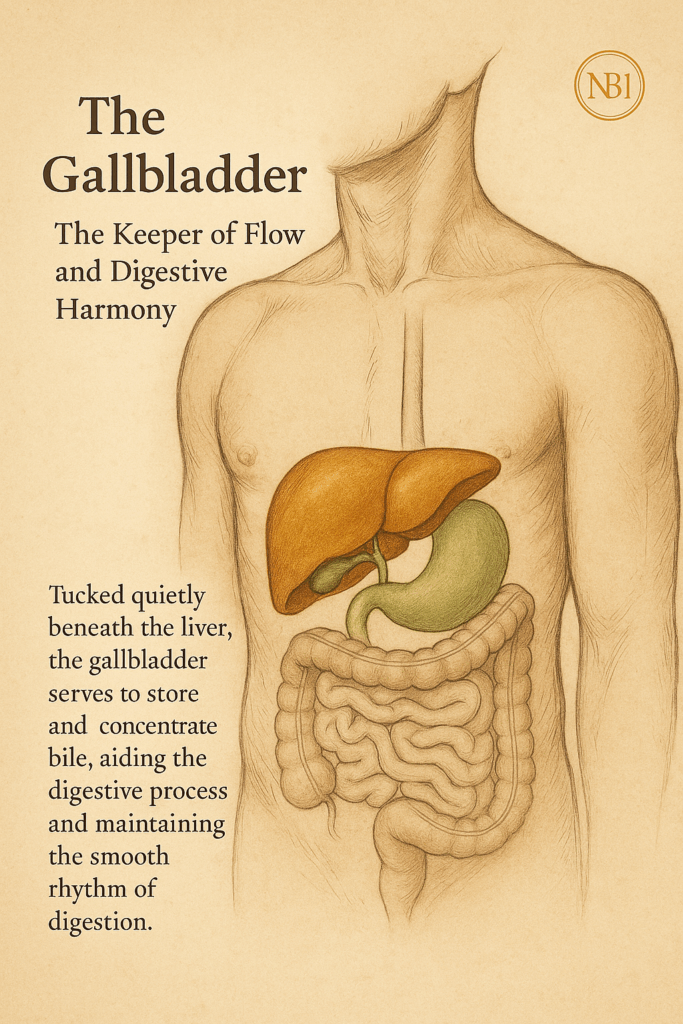
The gallbladder is a small pear-shaped organ tucked beneath the liver, yet its influence on digestion and overall vitality is far greater than its size suggests. In Natural Hygiene, the gallbladder is understood not as an isolated structure but as part of a coordinated digestive response. Its role is simple: store bile produced by the liver and release it when fatty foods enter the small intestine. When the diet is natural, water-rich, and low in heavy fats, the gallbladder operates effortlessly. Problems only arise when the organ is repeatedly forced to handle foods outside the body’s biological design.
The gallbladder’s job is not to tolerate endless quantities of oils, fried foods, butter, cheese, processed fats, baked goods, heavy animal products, and artificially mixed meals. These foods require intense bile secretion. Each time they are eaten, the gallbladder must contract powerfully to release stored bile. When this pattern becomes routine, the action becomes strained, the bile thickens, and symptoms begin to appear. These symptoms are not random malfunctions; they are signals that the organ is working far beyond its intended capacity.
Bile: The Body’s Natural Fat-Processing Fluid
Bile is a greenish fluid made by the liver. It emulsifies fats — essentially breaking them down so the small intestine can absorb them. In a natural diet rich in fruits, leafy greens, vegetables, and small amounts of natural fats found in whole foods, only modest amounts of bile are needed. This keeps bile thin, free-flowing, and easy to release.
However, when a person consumes large amounts of cooked fats, processed oils, baked foods, dairy products, and rich meals, the liver is forced to produce stronger bile. Over time, this bile can become thick or stagnant. When bile thickens, the gallbladder must contract even harder to push it out. This can cause discomfort, pressure, indigestion, nausea, and the painful episodes known as gallbladder attacks.
Natural Hygiene teaches that thick bile is simply the result of lifestyle, not a sign of a defective organ. The body attempts to work with what it is given. When the diet becomes overloaded with unnatural fats, the gallbladder responds accordingly.
Stones and Sludge: The Body Protecting Itself
Gallstones and gallbladder sludge form when bile becomes overly concentrated. This often happens because of:
- High-fat meals
- Cooked fats and oils
- Processed foods
- Lack of fresh fruit
- Heavy evening eating
- Emotional stress
- Dehydration
Stones are not the body “failing”. They are the body creating solid shapes to store material it cannot safely circulate. This is a protective adaptation, not an accident.
The key point in Natural Hygiene is this:
When the cause is removed, the body often dissolves or passes these obstructions on its own.
With cleaner blood, lighter meals, proper hydration, and periods of digestive rest, bile thins naturally and the liver–gallbladder system begins to restore normal function.
The Gallbladder After Removal: Why Symptoms Persist
Many people believe that removing the gallbladder solves digestive problems. In reality, it can create new ones. Without the gallbladder to store bile, the liver drips bile continuously into the intestines. This means the body can no longer release a strong surge of bile when a fatty meal arrives. As a result, people often experience:
- Difficulty digesting fats
- Bloating or gas
- Loose stools or diarrhoea
- Pain in the upper right abdomen
- Nausea after eating
- General digestive discomfort
These symptoms are simply the body trying to adjust. The underlying issue — a lifestyle too heavy for the liver–bile system — remains unchanged.
Natural Hygiene teaches that even without a gallbladder, people can thrive if they shift their diet to natural, water-rich foods and reduce the amount of fat and processed foods they consume. The liver adapts, bile becomes thinner, and digestion becomes easier.
Emotional Influence on the Gallbladder
The gallbladder is not immune to emotional pressure. Stress, frustration, anger, and internal tension can influence bile flow. When a person is emotionally tight, the muscles controlling gallbladder contraction can tighten as well. This is why gallbladder flare-ups often occur during stressful periods.
Learning to relax, practising deep breathing, resting properly, and simplifying priorities can help dramatically reduce gallbladder discomfort.
The Liver–Gallbladder Partnership
Natural Hygiene emphasises that the gallbladder cannot be understood without looking at the liver. The liver produces bile, while the gallbladder stores and concentrates it. Anything that burdens the liver — processed fats, overeating, stimulants, late meals, medication residues, and dehydration — also burdens the gallbladder.
When we restore natural conditions — fresh fruits, leafy greens, hydration, sunlight, movement, rest, and digestive simplicity — the liver begins producing cleaner, lighter bile. The gallbladder, in turn, can release this bile with ease.
Fasting and Rest: Deep Relief for the Gallbladder
Fasting is one of the most powerful tools for gallbladder healing because it gives the liver and gallbladder complete rest. With no fats to process, the gallbladder is free from contraction and irritation. The liver uses this time to purify itself and thin the bile. Many people notice relief from symptoms after even a short fast.
Fruit-only days or mono-meal eating also support gallbladder recovery by reducing digestive complexity and lowering the demand for bile.
The Gallbladder’s Message
The gallbladder does not fail without reason. Every sensation — pressure, tightness, nausea, bloating, or pain — is a message about dietary burden, emotional stress, or lifestyle imbalance. When we listen and remove the cause, the gallbladder responds with extraordinary resilience.
Natural foods, simple meals, proper hydration, emotional calm, and enough rest create the perfect environment for gallbladder harmony.
The body always moves towards healing when we stop interfering.
How This System Communicates Stress
- Digestive discomfort
- Pain, stiffness and inflammation
- Fatigue and exhaustion
- Skin changes and surface elimination
- Hormonal and cyclical shifts
Conditions Commonly Associated With the Gallbladder
- Gallstones
- Gallbladder dysfunction
- Acid reflux / GERD
- Fatty liver
- Digestive bloating
- Chronic indigestion