
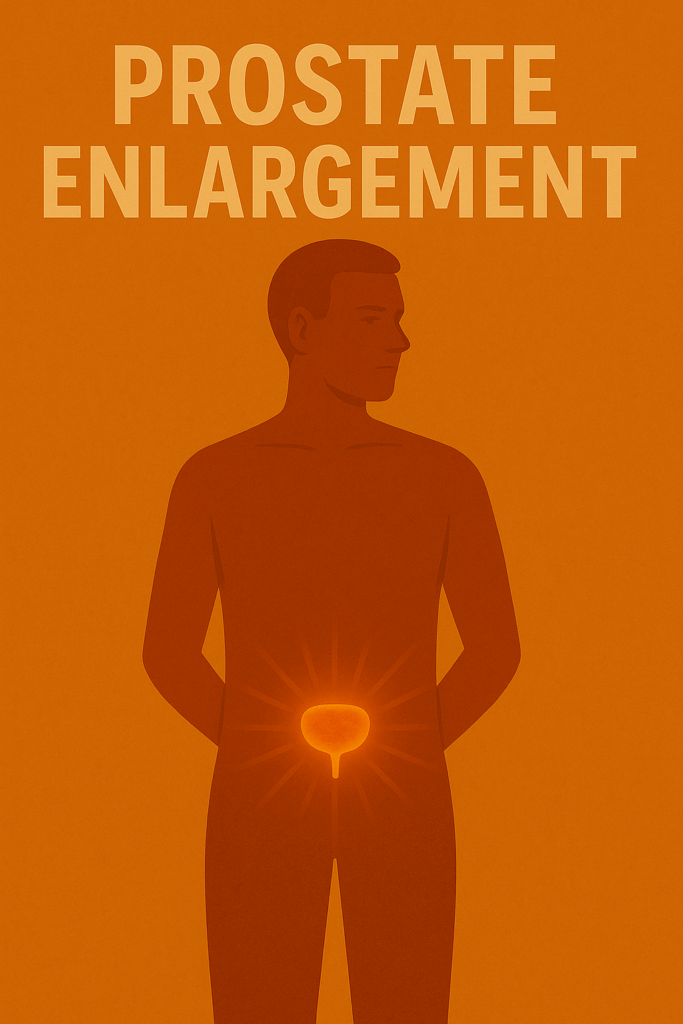
Prostate Enlargement: A Natural Hygiene Perspective on Growth, Pressure and Pelvic Terrain
Benign prostatic hyperplasia (BPH) is non-cancerous enlargement of the prostate gland. Because the prostate surrounds part of the urethra beneath the bladder, enlargement can narrow the urinary passage and contribute to weak flow, hesitancy, urgency, frequent urination or incomplete emptying.
What Is Actually Enlarging?
In BPH there is genuine growth in prostate tissue. Age-related hormonal and cellular changes are important to this process. Symptoms also depend on muscle tone around the prostate and bladder, so the size of the gland does not perfectly predict how troublesome symptoms will be.
Natural Hygiene adds the wider terrain question. Metabolic health, body composition, movement, sleep, food, alcohol and general cardiovascular health form part of the environment in which ageing tissues function. This is more defensible than describing BPH simply as toxins becoming trapped in the pelvis.
Circulation, Movement and Elimination
Regular movement supports cardiovascular and metabolic health and reduces long periods of sitting. Hydration and bowel regularity can also affect comfort in the pelvic region. Natural Hygiene groups these factors under circulation, elimination and terrain.
However, an enlarged prostate is not merely swelling created as a protective cleansing response, and emotional “holding on” should be treated as metaphor rather than a demonstrated cause of prostate growth.
Food, Rest and Fasting
Natural Hygiene favours nutritious minimally processed food, movement, adequate sleep and avoiding unnecessary stimulants and excess alcohol. Fasting is part of NH tradition, but it has not been shown to reliably shrink an enlarged prostate and should not delay investigation of significant urinary obstruction.
Inability to urinate, blood in the urine, fever with urinary symptoms, severe pain or rapidly worsening urinary obstruction requires prompt medical assessment. New urinary symptoms also deserve evaluation because BPH is not the only possible cause.
Vital Economy and Urinary Demand
Repeated night-time urination, poor sleep and difficulty emptying the bladder can themselves become significant demands on the person. Natural Hygiene’s Vital Economy is useful here as a demand-and-recovery framework, but it should not be used to claim that prostate growth is a deliberate energy-saving response.
Toxaemia and the Prostate Terrain
Classical Natural Hygiene uses toxaemia to describe the wider internal burden. NBI applies that concept to metabolic health, nourishment, alcohol, smoking, activity, sleep and elimination rather than claiming that unspecified toxins physically accumulate inside the prostate and make it grow.
The Observation and the Interpretation
The observation is genuine age-associated prostate tissue growth interacting with urinary pressure, muscle tone and bladder function. Natural Hygiene interprets the person within the wider terrain of metabolism, circulation, elimination and recovery.
What goes beyond the evidence is treating BPH as a toxin-storage mechanism or assuming fasting will reliably shrink established tissue. The terrain surrounding the prostate matters without changing what the enlargement itself is.
Related Urinary Reading
Natural Hygiene foundation: The Natural Hygiene approach
Natural Hygiene foundation: The Natural Hygiene approach