
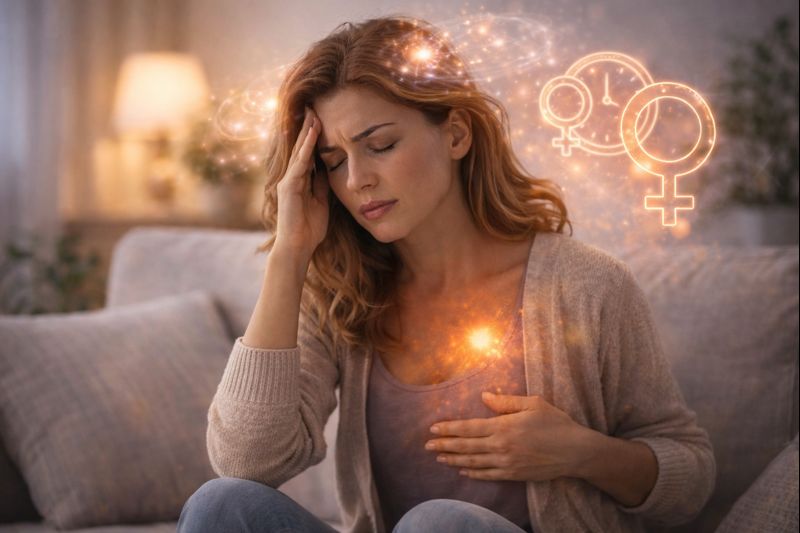
Hormonal and cyclical symptoms can feel unsettling, especially when the body seems to change overnight.
Hot flushes, night sweats, mood swings, menstrual changes, low libido, irregular cycles, breast tenderness, or a sense of being “out of rhythm” are often treated as problems to suppress.
From a Natural Hygiene perspective, these shifts are not random. They are signals that the body is adapting to strain, changing conditions, or accumulated load. Hormonal activity reflects the whole system, not one isolated gland.
Hormonal and cyclical shifts are the body’s way of saying: “I am recalibrating. Conditions and rhythms need attention.”
What These Symptoms Are Telling You
Hormonal patterns are strongly influenced by daily rhythms, nervous system tone, digestion, rest, emotional strain, and the body’s overall level of congestion.
Symptoms often intensify when:
- Sleep is disrupted or inconsistent
- Stress and stimulation remain high
- Digestion is under strain
- The body is working through elimination demand
- Daily routines are irregular and recovery is limited
During transitions such as puberty, postpartum, perimenopause, and menopause, the body may express stronger signals as it shifts priorities and rebalances rhythms.
Common Symptoms in This Group
People experiencing hormonal and cyclical shifts may notice:
- Irregular cycles or changes in bleeding
- Menstrual pain or increased sensitivity
- Mood swings or emotional intensity
- Hot flushes or temperature swings
- Night sweats
- Breast tenderness
- Changes in libido
- Water retention or swelling
Cyclical symptoms can fluctuate widely. It is common for the body to express different signals at different phases of a transition.
Related Illness Labels (Educational)
These symptom patterns are often grouped and labelled as:
These labels describe the pattern of symptoms, but they do not explain why the body is expressing those symptoms or what conditions are influencing hormonal rhythm.
Body Systems Commonly Involved
Hormonal and cyclical shifts often involve:
- Endocrine System – rhythm signalling and adaptation
- Nervous System – regulation, sensitivity, and stability
- Digestive System – internal load influencing rhythm
- Lymphatic System – congestion and elimination demand
This is why hormonal symptoms often overlap with fatigue, sleep disruption, digestive discomfort, and emotional tension.
Why Symptom Suppression Doesn’t Resolve the Pattern
Suppressing symptoms can provide temporary comfort, but it does not restore the rhythms that created the symptoms.
When underlying strain remains:
- Sleep and mood symptoms often persist
- The body may continue to express signals through the skin or digestion
- Energy may remain low because recovery is incomplete
- The cycle can feel increasingly unpredictable
The goal is not to fight the body. It is to reduce strain and restore supportive conditions so rhythm can return.
Supporting the Body’s Restorative Process
Hormonal rhythm often stabilises when the body experiences consistent recovery, calmer routines, and reduced internal load.
Supportive conditions commonly include:
- Consistent sleep and waking rhythms
- Reducing stimulation and chronic stress
- Simpler eating that reduces digestive pressure
- More rest during periods of intensity
- Gentle movement and time outdoors
As the whole system becomes more stable, hormonal symptoms often soften naturally.
How to Use This Information
You may wish to:
- Explore related symptom groups such as Sleep & Circadian Disruption, Emotional & Nervous Tension, or Fatigue & Exhaustion
- Learn more about the Endocrine System and how rhythm changes with conditions
- Return to the Symptoms Hub
A Reassuring Reminder
Hormonal shifts are not a sign that the body is broken.
They are often the body adapting to changing conditions and accumulated strain. When life becomes more supportive, rhythm and stability usually return.