
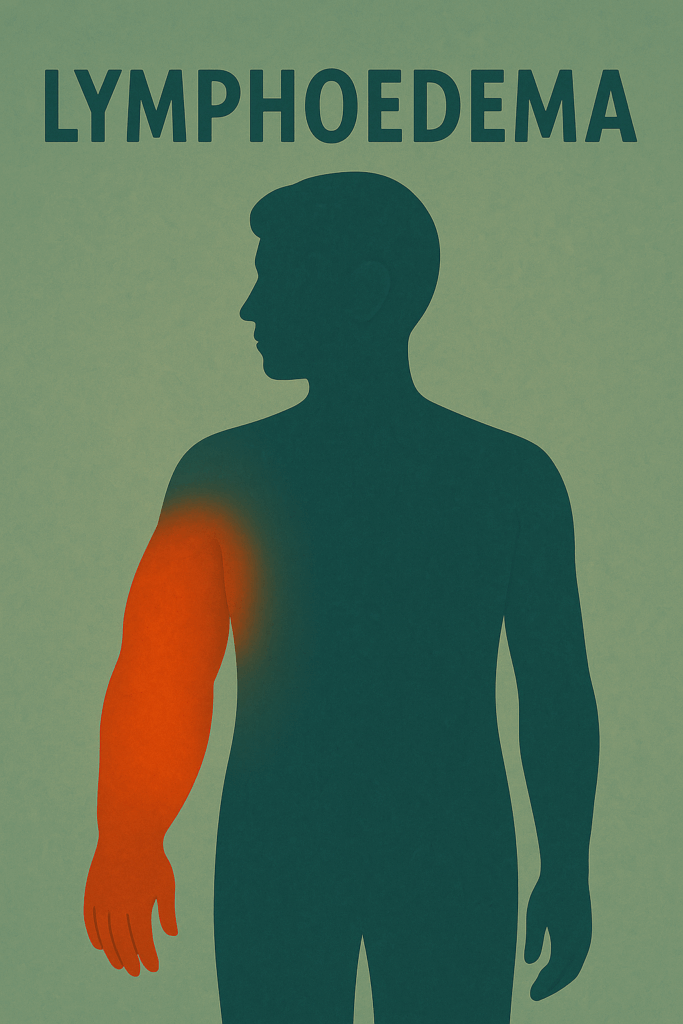
Lymphoedema: A Natural Hygiene Perspective on Fluid Return, Movement and Terrain
Lymphoedema is persistent swelling caused by impaired lymphatic drainage. It commonly affects an arm or leg and can develop because the lymphatic system did not form normally or after damage from surgery, radiotherapy, injury or other disease.
What Is Actually Accumulating?
Lymphatic vessels normally return excess tissue fluid and proteins to the circulation. When that transport capacity is reduced, protein-rich fluid remains in the tissues. Over time, persistent lymphoedema can also produce inflammatory and fibrotic tissue changes.
This is genuine impaired flow, giving Natural Hygiene’s interest in circulation a clear physiological basis. The swelling is not, however, the body deliberately retaining water to dilute and isolate dietary toxins.
Movement and External Support
Muscle contraction and breathing help move lymph. Movement within someone’s capacity is therefore useful. In established lymphoedema, compression garments, specialist exercise, skin care and sometimes manual lymphatic drainage can help manage fluid movement. These approaches assist physiology rather than necessarily “forcing” the body against itself.
The Wider Terrain
Natural Hygiene adds attention to sleep, movement, nourishment, hydration, body weight and general metabolic and cardiovascular health. These can support the person as a whole, but fruit or fasting cannot recreate lymph nodes removed during surgery or reliably dissolve structural lymphatic damage.
Skin care matters because chronically swollen tissue can be vulnerable to complications. Sudden new swelling, redness, heat, significant pain, fever, chest pain or breathlessness requires prompt assessment.
Vital Economy and Structural Capacity
Natural Hygiene’s Vital Economy can be useful when considering movement and recovery, but established lymphoedema demonstrates an important limit to purely functional explanations. If lymphatic vessels or nodes have been removed or damaged, the system may have permanently reduced transport capacity. Matching activity and management to that capacity is different from saying the body lacks enough vital energy to move the lymph.
Toxaemia and the Lymphatic Terrain
Classical Natural Hygiene gives the lymphatic system a central place in its discussion of toxaemia and elimination. That broader terrain concept can coexist with the measurable reality of lymph transport. The fluid in lymphoedema contains water, proteins and other normal tissue-fluid components; it should not simply be relabelled as accumulated dietary toxins.
The Observation and the Interpretation
The observation is impaired lymphatic transport with persistent tissue swelling and, in some cases, later inflammatory or fibrotic change. Natural Hygiene interprets lymph health within the wider terrain of movement, circulation, nourishment, body composition and elimination.
What goes beyond the evidence is claiming that established lymphoedema is a purposeful storage depot for toxins or that fasting can regenerate removed lymph nodes. Flow matters, terrain matters, and structural capacity matters too.
Related Lymphatic Reading
- Lymphatic System and Detoxification
- Chronic Lymphatic Congestion
- Fluid Retention (Oedema)
- Blood & Circulatory System
Natural Hygiene foundation: Toxaemia and the internal environment