
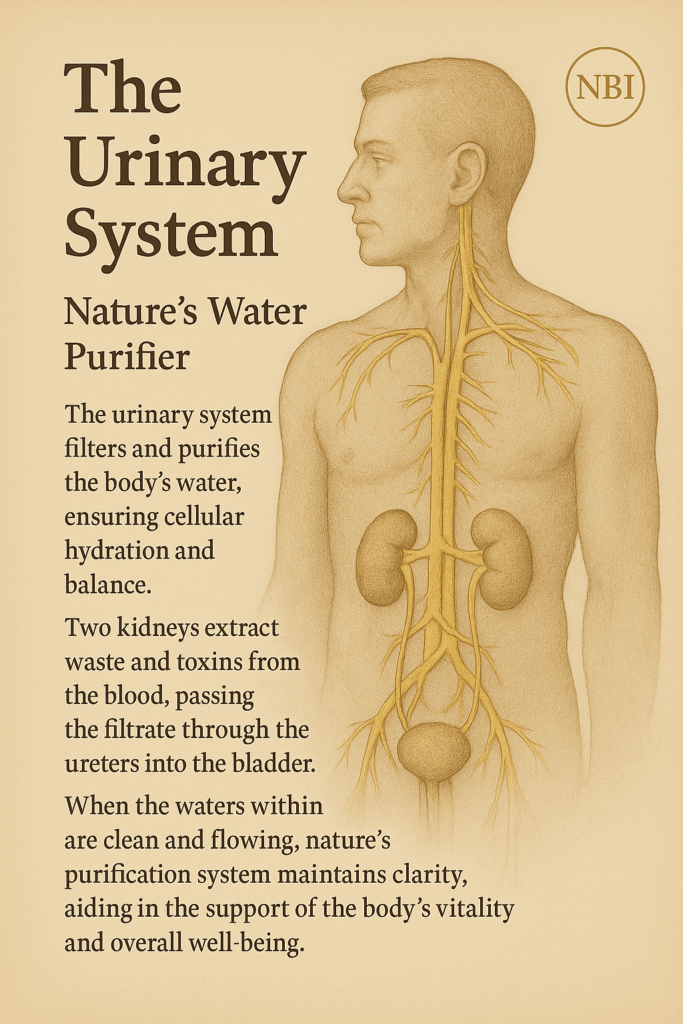
The urinary system is one of the body’s primary cleansing channels. It quietly filters the blood, removes dissolved waste, regulates minerals and fluid balance, and helps maintain the internal environment in a state of clarity. In Natural Hygiene, the urinary system is viewed as a responsive adaptation system rather than a fragile one. The kidneys, ureters, bladder, and urethra work together based on the conditions we create. When the body is well rested, well hydrated through natural water-rich foods, and supported with simple living, the urinary system functions silently and efficiently. When the bloodstream becomes overloaded with metabolic waste, chemical residue, stimulants, excess protein, or chronic stress, the urinary organs must work harder — and symptoms arise as intelligent warnings.
The Kidneys: The Body’s Internal Filters
The kidneys continuously filter the bloodstream, removing waste materials that circulate after digestion, activity, and natural cellular processes. Their ability to keep the blood clean is directly dependent on what enters the blood in the first place. Natural Hygiene teaches that a fruit-rich, water-rich diet places minimal demand on the kidneys because these foods leave almost no harmful metabolic residue.
On the other hand, cooked fats, processed foods, stimulants, alcohol, medication residues, dehydrated foods, and especially high-protein diets produce large amounts of acidic by-products. These substances must be neutralised and excreted through the kidneys. Over time, this increased workload thickens the blood, irritates the kidney tissue, and slows filtration.
Symptoms such as swelling, puffiness under the eyes, fatigue, lower back discomfort, strong-smelling urine, urinary frequency, or kidney “pressure” are not random failures. They are signs the kidneys are struggling to cope with the internal load.
The Bladder: A Storage Organ, Not a Source of Disease
The bladder is often blamed for symptoms like urgency, burning, or repeated urination. Natural Hygiene views these sensations differently. The bladder does not create its own problems; it simply stores the fluid the kidneys send to it. If the kidneys are filtering thick, irritating, or chemically loaded urine, the bladder’s lining becomes inflamed.
This irritation is the body’s attempt to expel waste that is too strong or too concentrated. Many people unknowingly worsen this by drinking too little water, consuming stimulants, or eating foods that leave behind chemical residues. The bladder’s symptoms are a message that the bloodstream is carrying substances the body wants removed urgently.
Hydration the Natural Hygiene Way
True hydration does not come from forcing litres of plain water into the body. The urinary system thrives when hydration comes predominantly through water-rich foods: fruits, salads, and fresh vegetables. These foods carry structured water accompanied by minerals and natural sugars that the body uses effortlessly.
When the diet is dominated by salty, cooked, processed, or dehydrated foods, the kidneys must work much harder to regulate electrolytes and fluid balance. This often causes the urine to become concentrated, acidic, and irritating.
Natural Hygiene teaches that proper hydration is achieved through:
- Fresh fruits
- Leafy greens
- A diet low in concentrated or processed foods
- Adequate rest
- Avoiding stimulants and diuretics
This approach lightens the kidney load and supports effortless filtration.
The Urinary System and Emotional Pressure
The kidneys and bladder are highly responsive to a person’s emotional landscape. Stress alters body chemistry, increasing the amount of metabolic waste circulating in the blood. Fear, anxiety, and chronic tension also affect muscle tone in the pelvis and lower back, influencing urinary flow and sensitivity.
Many people notice urinary issues flare during stressful periods. From a Natural Hygiene perspective, this is because the kidneys are working overtime to remove the biochemical by-products of prolonged emotional strain. The body is not breaking — it is adapting to the inner environment.
Supporting emotional hygiene through rest, simplicity, nature, and calm helps reduce the biochemical burden on the urinary organs.
Rest and Sleep: Essential for Kidney Function
The kidneys do a significant amount of repair work during rest. Poor sleep, late nights, stimulants, and chronic stress prevent the kidneys from entering deeper restorative phases. Over time, this reduces filtration efficiency.
Rest is not optional for urinary health. When a person sleeps properly, the kidneys slow their workload, repair tissue, and rebalance mineral levels. Without this rest, the urinary system becomes increasingly strained.
Fasting and Kidney Recovery
Fasting is one of the most effective ways to relieve the urinary system. Without digestion and constant biochemical input, the kidneys can redirect energy away from filtration and towards tissue repair and cleansing. Even short fasts or fruit-only days provide significant relief.
Many people notice clearer urine, reduced swelling, improved clarity of mind, and more stable energy after periods of digestive rest. This is the body rebalancing itself once the constant load is removed.
The Body Always Moves Towards Cleanliness
The urinary system’s message is simple: keep the bloodstream clean, and filtration becomes easy. In Natural Hygiene, kidney and bladder symptoms are always interpreted as signs of overload rather than disease. When we simplify our diet, reduce stimulants, prioritise rest, and allow emotional calm, the urinary system rapidly adapts and restores its natural efficiency.
The body is always moving toward health. We only need to remove the causes of irritation.
How This System Communicates Stress
- Pain, stiffness and inflammation
- Circulatory and sensory sensations
- Fluid retention and swelling
- Emotional and nervous tension
- Fatigue and exhaustion