
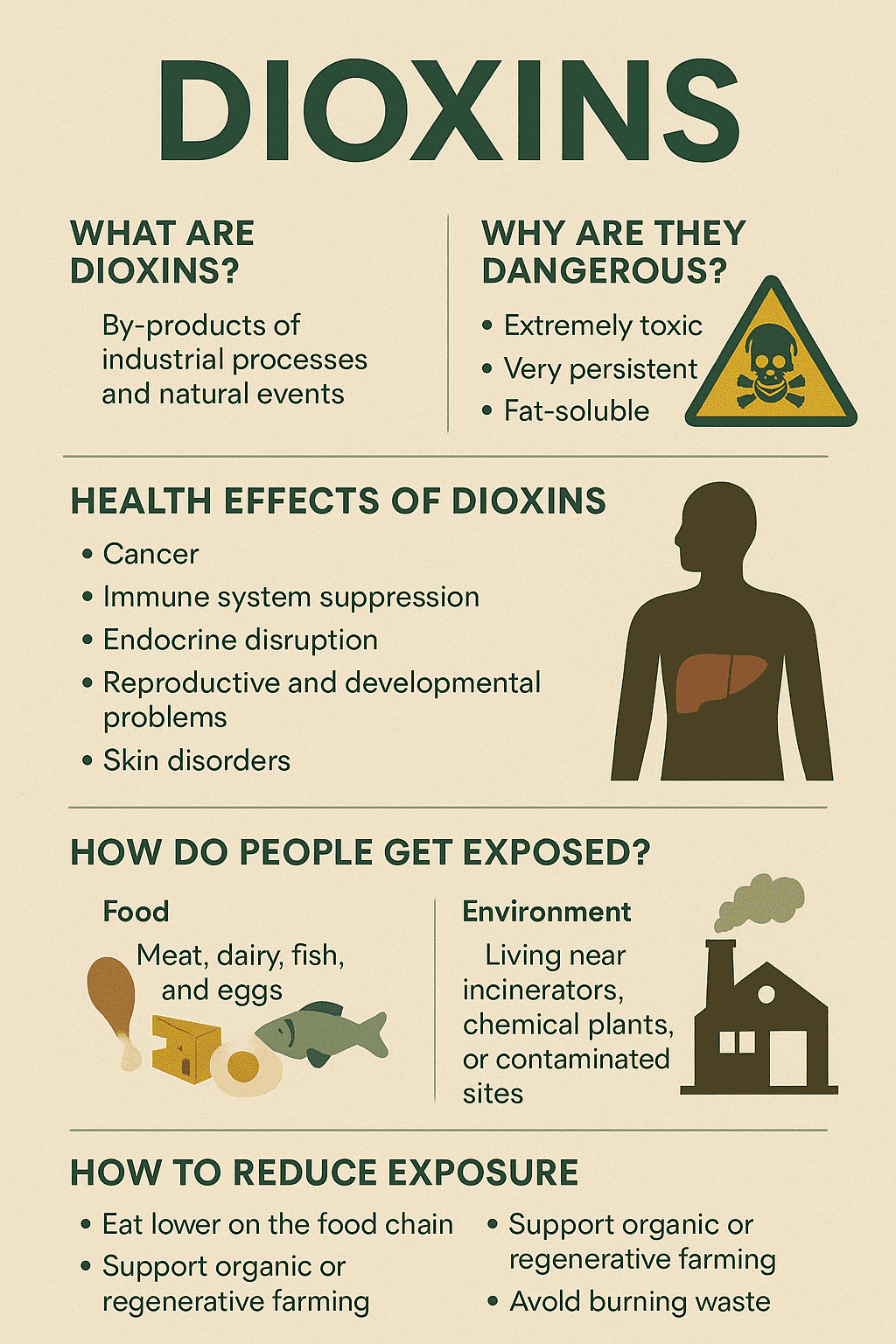
Dioxins are a group of chemically related compounds, including polychlorinated dibenzo-p-dioxins (PCDDs) and polychlorinated dibenzofurans (PCDFs). They are persistent environmental pollutants that can remain in the environment and accumulate in the food chain.
One of the best known is TCDD (2,3,7,8-tetrachlorodibenzo-p-dioxin), which the International Agency for Research on Cancer classifies as carcinogenic to humans.
Watch: A Journey Inside a Toxic Body
This Natural Body Intelligence video gives broader context for the idea of toxic load and the body’s internal environment before we look specifically at dioxins, how exposure occurs and why persistent pollutants can be difficult to avoid completely.
What are dioxins?
Dioxins are mainly unwanted by-products of industrial and combustion processes. They can be formed during waste incineration, some chemical manufacturing processes and other high-temperature activities. They can also be produced naturally during events such as forest fires and volcanic activity.
Why are they a concern?
- They can be toxic at very low levels. Some dioxin-like compounds can produce biological effects at extremely small concentrations.
- They are persistent. Certain dioxins remain in the body for years before being eliminated.
- They accumulate in fat. Because they are fat-soluble, they can build up in animals and become more concentrated through the food chain.
Possible health effects
High or long-term exposure to dioxins has been associated with a range of health effects. The World Health Organization lists effects including skin lesions such as chloracne, altered liver function, developmental and reproductive effects, effects on hormone systems and an increased risk of some cancers.
World Health Organization: Dioxins and their effects on human health
Major contamination cases
Seveso, Italy (1976)
A chemical reactor accident released TCDD into the surrounding area. The event became one of the most studied civilian dioxin exposures and led to long-term health monitoring of local residents.
Background on the Seveso disaster
Food contamination incidents
Dioxin contamination has also affected food supplies in a number of countries, particularly where contaminated animal feed entered the food chain. These incidents led to tighter monitoring and regulation.
How people are exposed today
For most people, the main source of exposure is food. Because dioxins accumulate in fat, animal-derived foods can be an important route of exposure, particularly fatty meat, dairy products, fish and eggs.
People living or working near contaminated sites, incinerators or certain industrial processes may also experience higher exposure.
How exposure is monitored and reduced
International and national agencies monitor dioxins in food, animal feed and the environment. Measures include tighter controls on industrial emissions, improved waste management, food testing and action to prevent contaminated feed entering the food chain.
- World Health Organization: Dioxins
- US Environmental Protection Agency: Learn about dioxin
- US Food and Drug Administration: Reducing human exposure to dioxins
Reducing your exposure
No one can completely avoid environmental pollutants, but exposure can be reduced. Eating a varied diet that is rich in plant foods can reduce reliance on the animal fats where dioxins are more likely to accumulate. People in areas with known contamination should also follow local guidance about fish, eggs or other foods produced nearby.
From a Natural Body Intelligence perspective, reducing unnecessary environmental load is one part of creating better conditions for the body. The emphasis is not on fear, but on lowering avoidable exposure wherever practical while supporting the body through simple food, rest, movement and a lower overall burden.
Conclusion
Dioxins are persistent environmental pollutants with well-documented health risks at sufficient levels of exposure. Regulation has reduced exposure in many countries, but because these compounds remain in the environment and food chain for long periods, continued monitoring is important.