
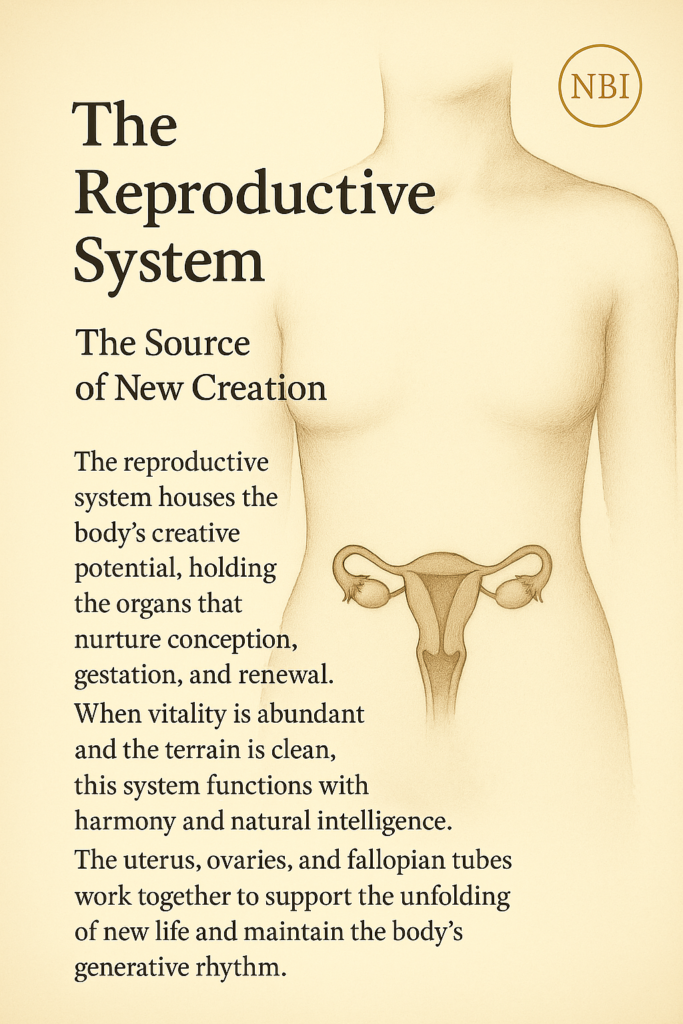
The Reproductive System: Rhythm, Energy Availability and the Natural Hygiene Terrain
The reproductive system does not operate independently from the rest of the body. Reproductive hormones interact with the brain, endocrine system, metabolism, circulation, nutrition and nervous system. This makes reproductive function a useful example of the Natural Hygiene principle that the condition of the whole organism matters.
The system includes the ovaries, testes, uterus, fallopian tubes, vagina, penis, prostate and associated hormonal networks. Its functions include sexual development, menstrual cycling, sperm production, fertility, pregnancy and sexual function.
Energy Availability and Vital Economy
Reproductive signalling really can change when energy availability becomes too low. Significant undernutrition, rapid weight loss or very high exercise demands can disrupt hypothalamic signalling and suppress menstrual function. Sperm production and sex hormones can also be affected by nutritional and metabolic conditions.
This provides a strong physiological example of Natural Hygiene’s Law of Vital Economy: reproductive function is integrated with the body’s assessment of available resources and current conditions.
That principle should not be stretched into saying every reproductive symptom is deliberate energy conservation. Fibroids, endometriosis, PCOS, vascular disease, structural abnormalities, medicines and many other factors can produce specific reproductive problems.
Hormones Respond to the Wider Terrain
Reproductive hormones are controlled through feedback networks involving the brain, pituitary gland and reproductive organs. Sleep, nutritional state, body composition, age, stress and illness can influence those networks.
Stress does not simply make the adrenal glands “take over” all reproductive hormones, but prolonged stress can influence hypothalamic, pituitary and autonomic signalling, sleep and behaviour. The wider terrain therefore matters without reducing every hormonal problem to stress or toxicity.
Menstruation and the Natural Hygiene Interpretation
Menstruation occurs when hormonal changes lead the uterine lining to break down and be shed when pregnancy has not occurred. Menstrual fluid contains blood, endometrial tissue, mucus and other secretions.
Natural Hygiene has long observed that some women report lighter, shorter and less uncomfortable periods after substantial improvements in diet and lifestyle. From the Natural Hygiene perspective, menstruation is viewed not only as the shedding of the uterine lining but as another occasion on which material is leaving the body, and therefore potentially another route through which the body can reduce its internal burden.
Conventional physiology explains menstrual flow primarily through hormonal changes and the breakdown and shedding of the endometrium. There is not currently an established mechanism showing that the uterus deliberately transfers general metabolic waste into menstrual fluid for elimination. Natural Hygiene interprets the observation more broadly: when the internal terrain improves, menstrual demands may diminish, which practitioners have historically interpreted as a reduced need for elimination.
The important distinction is between what we observe and how we interpret it. Menstrual flow can change substantially alongside changes in nutrition, energy availability, body composition, stress and wider health. The Natural Hygiene interpretation places these changes within the body’s broader processes of regulation and elimination, while recognising that unusually heavy bleeding, large clots or severe pain can also have specific causes such as fibroids, endometriosis or bleeding disorders and deserve investigation.
Libido and Sexual Function
Libido is influenced by hormones, relationships, psychological state, sleep, stress, medicines, pain and general health. Erectile function additionally depends on vascular, neurological and hormonal mechanisms.
Natural Hygiene’s whole-person approach is useful here because sleep, smoking, metabolic health, movement and stress can all affect sexual function. Low libido, however, is not necessarily a sign that the body has diverted “vital energy” into detoxification.
Circulation and Male Reproductive Health
Erections depend heavily on healthy blood-vessel function and adequate blood flow. Cardiovascular and metabolic health therefore form part of the reproductive terrain. This is more precise than describing processed food as creating “thick blood” that physically blocks circulation to the reproductive organs.
Pregnancy: Adaptation, Not Purification
Pregnancy produces extensive hormonal, cardiovascular and metabolic adaptation. Nausea, fatigue and heightened smell are common, but no single explanation accounts for every pregnancy symptom.
Pregnancy places substantial nutritional demands on the body. Adequate energy, protein, micronutrients and hydration matter. Prolonged or therapeutic fasting during pregnancy should not be promoted as detoxification.
Fasting and Reproductive Function
Fasting changes insulin, fuel use and hormone signalling and is an important part of Natural Hygiene tradition. But more fasting is not automatically better for reproductive health. If energy availability becomes too low, reproductive signalling can be suppressed rather than restored.
This is another example of why Natural Hygiene should respond to the body’s condition rather than apply one intervention mechanically to everyone.
The Reproductive Terrain
The strongest Natural Hygiene position is not that every reproductive symptom is detoxification. It is that reproduction occurs within a whole-body environment. Energy availability, nourishment, circulation, sleep, metabolic health, stress, age and tissue health all form part of that terrain.
Persistent heavy bleeding, severe pelvic pain, unexplained infertility, a new testicular lump, postmenopausal bleeding or sudden severe reproductive symptoms deserve appropriate investigation.
Explore Related Conditions & Symptoms
- Hormonal & Cyclical Shifts
- Menstrual Disorders
- Endometriosis
- Fibroids
- Infertility
- Erectile Dysfunction
- Pre-menstrual Tension (PMS)
- Menopause
- Perimenopause