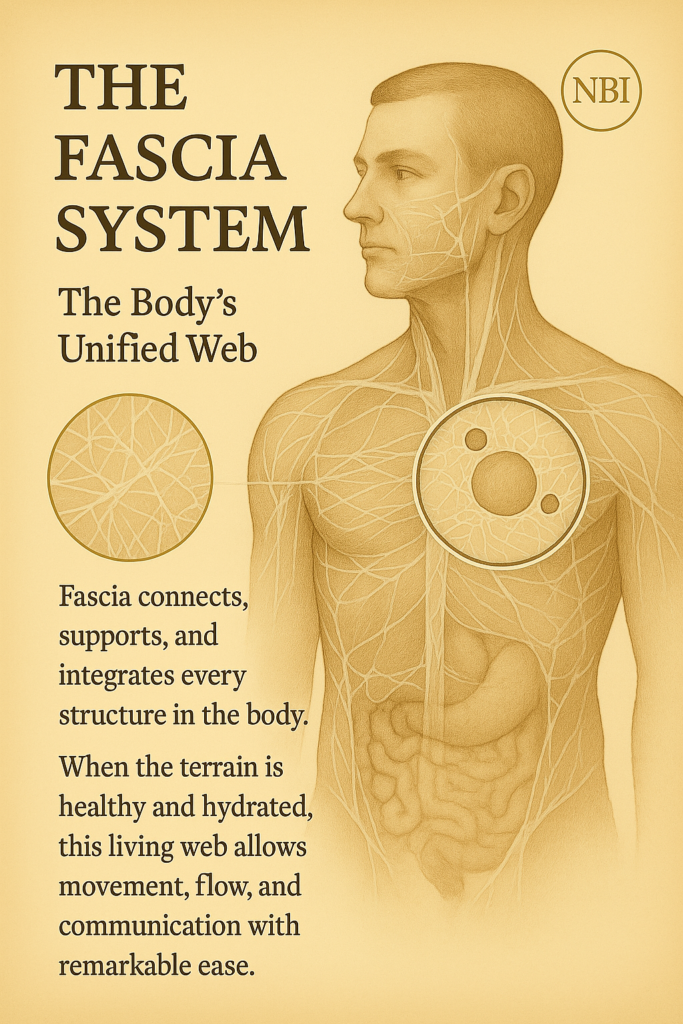
The fascia system is one of the most important yet least understood systems in the human body. Fascia is a continuous, intelligent web of connective tissue that surrounds every muscle, organ, nerve, vessel, and bone. It creates the body’s internal architecture, transmitting force, carrying fluids, supporting posture, and enabling smooth movement. Far from being a passive material, fascia is a living communication network, responding instantly to stress, hydration, movement, emotional states, and the internal chemistry of the body.
In Natural Hygiene, fascia provides a vital perspective because it reflects the whole-body environment. When the internal terrain is clean, hydrated, and relaxed, fascia remains supple and elastic. When the body is dehydrated, fatigued, emotionally stressed, or chemically overloaded, fascia tightens, thickens, and loses its fluid quality. Many symptoms attributed to muscles, joints, or nerves are actually fascial restrictions caused by lifestyle imbalance.
Fascia: The Body’s Internal Communication Web
Fascia connects everything. It binds muscles to bones, separates organs, suspends blood vessels, wraps nerves, and shapes the body’s posture. Because it is continuous from head to toe, any restriction in one area affects the entire system.
Fascia communicates through:
- Tension
- Pressure
- Hydration level
- Temperature
- Movement
- Emotional state
- Circulation quality
This makes fascia a primary indicator of the body’s overall condition. When fascia is healthy, the whole body feels fluid, stable, and energised. When fascia is unhealthy, movements feel heavy, stiff, or painful.
Hydration and Fascia: Water as Structural Lubrication
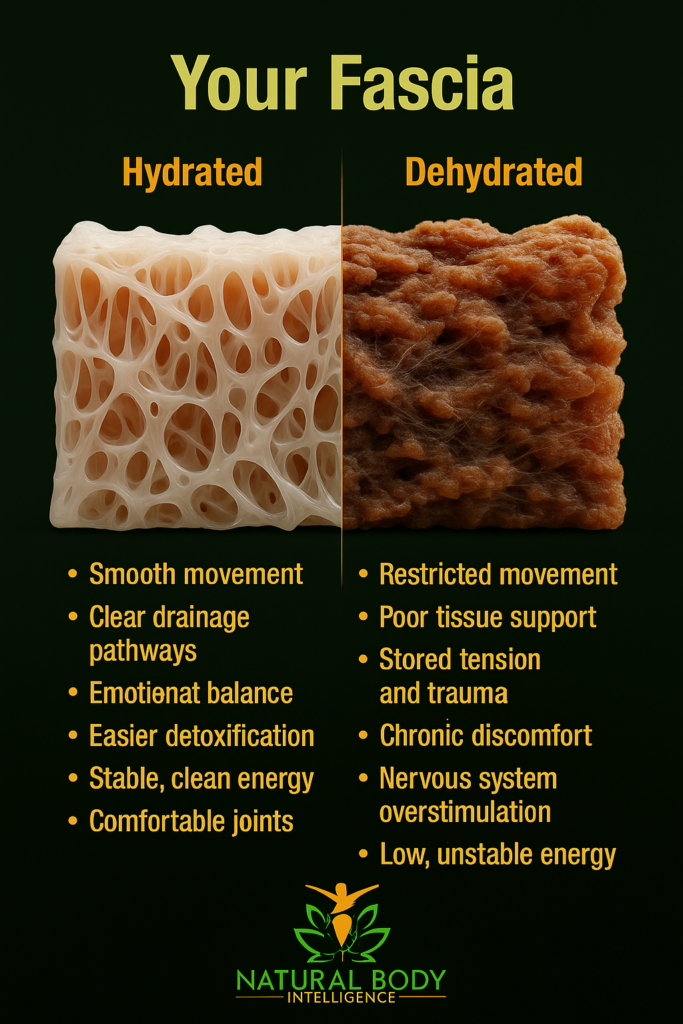
Fascia depends heavily on hydration — but not from drinking plain water. It requires water that is held within the tissues, which comes from fruits, vegetables, and natural foods. This structured water bathes the extracellular matrix and allows fascia to slide smoothly.
When the diet contains:
- Cooked foods
- Processed foods
- Salt-rich meals
- Stimulants
- Dehydrating substances
…the fascia becomes dry, sticky, and restricted.
This leads to:
- Stiffness upon waking
- Restricted range of motion
- Unexplained aches and pains
- Slow healing
- Poor athletic performance
- Postural imbalance
Natural Hygiene emphasises hydration from within, through water-rich living foods, to restore fascial fluidity.
Fascia Stores Emotional Tension
Because fascia responds to the nervous system, emotional states have a direct impact on fascial tone. Fear, anxiety, frustration, grief, and long-term stress tighten fascia just as surely as physical strain. This is why people feel emotions “in their body” — tight chest, clenched jaw, stiff neck, knots in the stomach.
When emotional tension becomes habitual, fascia adapts by thickening and reinforcing those patterns, creating chronic tightness. This becomes the basis for:
- Recurrent back pain
- Frozen shoulders
- Chronic neck tension
- Hip tightness
- Difficulty breathing fully
Emotional rest and honesty are therefore essential components of fascial health.
Movement: The Key to Fascial Elasticity
Fascia loves movement. It remodels itself according to how the body moves — or doesn’t move. Natural, fluid, varied movement stimulates circulation within the fascial layers and keeps them elastic.
Long periods of sitting, rigid exercise routines, or lack of full-range movement create fascial adhesions. These adhesions restrict muscles, compress nerves, and interfere with circulation.
Movement that restores fascia includes:
- Walking
- Stretching
- Gentle spiralling movements
- Full-body mobility
- Natural bending and reaching
- Breath-led movement
- Slow, mindful motion
Movement, combined with a clean internal terrain, restores elasticity and reverses restrictions.
Fascia and Detoxification
Fascia is closely tied to the lymphatic system. Both share space in the extracellular matrix. When lymph stagnates due to dehydration, inactivity, poor diet, or emotional stress, waste accumulates in fascial tissues. This creates heaviness, swelling, stiffness, and pain.
Improving detoxification through Natural Hygiene principles — rest, fasting, fruit-rich diet, deep breathing, and movement — clears fascial congestion.
Posture as an Expression of Internal State
Fascia shapes posture. A collapsed chest, forward head, or locked hips are not just structural issues; they reflect the internal chemistry and emotions of the individual. When the lifestyle is clean, relaxed, and harmonious, posture naturally improves as fascia softens.
When the lifestyle is heavy, stressful, and dehydrating, fascia stiffens and posture deteriorates.
In Natural Hygiene, posture becomes a diagnostic tool, revealing the body’s internal terrain.
Fasting and Fascial Regeneration
Fasting induces deep fascial repair. Without digestion taking energy, the body reallocates resources to cleansing and restructuring connective tissues. Old adhesions soften, chronic tension releases, and circulation improves.
Many people experience noticeable improvements in posture, flexibility, and ease of movement during or after a fast.
The Fascia System’s Message
Fascial symptoms are clear communication:
- “I am dehydrated internally.”
- “I am holding emotional tension.”
- “My movement is restricted.”
- “My internal terrain needs cleansing.”
- “I need rest and natural fuel.”
When the body receives natural foods, sunlight, movement, emotional release, and deep rest, the fascia system responds astonishingly quickly.
Fascia guides the entire body into alignment when we remove the causes of restriction.
Systems That Work Closely With the Skeletal System
Endocrine system
Digestive system
Muscular system
Fascia system
Joints system