Its role is simple. To perceive. To interpret. To inform the rest of the body about what is happening in the environment and within itself.
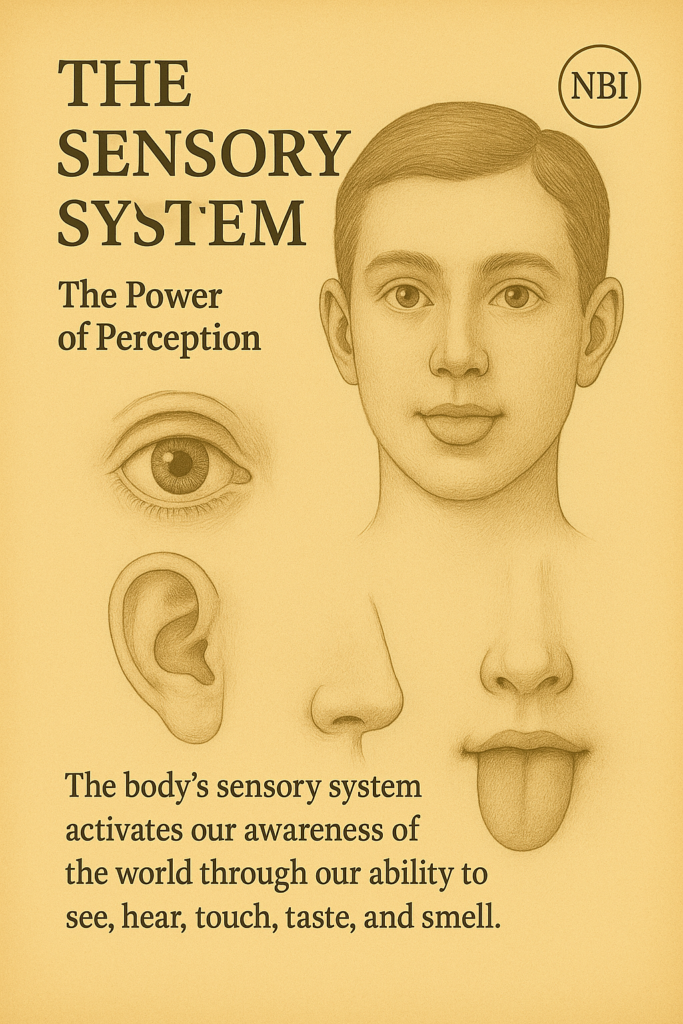
Through sight, hearing, smell, taste, and touch, the body gathers information every second of the day. This information shapes behaviour, digestion, movement, emotional response, and even long-term health.
Natural Hygiene recognises that the senses are not separate from health. They are part of the terrain. When the body is clear and balanced, perception is sharp and comfortable. When the system is overloaded, the senses often become irritated, dull, or hypersensitive.
The Organs of Perception
The sensory system includes the eyes, ears, nose, tongue, skin, and the vast network of sensory nerves that relay information to the brain. These structures do not operate in isolation. They are nourished by the blood, supported by the nervous system, and influenced by overall lifestyle.
When the internal environment is clean and well-rested, the senses function quietly and efficiently. When the body is burdened, the senses often become a channel for elimination or warning.
The Eyes: Windows of Internal State
The eyes are delicate tissues constantly exposed to light and environmental particles. They depend on clear circulation and proper rest.
When the body is overloaded with waste, irritation may appear as redness, watering, discharge, light sensitivity, or blurred vision. These are often labelled as isolated “eye problems”, yet from a Natural Hygiene perspective they frequently reflect systemic congestion.
Screens, artificial light, lack of sleep, and emotional strain further burden the eyes. Long hours of stimulation without rest create dryness, tension, and fatigue.
Spending time outdoors, allowing natural light exposure, resting the eyes, and reducing internal burden often restores clarity naturally.
The Ears: Balance and Vibration
Hearing depends on tiny, highly sensitive structures that detect vibration. The inner ear also governs balance.
When fluid balance in the body is disturbed, or when tension affects circulation around the head and neck, people may experience ringing, pressure, dizziness, or reduced hearing.
These symptoms are not random failures. They are signals. Often they arise during periods of stress, fatigue, or internal cleansing.
Quiet environments, deep rest, proper hydration, and removal of stimulants allow the delicate structures of the ear to settle.
The Nose: The First Line of Contact
The nose filters air and detects scent. It is lined with mucous membranes that respond quickly to irritation.
When the body needs to eliminate waste, the nasal passages often become active. Runny noses, congestion, sneezing, and sinus pressure are commonly attempts to expel irritation.
Suppressing these responses with medication may temporarily dry the surface, but the underlying burden remains.
Fresh air, clean environments, and simplified eating reduce the need for constant discharge.
The Tongue and Taste
Taste guides food selection. It is deeply connected to digestion.
A coated tongue often reflects digestive overload. Strong cravings may signal imbalance rather than genuine need.
When the body is clean and well-rested, taste becomes more sensitive. Natural foods taste vibrant and satisfying. Artificial flavours and heavy seasonings become less appealing.
Clarity of taste returns when the internal terrain is simplified.
The Skin: The Largest Sensory Organ
The skin detects temperature, pressure, and pain. It also participates in elimination.
Rashes, itching, sensitivity, and eruptions are frequently expressions of internal congestion finding an outlet. From a Natural Hygiene perspective, these are not skin defects but surface manifestations of deeper imbalance.
Allowing the body to complete these processes without suppression often leads to clearer, calmer skin over time.
Sensory Overload in the Modern World
Modern life bombards the senses constantly. Bright artificial light. Loud noise. Chemical fragrances. Processed flavours. Screens. Notifications. Continuous stimulation.
The nervous system rarely gets quiet.
When stimulation exceeds the body’s capacity to process it, fatigue, irritability, headaches, and hypersensitivity often follow. Some people withdraw. Others become restless. Both are signs of overload.
Reducing sensory input is as important as improving diet. Time in nature, silence, darkness at night, and digital boundaries allow the sensory system to recalibrate.
Emotion and Perception
The senses are influenced by emotional state. Fear sharpens perception but narrows it. Chronic stress dulls subtle awareness.
Many people notice that colours seem brighter, sounds clearer, and smells more vivid during periods of calm. That is not imagination. It reflects nervous system balance.
When emotional tension decreases, perception refines itself.
Fasting and Sensory Clarity
During fasting, many people report heightened senses. Smell becomes stronger. Vision feels clearer. Hearing sharpens.
This is not mystical. When digestion rests, energy becomes available for repair and recalibration. Congestion reduces. The nervous system quiets.
The senses often return to their natural sensitivity when burden is removed.
Perception Should Feel Comfortable
The sensory system is not designed for chronic irritation. Burning eyes, blocked sinuses, constant noise sensitivity, and skin discomfort are communications.
When we simplify food, reduce stimulants, rest properly, spend time in natural light, breathe clean air, and calm the nervous system, perception becomes effortless again.
The body always seeks balance. The senses simply report what is happening.
How This System Communicates Stress
Light sensitivity
Ringing in the ears
Sinus congestion
Skin irritation
Headaches
Overwhelm in busy environments
Conditions Commonly Associated With the Sensory System
Tinnitus
Vertigo
Meniere’s disease
Conjunctivitis
Glaucoma
Cataracts
Dry eye syndrome
Anosmia (loss of smell)
Ageusia (loss of taste)
Hyperacusis
Photophobia
Systems That Work Closely With the Digestive System
Nervous system
Lymphatic system
Circulatory system
Digestive system
Endocrine system