
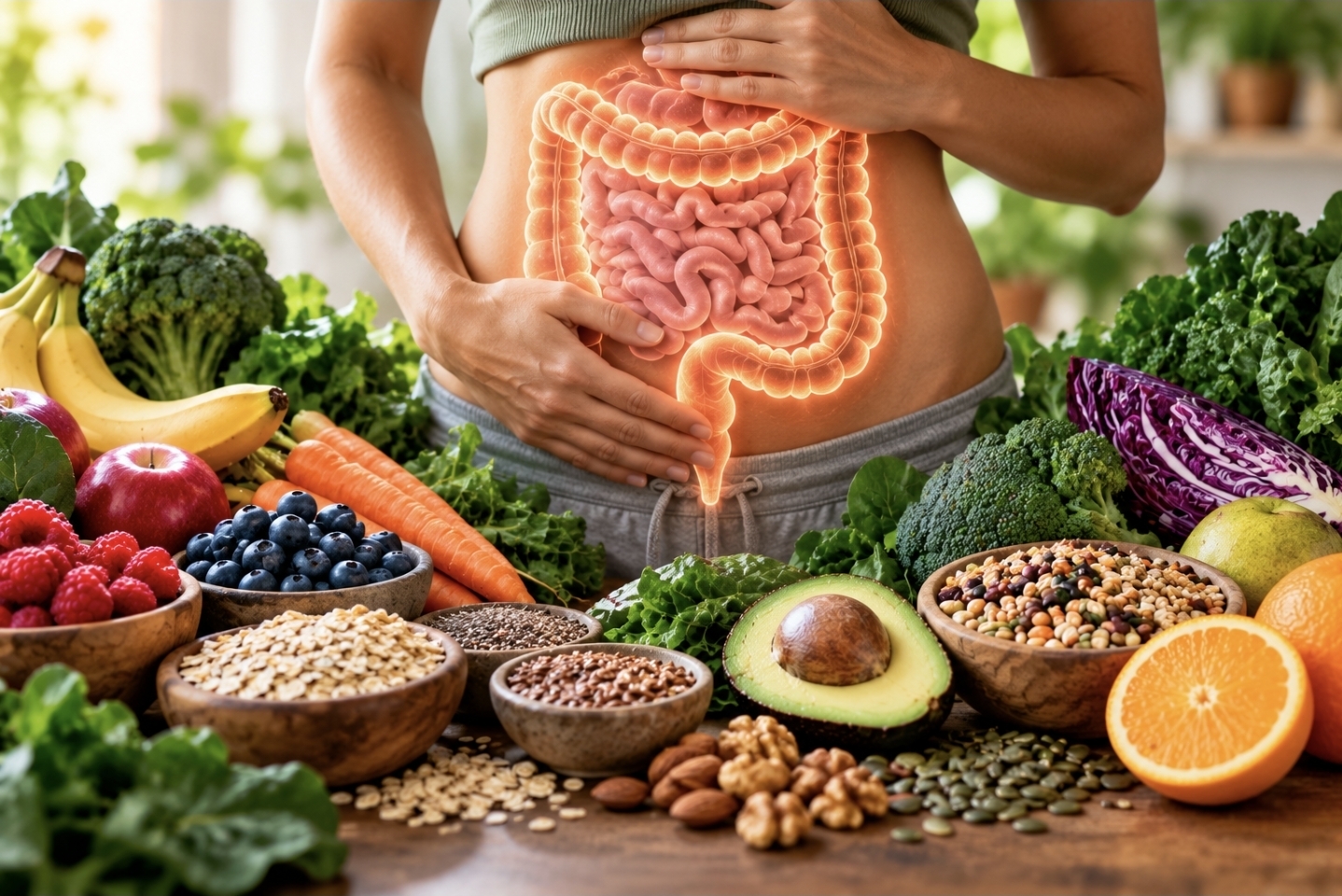
For years, protein dominated the nutrition conversation.
Now social media has found a new obsession: fibre.
The trend is called fibremaxxing — deliberately pushing fibre intake higher by loading meals with high-fibre foods and, in some cases, fibre powders and fortified products.
Unlike many online nutrition trends, this one starts with a reasonable idea. Plant foods naturally contain fibre, and many modern diets contain relatively little of it.
But social media has a habit of turning “more can be useful” into “the more the better”.
So can you actually eat too much fibre?
What is fibremaxxing?
Fibremaxxing means consciously trying to increase the amount of dietary fibre you eat each day.
It has become a major nutrition trend during 2026, with people sharing high-fibre meals, chia drinks, beans, lentils, whole grains and fibre supplements online.
In the UK, adults are generally advised to aim for around 30g of fibre per day. Yet national dietary data suggest average intake remains considerably lower than that.
That gap helps explain why encouraging people to eat more whole plant foods can be sensible.
The problem begins when a useful principle becomes a competition.
Can you eat too much fibre?
Yes — particularly if intake is increased very rapidly.
A sudden large increase can cause:
- bloating
- gas
- abdominal discomfort
- changes in bowel movements
- constipation in some circumstances
- diarrhoea or loose stools in others
This does not mean fibre is inherently harmful. It means the digestive system responds to the overall food environment, quantity and rate of change.
If someone has been eating a relatively low-fibre diet and suddenly starts consuming enormous quantities of bran, seeds, beans and fibre powders, it should not be surprising if their digestion notices.
Whole fruit is not the same as fibre powder
This is where the Natural Hygiene perspective becomes particularly useful.
Fibre does not naturally arrive as an isolated nutrient.
Eat an orange and the fibre comes packaged with water, natural sugars, organic acids, minerals and thousands of plant compounds within the physical structure of the fruit.
Eat lettuce, cucumber, berries, apples or other whole plant foods and the same principle applies.
The body encounters food, not an isolated number on a nutrition label.
This is one reason it makes little sense to treat a fibre supplement and a piece of fruit as though they were physiologically identical simply because both contain fibre.
Why does fibre affect the bowel?
Dietary fibre consists of plant material that is not fully broken down by human digestive enzymes.
Different fibres behave differently.
Some hold water and help influence stool consistency. Some contribute bulk. Others are fermented by microbes living in the colon.
That fermentation can produce short-chain fatty acids and gases.
This helps explain why suddenly increasing fermentable foods can make some people feel dramatically more bloated.
For more on persistent bloating, see Why Do I Feel Bloated Every Time I Eat?
Does bloating mean fibre is bad for you?
Not necessarily.
Bloating is a symptom, not a verdict on a particular nutrient.
The amount eaten, combinations of foods, speed of eating, digestive function and an individual’s existing diet can all influence what happens after a meal.
Someone moving suddenly from a heavily processed diet to very large salads, bowls of beans, seeds and supplemental fibre has changed many variables simultaneously.
The answer is not automatically to conclude that plant foods are the problem.
Nor is the answer automatically to keep forcing increasingly large quantities of fibre despite persistent discomfort.
Observe what the body is communicating.
Fibremaxxing and IBS
People with irritable bowel symptoms often discover that simplistic advice such as “just eat more fibre” does not tell the whole story.
Different plant foods contain different fibres and fermentable carbohydrates, and individual tolerance varies considerably.
If a dramatic dietary change consistently produces severe discomfort, it makes sense to investigate the overall diet rather than chasing an arbitrary fibre target.
See our broader discussion in Can IBS Go Away or Is It a Lifelong Condition?
Is fibre the reason plant foods are healthy?
This question exposes a common problem in modern nutrition.
We take a whole food, identify one component associated with beneficial outcomes and then assume that component must explain the food’s value.
Fruit becomes vitamin C.
Nuts become protein.
Vegetables become antioxidants.
Plant foods become fibre.
But the body never experiences these natural foods as isolated nutrients.
A fresh piece of fruit contains an extraordinarily complex mixture of water, carbohydrates, fibre, minerals and plant compounds arranged within a living biological structure.
Reducing that entire food to its fibre content misses most of the picture.
The processed-food industry has noticed the trend
There is another interesting development.
As consumers become more interested in fibre, manufacturers are increasingly adding isolated fibres to drinks, snack bars and other packaged products.
A highly processed product can therefore display a large “high fibre” claim on its packaging.
That does not transform it into an apple.
This is similar to the problem discussed in What Does Ultra-Processed Food Actually Do to Your Body?
Nutrition labels can provide useful information, but they cannot completely describe how a food has been constructed or how the body will respond to it.
Do you need to count grams of fibre?
For most healthy people eating a varied diet based heavily around whole plant foods, obsessively chasing a fibre score may add unnecessary complexity.
Counting can sometimes be useful for understanding a diet, particularly when someone has been advised to reach a specific intake.
But there is a difference between using a number as information and allowing the number to become the goal itself.
The Natural Hygiene approach is more interested in the quality and suitability of the overall diet.
What is a sensible way to increase fibre?
If your current diet contains relatively few plant foods, there is no prize for changing everything overnight.
Gradually replacing highly processed products with recognisable whole foods gives the digestive system time to adapt to a very different dietary environment.
Fruit and vegetables also naturally contain substantial amounts of water, something that is easy to overlook when people concentrate exclusively on fibre grams.
The goal should be a better diet — not simply a bigger number.
Fibremaxxing gets one big thing right
There is something encouraging about this particular internet trend.
After years of nutrition culture telling people what to eliminate, fibremaxxing has encouraged many people to eat more fruit, vegetables and other plant foods.
That is a far more constructive starting point than many restrictive diet trends.
But we do not need to turn a natural component of plant food into another substance to maximise, supplement and obsess over.
More is not automatically better. Better food is better.
Frequently asked questions
What does fibremaxxing mean?
Fibremaxxing is the social-media term for deliberately increasing daily fibre intake, usually by eating more fibre-rich foods or adding fibre supplements.
Can too much fibre cause bloating?
Yes. A rapid increase in fibre, particularly fermentable fibre, can increase gas and bloating. Gradual dietary changes are generally easier to tolerate than suddenly increasing intake dramatically.
Can too much fibre cause constipation?
It can in some circumstances. Bowel function depends on more than fibre alone, including fluid intake, overall food intake, activity, medications and individual digestive health. Persistent or severe constipation should be medically assessed.
Is fibre powder as good as fruit and vegetables?
They are not equivalent foods. Supplements can provide particular types of fibre, while whole fruits and vegetables also provide water, minerals and numerous plant compounds within their natural food structure.
How much fibre should adults eat?
UK guidance recommends around 30g per day for adults. Individual requirements and tolerance vary, and some medical conditions require specific dietary advice.
Important: Persistent abdominal pain, unexplained weight loss, blood in the stool or a significant unexplained change in bowel habits should not simply be attributed to fibre or “detox”. Seek appropriate medical assessment.